Filippo Lippi Facts For Kids

Filippo Lippi, often referred to as 'Filippo Lippi O,' was a skilled Italian painter from Florence who played a crucial role in the early Renaissance with his realistic style and emotional depth in art.
Select reading age
Go deeper More articles
Filippo Lippi
Filippo Lippi Facts For Kids
Videos & Quizzesincluded
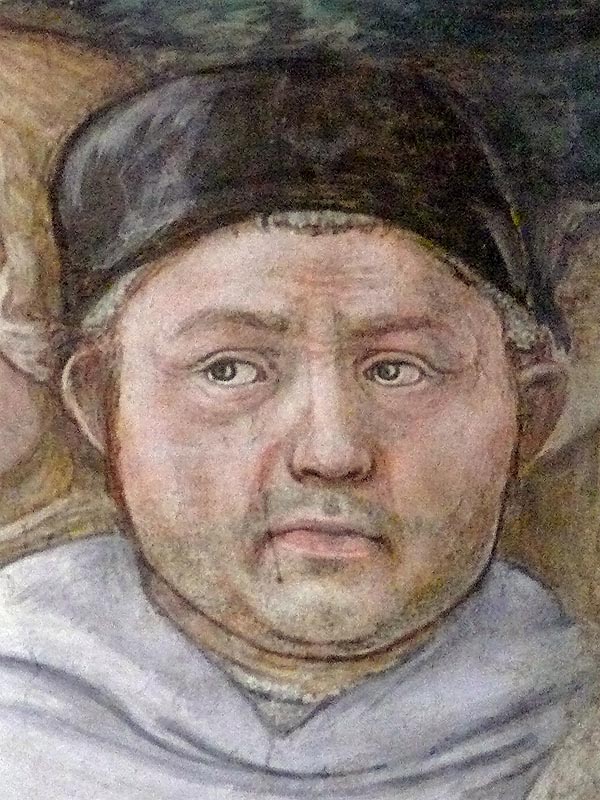
Image by Filippo Lippi, licensed under Creative Commons Attribution-Share Alike 2.5

About this topic

Filippo Lippi (c. 1406-1469) was an Italian painter from the Renaissance period! 🎨He was born in Florence, a beautiful city in Italy, famous for its art and culture. Lippi created many paintings that are admired today. His work helped to develop a new style of painting that focused on human emotion and realistic details. He was a monk, but loved painting so much that he left the monastery to follow his passion. His art features angels, Mary, and joyful scenes from the Bible! 🌟Lippi's work still inspires artists and art lovers all around the world!
Explore with ChatDino

Key Points

Towards the end of his life, Lippi continued to create beautiful art!
Lippi loved to paint themes from the Bible!
Filippo Lippi was born in a small town in Florence, Italy.
Filippo Lippi worked for many important people and churches during his career!
Filippo Lippi inspired many other artists in his time!
Lippi had an incredible artistic style!
One of Lippi's most famous paintings is "Madonna and Child," which shows Mary holding baby Jesus.
Compared to other contemporary artists, Lippi had a unique style!
Filippo Lippi played a crucial role in the Renaissance movement, a time when art, science, and learning blossomed in Europe!
Over the years, Lippi's work has been featured in many exhibitions around the world!

Photos of Filippo Lippi

Devotional image of the Madonna and Child before a golden curtain, the Workshop of Filippo Lippi (c. 1446–1447),[6] Walters Art Museum

Devotional image of the Madonna and Child before a golden curtain, the Workshop of Filippo Lippi (c. 1446–1447),[6] Walters Art Museum

Adoration in the Forest (1459)

Adoration in the Forest (1459)

Madonna and Child (1440–1445), tempera on panel, National Gallery of Art, Washington, D.C.

Madonna and Child (1440–1445), tempera on panel, National Gallery of Art, Washington, D.C.

Madonna with the Child and Two Angels (1465), tempera on wood, Uffizi, (also called "Lippina"; Lucrezia Buti is thought to be the model)

Madonna with the Child and Two Angels (1465), tempera on wood, Uffizi, (also called "Lippina"; Lucrezia Buti is thought to be the model)

Detail of the Spoleto Coronation of the Virgin (c. 1469), fresco, semidome of the apse of Spoleto Cathedral

Detail of the Spoleto Coronation of the Virgin (c. 1469), fresco, semidome of the apse of Spoleto Cathedral

Filippo Lippi β€” photo 6

Filippo Lippi β€” photo 6

Filippo Lippi β€” photo 7

Filippo Lippi β€” photo 7

Filippo Lippi β€” photo 8

Filippo Lippi β€” photo 8

Filippo Lippi β€” photo 9

Filippo Lippi β€” photo 9

πŸ–ΌοΈ Later Life And Legacy

Towards the end of his life, Lippi continued to create beautiful art! πŸ–ΌοΈ He spent many years in Spoleto, a lovely town in Italy, where he painted major works. Sadly, he passed away in 1469, but his influence did not end! Today, people still admire and study his work. Museums around the world display his paintings, and art classes teach about his style. πŸŽ“Lippi is remembered not just as a painter but as a key figure in the Renaissance who helped revolutionize art and inspire future generations!
Go deeper

πŸ“– Themes In Lippi's Art

Lippi loved to paint themes from the Bible! πŸ“–Many of his paintings show important stories like the Virgin Mary, angels, and scenes from Jesus's life. You can often see motherly love in his artwork, as he beautifully portrayed Mary with baby Jesus. 🌟Lippi also liked to include everyday people, making his paintings relatable. He used colors and emotions to create a sense of happiness and peace. This focus on warmth and humanity makes his paintings special, as they invite us to connect with the divine! πŸ’–
Go deeper

🌷 Early Life And Training

Filippo Lippi was born in a small town in Florence, Italy. 🌷When he was very young, his mother died, and his father was a butcher. After a while, Lippi became a monk at the convent of Santa Croce. Here, he began to learn about painting! 🎨He studied under a famous painter named Masaccio, who taught him about colors and shapes. Lippi loved to watch the great artists around him and learn as much as he could. After his training, he started creating his own beautiful paintings that would make him famous!
Go deeper

🏰 Patrons And Commissions

Filippo Lippi worked for many important people and churches during his career! 🏰One of his main patrons was Cosimo de’ Medici, a wealthy and powerful man who loved art. Cosimo helped Lippi get commissions to decorate chapels and churches. Lippi painted for the Cathedral of Prato and the convent of San Lorenzo in Florence. His works were so admired that people wanted him to create art for them all the time! Lippi’s ability to connect with his patrons helped him grow and leave a lasting mark on the world of art. πŸ–ŒοΈ
Go deeper

πŸŽ‰ Influence On Other Artists

Filippo Lippi inspired many other artists in his time! πŸŽ‰Artists like Sandro Botticelli and Leonardo da Vinci admired his work. They learned from Lippi's style, especially how he painted the human form and emotions. Lippi showed that art could be more lifelike by creating characters with feelings and stories. Because of him, many artists started to focus on painting more realistic scenes. Lippi’s influence helped shape the future of art in the Renaissance and even today, you can see his ideas in many types of artwork! 🌏
Go deeper

🌈 Artistic Style And Techniques

Lippi had an incredible artistic style! 🌈He used bright, vivid colors and painted things that looked very real. He often chose ordinary people to model instead of just saints or angels! His technique included using something called linear perspective, which means he knew how to create the illusion of depth and space on a flat canvas. Lippi also loved to show light and shadow in his paintings, which made them look even more realistic! His work captures feelings, like joy and surprise, making you feel like you’re a part of the scene! 😊
Go deeper

🌟 Major Works And Contributions

One of Lippi's most famous paintings is "Madonna and Child," which shows Mary holding baby Jesus. 🌟In this painting, he used soft colors and gentle expressions that made it very special. Another important work is "The Annunciation," where an angel comes to tell Mary she will have Jesus. Lippi influenced many future artists, especially with his beautiful depictions of mothers and babies. πŸ₯°His art was a big hit during the Renaissance and helps us understand how people felt and lived during that time!
Go deeper

✨ Comparison With Contemporaries

Compared to other contemporary artists, Lippi had a unique style! ✨While painters like Masaccio focused on strong lines and less emotion, Lippi brought warmth and feeling to his characters. His use of color was softer and more inviting than others. Artists such as Fra Angelico and Botticelli were influenced by Lippi's work, adopting his focus on detail and emotion. πŸŽ‰While some artists depicted important scenes with a more serious tone, Lippi’s subjects often reflected joy and tenderness, making his paintings stand out in the world of Renaissance art!
Go deeper

🌻 Lippi's Role In The Renaissance Movement

Filippo Lippi played a crucial role in the Renaissance movement, a time when art, science, and learning blossomed in Europe! 🌻He focused on realism and emotional expression in his paintings, which helped shape Renaissance art. Lippi used new techniques to create depth and light, making scenes feel lively. He also painted everyday life, which was exciting for the time. Lippi's work paved the way for other artists to explore their creativity. His passion and unique vision set a standard for future art that would be admired for centuries! 🌍
Go deeper

πŸ›οΈ Significant Exhibitions And Restorations

Over the years, Lippi's work has been featured in many exhibitions around the world! πŸ›οΈ Museums like the Uffizi Gallery in Florence showcase his masterpieces, allowing people to see his beautiful art up close. Some of his works have undergone restorations to bring back their original colors and details. 🎨Experts carefully clean and fix the paintings, treating them with love and respect. Thanks to these efforts, new generations can enjoy Lippi’s art and learn about his contributions to the Renaissance. His paintings inspire visitors to appreciate history and creativity! 🌟
Go deeper

🧠 Take the Quiz about Filippo Lippi

Question 1 of 10

What period was Filippo Lippi from?

Question 2 of 10

What city was Lippi born in?

Question 3 of 10

Which style did Lippi focus on in his paintings?

Question 4 of 10

What is one of Lippi's most famous paintings?

Question 5 of 10

Who was one of Lippi's main patrons?

Question 6 of 10

What themes did Lippi often paint?

Question 7 of 10

Lippi is known for painting which kind of people?

Question 8 of 10

Which painting technique did Lippi use to create depth?

Question 9 of 10

In what year did Filippo Lippi pass away?

Question 10 of 10

What is the focus of Lippi's paintings?

πŸ”’

Your results

Answer all 10 questions to see how you did.

Kid-safe AI powered by AstroSafe

DIY.org

Kid-safe AI for discovery and learning. Ask anything, explore everything, learn with confidence.

Product

  • Pricing
  • App
  • All Apps

Resources

  • Blog
  • Kids Wikipedia
  • Worksheets
  • Activities for Kids
  • Build a Hacker Simulator
  • SafeTube

Company

  • About
  • Terms & Conditions
  • Privacy Policy
  • AstroSafe
TwitterInstagramYouTube

Β© 2026 DIY.org. All rights reserved. Β· Powered by AstroSafe