Felix Bloch Facts For Kids
Felix Bloch was a Swiss-American physicist celebrated for his groundbreaking work in quantum mechanics and solid-state physics, and he received the Nobel Prize in Physics in 1952.
Select reading age
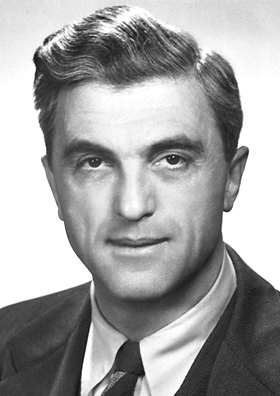
Felix Bloch Facts For Kids
Videos & Quizzesincluded
About this topic
Felix Bloch was a famous physicist born on October 23, 1905, in Zurich, Switzerland 🇨🇭. He is best known for his work on the behavior of electricity in solids, which helps us understand how materials like metals and semiconductors work! He later moved to the United States 🇺🇸 and conducted important research at Stanford University. Bloch received many awards during his lifetime and is remembered as a fantastic scientist who contributed greatly to physics!
Explore with ChatDinoKey Points
Felix Bloch's legacy lives on in the world of physics ⚡!
Felix Bloch won the Nobel Prize in Physics in 1952 🏆.
Felix Bloch loved learning about science from a young age.
Outside of physics, Felix Bloch enjoyed music and often played the piano 🎶.
Throughout his career, Felix Bloch published many important papers 📜 that shared his discoveries with the world.
Felix Bloch made a big impact on quantum mechanics, which is the study of tiny particles like atoms and electrons 🌀.
In the 1930s, Felix Bloch moved to the United States to work at Stanford University and the National Bureau of Standards.
Felix Bloch worked with many other brilliant scientists during his career.
Felix Bloch is a key figure in solid-state physics, the study of materials and their properties.
Photos of Felix Bloch

Felix Bloch in the lab, 1950s
⚡ Legacy And Awards
Felix Bloch's legacy lives on in the world of physics ⚡! After passing away on September 10, 1983, he left behind a lasting impact through his research and teachings. Many institutions and awards are named in his honor, celebrating his contributions to science. Students learn about his work in classrooms, and his ideas continue to inspire new generations of scientists. Bloch's commitment to advancing knowledge and helping others learn is an important part of his legacy that we still remember today!
Go deeper🏆 Nobel Prize In Physics
Felix Bloch won the Nobel Prize in Physics in 1952 🏆. He shared this honor with another physicist named Edward Purcell for their discoveries in NMR. The Nobel Committee awarded them for showing how to measure magnetic fields in atoms and molecules. This work was essential in improving medical imaging and studying various materials. Winning the Nobel Prize made Bloch even more famous, and he became a role model for future physicists! People around the world celebrated his achievement and continued to learn from his discoveries.
Go deeper📚 Early Life And Education
Felix Bloch loved learning about science from a young age. He attended the University of Zurich and studied physics there! He earned his Ph.D. in 1928 📚. Bloch was curious about how things worked, and his teachers noticed he was very bright! One of his professors was the famous physicist Wolfgang Pauli. Bloch was also interested in music and played the piano, showing he had many talents 🎹! His passion for learning laid the groundwork for his future discoveries.
Go deeper🎶 Personal Life And Interests
Outside of physics, Felix Bloch enjoyed music and often played the piano 🎶. He loved spending time with his family and valued their support throughout his career. Bloch also liked hiking and exploring nature, believing it inspired his curiosity about the world. He often encouraged his students to appreciate the beauty of science and nature. His balanced life of work, music, and family shows how important it is to enjoy different hobbies and interests. Bloch’s love for learning and discovery made him an outstanding physicist and a well-rounded individual!
Go deeper📜 Major Publications And Works
Throughout his career, Felix Bloch published many important papers 📜 that shared his discoveries with the world. One of his famous works is called "Nuclear Magnetism," where he explained how atoms behave in magnetic fields. Another essential contribution was his research on electrical properties in solids. His publications helped students and fellow scientists understand complex topics! Bloch also wrote books on physics and worked to make science exciting and accessible for everyone. His writings are still studied by students and researchers today.
Go deeper🌀 Influence On Quantum Mechanics
Felix Bloch made a big impact on quantum mechanics, which is the study of tiny particles like atoms and electrons 🌀. His work helped scientists understand how these particles behave in different materials. He studied how electrons move in solids, leading to important discoveries in everything from electronics to superconductors. Superconductors are materials that can conduct electricity without losing energy, which could change how we use electricity in the future! Bloch's ideas influenced many scientists and are still important in today's research.
Go deeper⚛️ Career And Research Contributions
In the 1930s, Felix Bloch moved to the United States to work at Stanford University and the National Bureau of Standards. He made significant discoveries about magnetism and how it works in materials ⚛️. His work helped scientists understand the principles behind nuclear magnetic resonance (NMR), which is important in medicine for MRI machines 🏥. Bloch's ideas changed the way people think about solid materials and their properties! He continued to research throughout his life and inspired many students and scientists.
Go deeper🥇 Collaboration With Other Scientists
Felix Bloch worked with many other brilliant scientists during his career. One of his closest collaborators was Edward Purcell, with whom he shared the Nobel Prize 🥇. They exchanged ideas about magnetic effects and influenced each other's research. Bloch was also a mentor to many students and young scientists, encouraging them to explore their ideas. He believed working together led to more significant discoveries! His collaborations helped advance various fields, showing how teamwork is essential in science and helping to solve complex problems.
Go deeper📱 Contributions To Solid State Physics
Felix Bloch is a key figure in solid-state physics, the study of materials and their properties. He developed crucial theories to explain how atoms and their electrons behave in solids, which affects things like electricity and magnetism. His research on conductivity helped in the development of modern electronics, like smartphones and computers 📱💻! His work on band theory explained how electrons move in materials, which is essential for creating better electronic devices. Bloch's contributions helped shape our understanding of solid materials and how we use them in daily life.
Go deeper