All Articles

Federation

Federation Facts For Kids

A federation is a union of partially self-governing regions under a federal government, allowing for both local autonomy and national unity.

🎨 Reading age for 6-8
Background blob
Federation
Federation
Facts for Kids!
Image by Lokal_Profil, licensed under Creative Commons Attribution-Share Alike 2.5

Do more with AI

Introduction

A federation is like a big team of states or regions joining together to form a country! 🌍In a federation, each state can make some of its own rules, but they all follow the same main laws set by the federal government. For example, in the United States, there are 50 states, like Texas and California, and they work together under one national government, while still having their own powers. This system helps share responsibilities and gives different areas a voice in how they are run. It's like everyone gets to play their part in a big game! ⚽️

Images of Federation

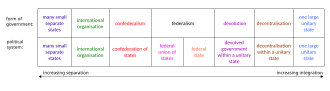
The pathway of regional integration or separationImage by Gaioa, licensed under Creative Commons Attribution 4.0

The pathway of regional integration or separation

A map of the Russian Federation, showing its eighty-three federal subjects before the annexation of Crimea in 2014Image by User:Tavork Russia_-_blank_map_(2008-01).svg : Ezhiki derivative work: Plavius ( talk ) Luís Flávio Loureiro dos Santos, licensed under Creative Commons Attribution-Share Alike 3.0

A map of the Russian Federation, showing its eighty-three federal subjects before the annexation of Crimea in 2014

A map of the Federative Republic of Brazil, showing its twenty-six constituent states and the Federal DistrictImage by TUBS, licensed under Creative Commons Attribution-Share Alike 3.0

A map of the Federative Republic of Brazil, showing its twenty-six constituent states and the Federal District

A map of the Federal Democratic Republic of Ethiopia, showing its regionsImage by Jfblanc, licensed under Creative Commons Attribution-Share Alike 4.0

A map of the Federal Democratic Republic of Ethiopia, showing its regions

A map of the Federal Republic of Nigeria, showing its 36 states and the Federal Capital Territory

A map of the Federal Republic of Nigeria, showing its 36 states and the Federal Capital Territory

A map of the United Mexican States, showing its thirty-one constituent states and Mexico City

A map of the United Mexican States, showing its thirty-one constituent states and Mexico City

A map of the United States of America showing its fifty constituent states and the District of ColumbiaImage by The original was edited by Andrew c to include Nova Scotia, PEI, Bahamas, and scale key. It was originally uploaded to the English Wikipedia with the same title by Wapcaplet : 20:57, 9 October 2005 . . Dbenbenn . . 959x593 (339217 bytes) (fix South Carolina label) 20:27, 9 October 2005 . . Dbenbenn . . 959x593 (339227 bytes) (typo, Massachussetts -> Massachusetts) 19:01, 9 October 2005 . . Dbenbenn . . 959x593 (371653 bytes) (crop, and remove some shapes (rivers, highways, capitals, lakes) that didn't display anyway) 13:18, 23 September 2005 . . Ed g2s . . 990x855 (978668 bytes) (fix (removed tag)) 23:48, 23 September 2004 . . Wapcaplet . . 0x0 (978926 bytes) ( SVG map of the United States . Created by Wapcaplet . {{GFDL} }), licensed under Creative Commons Attribution-Share Alike 3.0

A map of the United States of America showing its fifty constituent states and the District of Columbia

A map of Canada showing its ten provinces and three territories

A map of Canada showing its ten provinces and three territories

A map of the Commonwealth of Australia showing its six states and ten territoriesImage by Lasunncty, licensed under Creative Commons Attribution-Share Alike 4.0

A map of the Commonwealth of Australia showing its six states and ten territories

The pathway of regional integration or separationImage by Gaioa, licensed under Creative Commons Attribution 4.0

The pathway of regional integration or separation

A map of the Russian Federation, showing its eighty-three federal subjects before the annexation of Crimea in 2014Image by User:Tavork Russia_-_blank_map_(2008-01).svg : Ezhiki derivative work: Plavius ( talk ) Luís Flávio Loureiro dos Santos, licensed under Creative Commons Attribution-Share Alike 3.0

A map of the Russian Federation, showing its eighty-three federal subjects before the annexation of Crimea in 2014

A map of the Federative Republic of Brazil, showing its twenty-six constituent states and the Federal DistrictImage by TUBS, licensed under Creative Commons Attribution-Share Alike 3.0

A map of the Federative Republic of Brazil, showing its twenty-six constituent states and the Federal District

A map of the Federal Democratic Republic of Ethiopia, showing its regionsImage by Jfblanc, licensed under Creative Commons Attribution-Share Alike 4.0

A map of the Federal Democratic Republic of Ethiopia, showing its regions

A map of the Federal Republic of Nigeria, showing its 36 states and the Federal Capital Territory

A map of the Federal Republic of Nigeria, showing its 36 states and the Federal Capital Territory

A map of the United Mexican States, showing its thirty-one constituent states and Mexico City

A map of the United Mexican States, showing its thirty-one constituent states and Mexico City

A map of the United States of America showing its fifty constituent states and the District of ColumbiaImage by The original was edited by Andrew c to include Nova Scotia, PEI, Bahamas, and scale key. It was originally uploaded to the English Wikipedia with the same title by Wapcaplet : 20:57, 9 October 2005 . . Dbenbenn . . 959x593 (339217 bytes) (fix South Carolina label) 20:27, 9 October 2005 . . Dbenbenn . . 959x593 (339227 bytes) (typo, Massachussetts -> Massachusetts) 19:01, 9 October 2005 . . Dbenbenn . . 959x593 (371653 bytes) (crop, and remove some shapes (rivers, highways, capitals, lakes) that didn't display anyway) 13:18, 23 September 2005 . . Ed g2s . . 990x855 (978668 bytes) (fix (removed tag)) 23:48, 23 September 2004 . . Wapcaplet . . 0x0 (978926 bytes) ( SVG map of the United States . Created by Wapcaplet . {{GFDL} }), licensed under Creative Commons Attribution-Share Alike 3.0

A map of the United States of America showing its fifty constituent states and the District of Columbia

A map of Canada showing its ten provinces and three territories

A map of Canada showing its ten provinces and three territories

A map of the Commonwealth of Australia showing its six states and ten territoriesImage by Lasunncty, licensed under Creative Commons Attribution-Share Alike 4.0

A map of the Commonwealth of Australia showing its six states and ten territories

Types Of Federation

There are different types of federations! One common type is a "dual federation," where there are two levels of government: the national government and state governments. In the United States, the federal government handles national issues, while each state takes care of local matters. 🏛️ Another type is a "cooperative federation," where all levels of government work together on projects, like in Australia, which has a federal system that encourages teamwork among states. They share responsibilities and ensure all voices are heard. Every federated country finds its style that suits its people! 🌈

Division Of Powers In Federations

In federations, powers are divided between the national government and the state or regional governments. 🔍The national government usually handles big issues that affect everyone, like defense, foreign affairs, and immigration. For example, in the U.S., the federal government decides what happens at the country level! 🌟Meanwhile, state governments manage local issues, like education, transportation, and health services. 🎓This division makes sure that governments focus on what they do best! It helps everyone get the right services at their own level, like having different roles in a team sports! 🏆

Major Federations Around The World

Did you know there are many federations around the world? 🌎Besides the United States and Australia, other countries include Canada, with 10 provinces and 3 territories. Canada’s federation is unique because it recognizes French and English as official languages! 🇨🇦 India is also a federation, consisting of 28 states and 8 Union territories; it’s known for its rich culture and diversity. 🇮🇳 Brazil’s federation has 26 states and a federal district, together celebrating unique traditions and cuisines! 🌮Each federation has its own special features that make it fun and different!

Benefits And Challenges Of Federalism

Federalism has some awesome benefits! It allows states to make decisions that best suit their people, creating local identities! 🎉It also enables citizens to have a say in what happens close to home. For example, if one state wants to protect its forests better, it can do that while learning from others! 🌲However, there are challenges, too. Sometimes, different laws in states can confuse people, like when crossing borders. 🚧Also, issues might arise if states do not work well together, affecting how problems are handled! Balancing each state's needs can be tricky, like solving a puzzle! 🧩

Historical Development Of Federations

Federations have a long history! One early example is the United States, which became a federation in 1789 after the American Revolution. 🗽Before that, the Thirteen Colonies wanted to work together for freedom from British rule. Another famous federation is Switzerland, which became a federation in 1848, made up of 26 cantons (regions) that joined to work together. 🎉Over time, many countries saw the benefits of federating, allowing them to be strong while respecting local differences. These groups are formed to manage big issues like defense and trade while considering local needs. 🤝

Case Studies Of Successful Federations

Let’s look at successful federations! 🇨🇦 Canada shines with its cooperation among provinces! It embraces both English and French cultures, showing how diversity enriches a nation! 🎭Germany is another success story, where states have strong powers but work closely with the federal government to balance autonomy and unity, ensuring citizens are protected! 🇩🇪 India remarkably fosters unity in diversity, showcasing hundreds of languages and cultures while changing laws to meet local needs! 🌏These successful federations teach us how working together allows everyone to shine, through shared challenges and collective solutions! 💪

Constitutional Framework Of Federations

Every federation has a special set of rules called a constitution. 📜This document explains how the government works, how power is divided, and what rights the people have! In the United States, the Constitution was written in 1787 and is still in use today! 🗳️ It outlines the powers of the federal government and the states. In Germany, the Basic Law serves a similar purpose, ensuring everyone knows who does what! A good constitution helps keep order and fairness, so citizens can enjoy their rights and freedoms. It’s like a big agreement to play fair! ⚖️

Impact Of Federalism On Local Governance

Federalism improves local governance by making it easier for communities to have a voice! 🗣️ Citizens can participate in their local government and influence their environment more directly than in a centralized system. For example, local leaders can address problems like trash collection or park maintenance more effectively! 🌳🏞️ This system helps local communities to connect better and feel closer to their representatives. However, sometimes local governments may argue over responsibilities, so clear communication is on their to-do list! 🤝Overall, federalism empowers citizens to engage in their local communities happily! 🎈

Role Of State Governments In Federations

State governments play a big role in federations! They create laws and regulations that impact people’s everyday lives, like what happens in schools and parks! 🏫🌳 In Australia, each state has its own parliament to make local laws, which reflects the needs of its people. State governments also take care of public services, including hospitals and roads, keeping communities running smoothly! 🏥🚧 They can also run special programs, like recycling and public transport, helping to keep states healthy and happy! Each state’s unique needs influence how it runs, like flavors in ice cream! 🍦

Federation Quiz

Q1
Question 1 of 10

Learn more about Federation

Ready to create?

Make

To create a safe space for kid creators worldwide!

Create

Vibe Coding

Kids GPT

All Tools

Kibu

Resources

Worksheets

SafeTube

Blog

FAQ

Account

Pricing

Log-in

Sign-up

Data Deletion

Company

About

Community Guidelines

Privacy Policy

Terms of Service

2025, URSOR LIMITED. All rights reserved. DIY is in no way affiliated with Minecraft™, Mojang, Microsoft, Roblox™ or YouTube. LEGO® is a trademark of the LEGO® Group which does not sponsor, endorse or authorize this website or event. Made with love in San Francisco.