Eye Facts For Kids
An eye is a sensory organ that allows an organism to perceive visual information, enabling us to see the world around us in color and detail.
Select reading age
Eye Facts For Kids
Videos & Quizzesincluded
About this topic
👁️ Our eyes are amazing organs that let us see the world around us! Located on our faces, they help us observe colors, shapes, and movements. Humans typically have two eyes, which work together to create depth and help us judge distances. The eye is made up of different parts, including the cornea, lens, and retina. Did you know that around 80% of our memories are tied to what we see? From the bright blue sky 🌤️ to the rainbow 🌈, our eyes allow us to enjoy the beauty of the planet Earth! Let’s explore the mysteries of eyes together! 🌍
Explore with ChatDinoKey Points
When you look at something, light bounces off it and enters your eye.
The eye has several important parts, each with its own job!
Taking care of your eyes is super important!
Just like other body parts, our eyes can sometimes have problems.
Eyes have an interesting history!
Did you know animals have different kinds of eyes?
Did you know that some animals can see ultraviolet light, while humans cannot?
In many cultures, the eyes are seen as the "window to the soul".
The study of eyes, called ophthalmology, is always changing!
Technology has made amazing advancements in how we understand and help our eyes!
Photos of Eye

Eye of a European bison


The eyes of a mantis shrimp (here Odontodactylus scyllarus) are considered the most complex in the animal kingdom.

A refractive cornea type eye of a human. The cornea is the clear domed part covering the anterior chamber of the eye.

Eyelids and eyelashes are a unique characteristic of most mammalian eyes, both of which are evolutionary features to protect the eye.

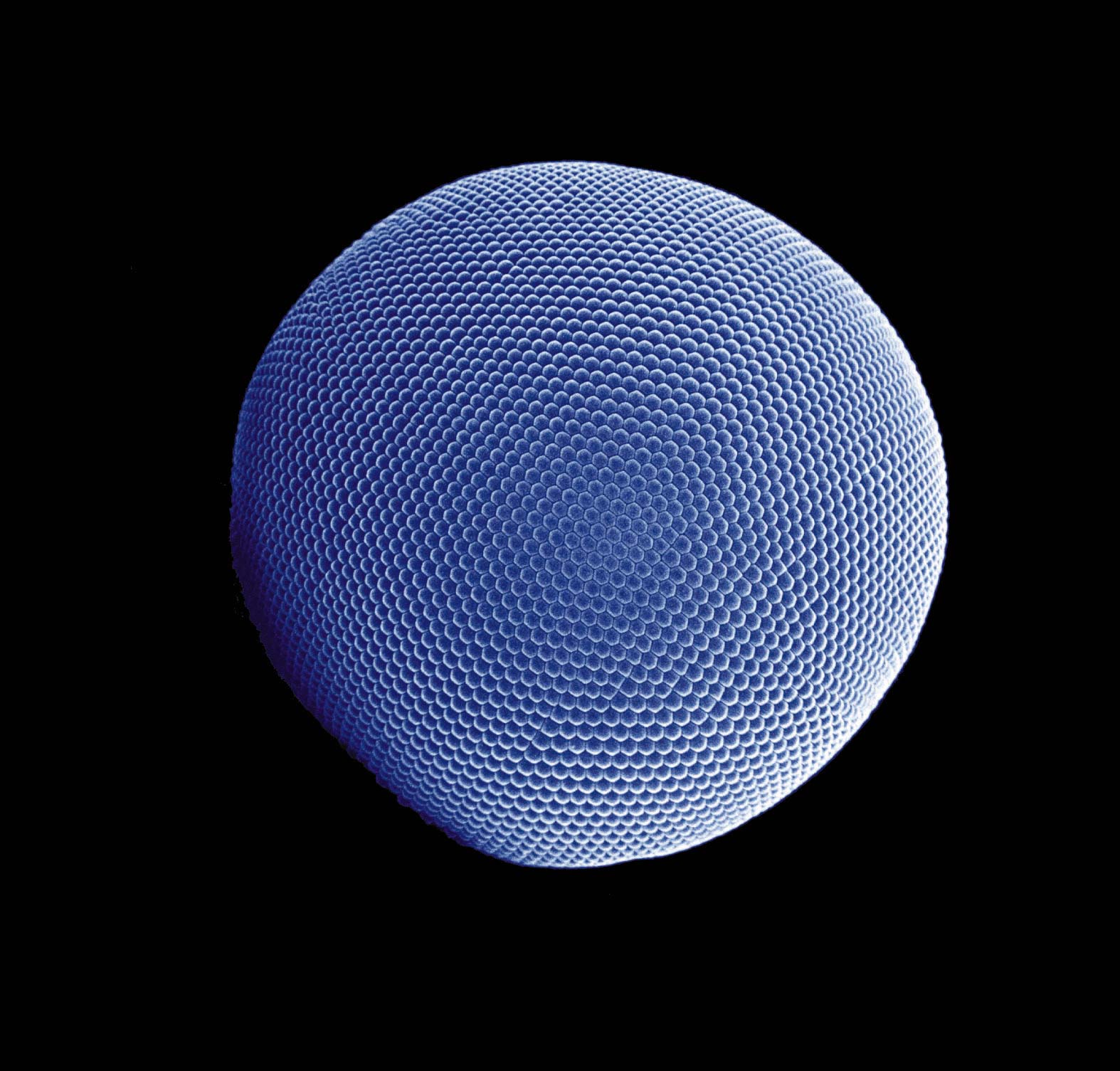
An image of a house fly compound eye surface by using scanning electron microscope
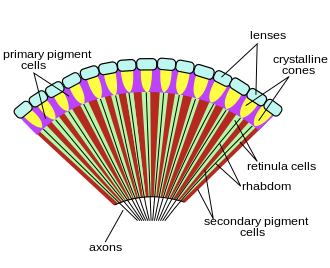
Anatomy of the compound eye of an insect

Arthropods such as this blue bottle fly have compound eyes.
🌞 How Vision Works
When you look at something, light bounces off it and enters your eye. 🌞The cornea and lens help to focus that light on the retina. Once there, the special cells convert the light into electrical signals. These signals travel through the optic nerve to your brain, which interprets them so you can understand what you're seeing! 👀This whole process happens in less than a second! Your two eyes work together to help you see in 3D, which is why you can catch a ball or ride a bike so easily. Isn’t our vision system fantastic? ✨
Go deeper🧐 Anatomy Of The Eye
The eye has several important parts, each with its own job! The cornea is the clear front layer that helps focus light. 🧐Next is the iris, which gives your eye its color, like blue, green, or brown! The pupil is the black part in the center that opens and closes to control how much light enters. Inside, the lens focuses light onto the retina, where special cells send signals to the brain. 🧠The retina acts like a camera film! On average, each eye has about 120 million rod cells for seeing in low light and around 6 million cone cells for seeing color! 🎨
Go deeper👁️ Eye Care And Health
Taking care of your eyes is super important! 👁️ Here are some tips: first, make sure to eat healthy foods like carrots 🥕 and spinach 🥬, which help your eyes stay strong! Always wear sunglasses 🕶️ outside to protect your eyes from bright sunlight. When using screens, remember to take breaks! The 20-20-20 rule is great: every 20 minutes, look at something 20 feet away for 20 seconds. Also, don’t forget to wash your hands before touching your eyes and never share eye makeup. ✨Keeping your eyes healthy means you can see the world clearly!
Go deeper👓 Common Eye Disorders
Just like other body parts, our eyes can sometimes have problems. Here are a few common eye disorders. Nearsightedness means you can see things up close but struggle to see far away. 👓Farsightedness is the opposite; faraway things are clear, but close things are blurry! Astigmatism causes blurry vision at any distance due to an irregularly shaped cornea. Another big issue is color blindness, where some people have trouble seeing certain colors. 🎨Regular eye check-ups with an eye doctor can help catch these problems early and keep our eyes healthy! 👩⚕️
Go deeper🦖 The Evolution Of Eyes
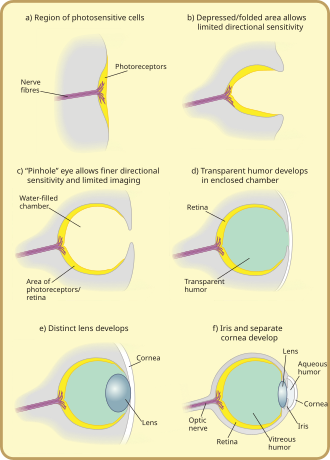
Eyes have an interesting history! 🦖Scientists believe eyes developed over 500 million years ago! The simplest eyes were just light-sensitive spots found in tiny creatures. 🌊As time went on, they evolved into more complex organs. By the time dinosaurs roamed the Earth, many had sophisticated eyesight! 🦕Today, humans have one of the most advanced eye systems. Our eyes evolved to help us better hunt, gather, and avoid danger! 🌳Learning about this evolution helps us understand how important eyes are not just to us, but to many creatures! 🌟
Go deeper🦉 Types Of Eyes In Animals
Did you know animals have different kinds of eyes? 🦉For example, cats have excellent night vision because more light hits their retinas, allowing them to see better in the dark. 🐈Eagles have super sharp eyesight, letting them spot tiny prey from high in the sky! 🦅Then, there are animals like octopuses, which have eyes similar to ours but can see polarized light. 🐙Some insects, like flies, have compound eyes made up of thousands of tiny lenses, giving them a wide view of the world. 🪲Each animal adapts its eyes to survive in its environment!
Go deeper🦋 Fascinating Facts About Eyes
Did you know that some animals can see ultraviolet light, while humans cannot? 🦋This helps butterflies and bees find flowers! Here’s another fun fact: our eyes can distinguish about 10 million different colors! 🎨If you placed all the blood vessels in your eyes end to end, they could stretch for about 100,000 miles! 🌍Also, your eyes blink about 15-20 times per minute, keeping them moist and clean! With so many amazing facts, it’s easy to see why eyes are so special! Isn’t it incredible how much we can learn about them? 🤩
Go deeper👀 Cultural Significance Of Eyes
In many cultures, the eyes are seen as the "window to the soul". 👀For example, in ancient Egypt, they worshiped the Eye of Horus, symbolizing protection and good health. Throughout history, people have used eye symbols in art to express feelings or stories. Many languages have sayings about eyes, like “the eyes are the window to the soul.” 🌌 In some cultures, different colored eyes have special meanings or are associated with good luck. This shows how important eyes are not just biologically, but also culturally! 🌍Let's appreciate how eyes connect us to feelings and stories!
Go deeper🧬 Future Research In Ophthalmology
The study of eyes, called ophthalmology, is always changing! Researchers are exploring ways to improve vision health, like using gene therapy to cure inherited eye diseases. 🧬Scientists are also working on new technologies to create artificial retinas, helping people with certain types of blindness see again. 🦾Advanced tools like 3D imaging will make eye exams even better, allowing doctors to see tiny details. 🌟The future of eye care is bright, with so many exciting discoveries waiting to happen! Who knows what amazing things we’ll learn next about this incredible sense we all share? 🌈
Go deeper👩🔬 Technological Advancements In Vision
Technology has made amazing advancements in how we understand and help our eyes! 👩🔬 Doctors now use tools like retinal imaging to see the inside of your eye without surgery! There are also glasses and contact lenses to help those who need vision correction. With inventions like laser eye surgery, people can fix their eyesight permanently. Additionally, artificial intelligence is helping doctors identify eye diseases faster and more accurately than ever before! 🤖Thanks to these technologies, our understanding of eye health continues to grow, making it possible to keep our vision sharp!
Go deeper