Enver Hoxha Facts For Kids
Enver Hoxha was an influential Albanian communist leader known for his strict control over the country from 1944 to 1985, shaping Albania's policies and its isolation from the rest of the world.
Select reading age
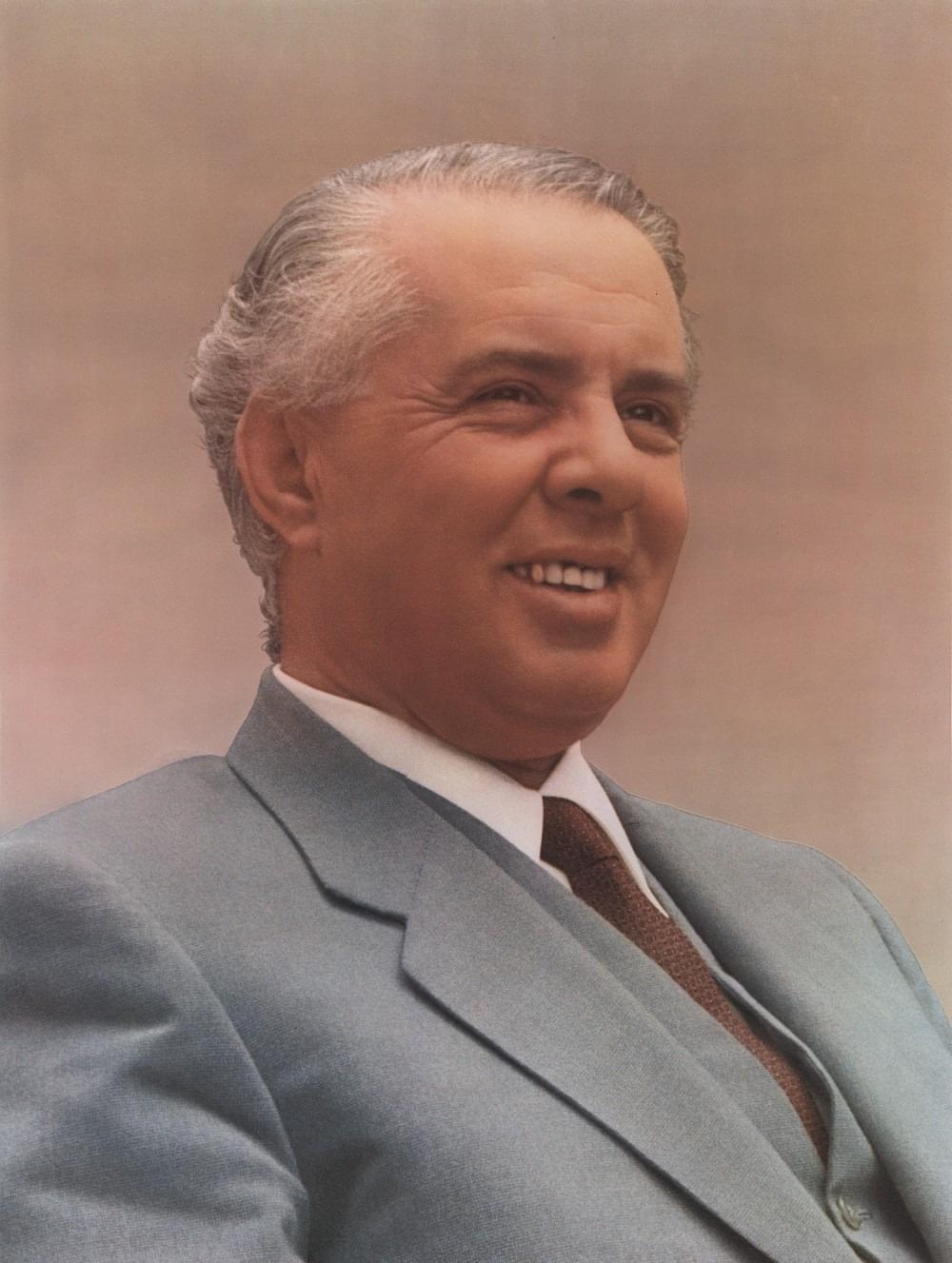
Enver Hoxha Facts For Kids
Videos & Quizzesincluded
About this topic
Enver Hoxha was a very important leader in Albania 🇦🇱. He was born on October 16, 1908, and he became the leader of Albania from 1944 until he passed away in 1985. Hoxha wanted to create a society where everyone was treated equally, according to his ideas about communism. He was the first Secretary of the Party of Labor of Albania, and he changed many things in his country. His time as a leader was very different, and many people have mixed feelings about him. Let's explore more about Hoxha's life and what he did! 📚
Explore with ChatDinoKey Points
After World War II, Albania was going through many changes.
During Hoxha's rule, he made various economic changes to improve Albania's resources.
After Enver Hoxha died in 1985, Albania began changing rapidly.
Enver Hoxha was born in the town of Gjirokastër in Albania.
Enver Hoxha's government was known for being strict and harsh.
Enver Hoxha wanted to create a unified culture in Albania.
Under Hoxha, Albania became quite isolated from other countries.
Enver Hoxha believed in communism, a system where the government controls everything to ensure everyone is treated equally.
Many authors and historians have written about Enver Hoxha's life.
Enver Hoxha left behind a complicated legacy.
Photos of Enver Hoxha

The site of the house where Hoxha grew up in Gjirokastër; the original home was lost to a fire in the 1960s

Hoxha at the age of 18

Hoxha in uniform, 1940

Hoxha as a partisan, 1944

Miladin Popović, Liri Gega, and Enver Hoxha

Joseph Stalin and Hoxha in Moscow in the 1950s

Mao Zedong and Hoxha in 1956

Postage stamp celebrating Hoxha's 60th birthday (1968)
![Bunkers in Albania were built during Hoxha's rule to avert the possibility of external invasions. By 1983 over 173,000 concrete bunkers were scattered throughout the country.[59]](https://upload.wikimedia.org/wikipedia/commons/thumb/e/e1/Albania_bunkers.jpg/330px-Albania_bunkers.jpg)
Bunkers in Albania were built during Hoxha's rule to avert the possibility of external invasions. By 1983 over 173,000 concrete bunkers were scattered throughout the country.[59]
💪 Rise To Power
After World War II, Albania was going through many changes. Enver Hoxha became a leader by joining the partisans, a group that fought against foreign control. 💪In 1944, they won, and Hoxha became the country's prime minister! He quickly started to change Albania's government and society to follow his communist ideas. Hoxha strengthened his power over the years and became known for his strict leadership. Many people followed him, believing he was helping Albania become a stronger country. 🌟
Go deeper🛠️ Economic Reforms
During Hoxha's rule, he made various economic changes to improve Albania's resources. He pushed for industrialization, which means turning Albania into a country that made things like machines and textiles. 🛠️ Hoxha created many state-owned farms and encouraged people to work together. While some people got jobs, others felt restricted by his methods. The economy was a mix of growth and challenges, as Hoxha tried to make every Albanian contribute to building a strong country! 📈
Go deeper🎉 Post-communist Albania
After Enver Hoxha died in 1985, Albania began changing rapidly. In the early 1990s, the communist system collapsed, which led to a new democratic government. 🎉The people of Albania started to express their opinions freely and built connections with other countries. This period was full of challenges, but it allowed Albania to become part of Europe and the wider world. Today, Albania continues to grow and develop, learning from its past! 🌱
Go deeper🌍 Early Life And Education
Enver Hoxha was born in the town of Gjirokastër in Albania. He came from a modest family, and he was very curious about the world! 🌍He went to school in his hometown and later moved to France to study at university. While in France, Hoxha learned about different ideas, including communism. He was inspired by the Russian Revolution, which made him passionate about creating change in his own country. After finishing school, he returned to Albania, ready to make a difference! 🎓
Go deeper⚖️ Persecution And Human Rights
Enver Hoxha's government was known for being strict and harsh. People who didn’t agree with his ideas were often punished. Many were imprisoned, and some were even executed. ⚖️ To maintain control, Hoxha used fear tactics and surveillance to watch his people. Human rights, like freedom of speech and expression, were limited. Many lived in fear, and the country didn’t have the same freedoms that others enjoyed. This created a legacy of suffering for many citizens. 😔
Go deeper🎶 Cultural Impact And Propaganda
Enver Hoxha wanted to create a unified culture in Albania. To do this, he promoted literature, music, and art that supported his ideas. 🎶He encouraged artists to celebrate the achievements of the working class and the values of communism. Hoxha's government also controlled what people could read, listen to, or watch on TV 📺. This meant that only positive things about him and his rule could be shown, which made it hard for people to see the truth outside their country.
Go deeper🌍 Foreign Relations And Isolation
Under Hoxha, Albania became quite isolated from other countries. Initially, Hoxha had strong ties with the Soviet Union, but things changed when he disagreed with their ideas. This led to a break with many countries, and Albania didn’t trust others. 🌍Hoxha emphasized self-reliance, believing that Albania could thrive alone. As a result, Albania became one of the most isolated countries in Europe. This meant fewer connections with the outside world and a unique culture developing! 🌐
Go deeper🚻 Political Ideology And Policies
Enver Hoxha believed in communism, a system where the government controls everything to ensure everyone is treated equally. He wanted to create a classless society 🚻. To do this, he enforced strict rules and worked on getting rid of private businesses. Instead, he focused on state-run farms and factories. Hoxha also limited the influence of religion, believing it could distract people from working towards equality. His policies changed the daily lives of many Albanians! 🏭
Go deeper📚 Critical Biographies And Analysis
Many authors and historians have written about Enver Hoxha's life. 📚Some agree with his vision of a communist Albania, while others focus on the negative impacts of his rule. Books like “Hoxha: The True Story” by James O. L. Brown offer different perspectives. These analyses help us understand both the achievements and failures during Hoxha's leadership. Learning from biographies teaches us not just about him, but about leadership, history, and the importance of human rights. 🏛️
Go deeper🙌 Legacy And Historical Perspectives
Enver Hoxha left behind a complicated legacy. Some people believe he was a strong leader who tried to modernize Albania. 🙌Others remember the fear and punishment that characterized his rule. Today, historians debate the impact of Hoxha's policies on the country’s development. While some admire his focus on education and industry, others criticize the lack of freedoms during his time. Hoxha's role in history continues to be discussed and analyzed. 📖
Go deeper