Downy Woodpecker Facts For Kids
The downy woodpecker is a small, adaptable woodpecker known for its distinctive black-and-white coloration and pecking behavior.


Do more with AI
Introduction
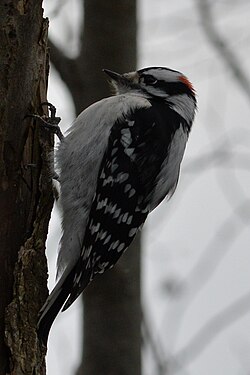
The downy woodpecker is a small bird found all over North America! 🐦They are about 6-7 inches long and are known for their black and white feathers. Downy woodpeckers can be spotted in backyards, forests, and parks. Their scientific name is *Picoides pubescens*. These birds love to drum on trees to find insects and communicate with each other. The male has a tiny red patch on the back of its head, while females do not. They are friendly birds and can often be seen hopping around on fences or tree trunks! 🌳
Images of Downy Woodpecker

A female Downy woodpecker. WA, USA.

The female lacks the red patch on the back of the head

An audio speaker emitting sound waves, in the Gnome style

A very small black and white bird pecking at a branch located on riverbank of the South Saskatchewan River in Saskatoon. No red on the head of this bird. Compare identification to Downy Woodpecker, Picoides pubescens All About Birds Hinterland Book Downy Woodpecker Chipper Woods Bird Observatory


Male Downy Woodpecker Picoides pubescens , Overpeck Park, New Jersey, USA.


Fun Facts
1. Did you know downy woodpeckers can peck up to 20 times a second? 🥁
2. They are excellent climbers, often moving headfirst down tree trunks!
3. Their tongues can be up to 4 inches long. That helps them reach insects! 👅
4. Downy woodpeckers often join flocks with other bird species in winter.
5. You can tell the difference between a downy woodpecker and a similar-looking species, the hairy woodpecker, by the size—the hairy woodpecker is larger! 🐦💡
Conservation Status
The downy woodpecker is not considered endangered! 🌍They are quite common and adapt well to different environments. However, they rely on old trees for nesting, which can sometimes be threatened by deforestation. Conservation efforts help protect their habitats by ensuring trees are preserved. Backyard bird feeders can also provide food during winter months when natural supplies are scarce. Many nature lovers enjoy watching these charming birds, which helps keep their populations healthy. Birdwatching and protecting nature are great ways to help them thrive! 🦺
Breeding And Nesting
During spring, downy woodpeckers begin to look for nesting sites! 🏡They usually choose holes they make in dead or decaying trees. Females lay about 3 to 8 white eggs in the nest, which they incubate for around 12 days. The baby woodpeckers hatch with their eyes closed and depend on their parents for everything. 🐣Both mom and dad take turns feeding them insects. After about 3 weeks, the young birds are ready to leave the nest but might stick around for a little while as they learn to find food!
Cultural Significance
Downy woodpeckers are important in many cultures! 🌟They represent hard work and determination because they peck away at trees tirelessly. In Native American folklore, the woodpecker symbolizes community and cooperation. These birds can also be seen in books and cartoons, teaching kids about nature and wildlife. Many birdwatchers enjoy spotting them, making these woodpeckers a favorite subject for photographers and wildlife enthusiasts! In some places, they are also seen as good luck! 🌈
Diet And Feeding Habits
Downy woodpeckers love to eat insects and their larvae! 🐛They mainly feed on beetles, ants, and spiders, which they find by pecking on trees. Sometimes they also eat seeds, fruits, and suet – a fatty treat that many bird lovers put out in feeders. Their long, sticky tongues help them catch bugs hidden under the bark. They often forage on smaller branches and shrubs, looking for food. Downy woodpeckers use their strong beaks to drill into tree bark and also to find food in other places like high grass or bushes! 🌿
Habitat And Distribution
These woodpeckers enjoy a variety of habitats. 🌲You can find them in deciduous forests, parklands, and suburban areas. They prefer places with plenty of trees, as they love to peck on bark! Downy woodpeckers are found from Canada to Mexico, as well as the eastern and western coasts of the United States. During winter, they move to areas where food is available, often moving closer to human neighborhoods. These adaptable birds like to make their homes in mixed forests with dead trees, which are perfect for finding food!
Physical Characteristics
Downy woodpeckers have a unique appearance! Their body is mostly white with black wings and a black-and-white checkered pattern on their back. The males sport a small red spot on their head, while females are all black and white. 🎨They have strong, chisel-like beaks that help them dig into wood to find bugs! Their tails are stiff, which provides support as they climb tree trunks. Adult downy woodpeckers weigh around 1 ounce (28 grams) and have a wingspan of about 12-13 inches. They are the smallest woodpeckers in North America!
Behavior And Social Structure
Downy woodpeckers are known for their unique behaviors. 👀They "drum" on trees to communicate and mark their territory. During spring, males drum loudly to attract mates! These birds are quite social and can often be spotted in pairs or small groups. They usually stay near their breeding territories. Young woodpeckers may stay with their parents for a little while before venturing out on their own. They are often seen hopping and clinging to trees, using their sharp claws to grip the bark. Their distinctive calls can be heard throughout the woods! 🐦
Downy Woodpecker Quiz
Learn more about Downy Woodpecker
