Diego Velázquez Facts For Kids

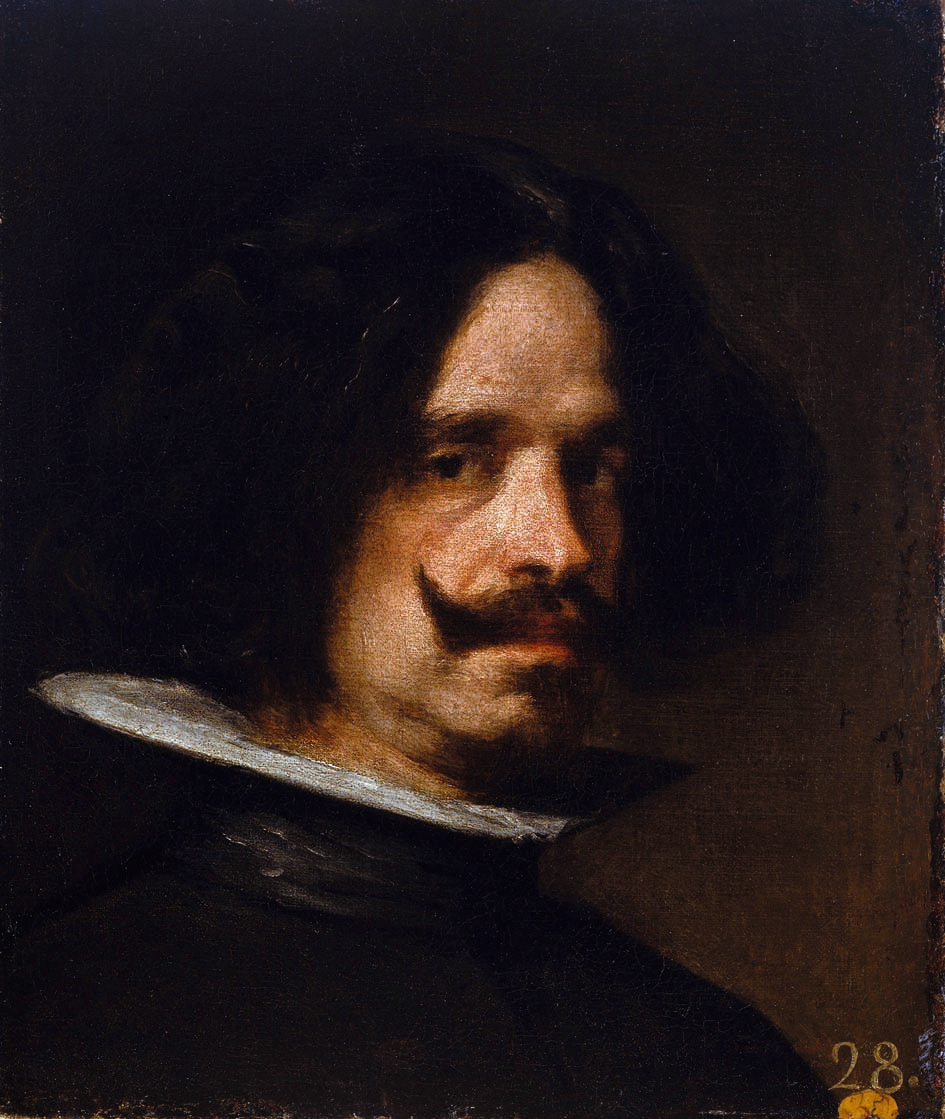
Diego Velázquez was a renowned Spanish painter, the leading artist in the court of King Philip IV of Spain, celebrated for his masterpieces during the Spanish Golden Age.
Select reading age
Go deeper More articles
Diego Velázquez
Diego Velázquez Facts For Kids
Videos & Quizzesincluded

About this topic

Diego Velázquez was a famous Spanish painter born on June 6, 1599, in Seville, Spain. 🎨He is best known for his beautiful portraits and scenes of everyday life. Velázquez became the leading painter at the court of King Philip IV, painting many royal portraits. His artwork showed a deep understanding of light, color, and emotion. Velázquez lived in a time called the Spanish Golden Age when art and culture flourished in Spain. He passed away on August 6, 1660. His impressive works are still admired today in museums around the world! 🌍
Explore with ChatDino

Key Points

Velázquez created several masterpieces that are still famous today!
Velázquez had a unique painting style that made his artworks special.
Velázquez came from a family of artists.
One of Velázquez's most famous paintings, “Las Meninas,” is filled with detail and meaning.
Velázquez’s art has had a remarkable cultural impact!
As Velázquez grew, he was influenced by many artists.
Many of Velázquez's masterpieces have undergone restoration to preserve their beauty.
Diego Velázquez left a huge impact on future artists!
In 1623, Velázquez became the official painter for King Philip IV of Spain.

Photos of Diego Velázquez

Birthplace of Velázquez in SevilleImage by Anual, licensed under Creative Commons Attribution 3.0

Birthplace of Velázquez in Seville

Vieja friendo huevos (1618). National Gallery of Scotland, Edinburgh.

Vieja friendo huevos (1618). National Gallery of Scotland, Edinburgh.

Philip IV in Brown and Silver, 1632

Philip IV in Brown and Silver, 1632

El Triunfo de Baco or Los Borrachos 1629 (English: The Triumph of Bacchus/The Drunks)

El Triunfo de Baco or Los Borrachos 1629 (English: The Triumph of Bacchus/The Drunks)

Portrait of the Infanta Maria Theresa, Philip IV's daughter with Elisabeth of France

Portrait of the Infanta Maria Theresa, Philip IV's daughter with Elisabeth of France

La rendición de Breda (1634–35) was inspired by Velázquez's first visit to Italy, in which he accompanied Ambrogio Spinola, who conquered the Dutch city of Breda a few years prior. It depicts a transfer of the key to the city from the Dutch to the Spanish army during the Siege of Breda. It is considered one of the best of Velázquez's paintings.

La rendición de Breda (1634–35) was inspired by Velázquez's first visit to Italy, in which he accompanied Ambrogio Spinola, who conquered the Dutch city of Breda a few years prior. It depicts a transfer of the key to the city from the Dutch to the Spanish army during the Siege of Breda. It is considered one of the best of Velázquez's paintings.

Lady from court, c. 1635

Lady from court, c. 1635

Portrait of Pablo de Valladolid, 1635, a court fool of Philip IV

Portrait of Pablo de Valladolid, 1635, a court fool of Philip IV

Portrait of Pope Innocent X, 1650

Portrait of Pope Innocent X, 1650

👸 Major Works

Velázquez created several masterpieces that are still famous today! One of his most significant works is “Las Meninas,” painted in 1656. 👸🏻 It shows him painting the young princess and gives viewers a peek into the royal court. Another notable painting is “The Surrender of Breda,” which depicts a historical event during the Eighty Years’ War. His portrait of King Philip IV is also iconic, showing the king's power and presence. 🎩Throughout his life, Velázquez produced over 300 works, each telling a story or capturing an important moment in time!
Go deeper

🎨 Techniques And Style

Velázquez had a unique painting style that made his artworks special. He often used a technique called "impasto," where paint is applied thickly to create texture. 🎨He also excelled in blending colors, which helped to create realistic skin tones and details. Moreover, Velázquez was a master of light and shadow, skillfully using them to give depth to his paintings. 🌅This technique adds a life-like quality to his subjects. He focused on capturing the emotions of people, making his portraits feel real and relatable. Artistic techniques he developed are still admired in art classes today!
Go deeper

🖌️ Early Life And Education

Velázquez came from a family of artists. At the young age of 11, he started his training with Francisco Pacheco, a well-known painter in Seville. 🖌️ Pacheco was a strict teacher who taught Velázquez many important techniques. By the time he was 20, Velázquez had already painted impressive works. He learned to mix colors to create different effects and developed a unique style. His early work featured religious themes and local life. This foundation helped him grow as an artist and eventually gain recognition in the royal court! 👑
Go deeper

🤔 Analysis Of Notable Paintings

One of Velázquez's most famous paintings, “Las Meninas,” is filled with detail and meaning. 🤔In this work, viewers see the artist himself, reflecting the world of the royal court. The use of mirrors creates depth, capturing the atmosphere. Another notable painting, “The Surrender of Breda,” showcases bravery and triumph, portraying soldiers with realistic expressions. 🛡️ “The Triumph of Bacchus” reveals the joy of celebration and features lively colors and engaging characters. Each painting invites the viewer to explore the stories behind the scenes and appreciate Velázquez's brilliance!
Go deeper

🌍 Cultural Impact And Recognition

Velázquez’s art has had a remarkable cultural impact! 🌍His work is displayed in famous museums, like the Prado Museum in Madrid and the Metropolitan Museum of Art in New York City. 🖼️ His paintings are often studied in art classes around the world, helping students understand the beauty of classical art. Not only is he recognized in Spain, but his legacy also reaches many countries! Artists and historians continue to discuss and analyze his paintings, ensuring that Velázquez will be remembered as a brilliant cultural figure. 📚
Go deeper

💡 Influences And Artistic Development

As Velázquez grew, he was influenced by many artists. One major influence was Caravaggio, known for his use of dramatic lighting. 💡Velázquez admired how Caravaggio portrayed emotions and everyday people. He also studied the works of Italian artists during his trips to Italy. These experiences shaped his artistic style and helped him develop new techniques. Additionally, he was inspired by the beauty of Spanish culture, which filled his paintings with life and movement. 🌈His ability to blend different influences made his art stand out and remain timeless!
Go deeper

🎨 Restoration And Conservation Of Works

Many of Velázquez's masterpieces have undergone restoration to preserve their beauty. 🎨Over time, paintings can become damaged due to age, dust, and environmental influences. Experts carefully clean and repair these artworks to keep them looking their best. Museums, like the Prado, invest in conservation projects to study and protect Velázquez’s paintings, ensuring they can be enjoyed by future generations. 🔍This work helps art enthusiasts appreciate his masterpieces even more, allowing everyone to connect with Velázquez's genius through well-preserved art!
Go deeper

🎨 Legacy And Influence On Future Artists

Diego Velázquez left a huge impact on future artists! 🎨His techniques influenced many famous painters, including Édouard Manet and Pablo Picasso. They admired his use of light and his ability to portray realistic expressions. Velázquez became a role model for artists who wanted to communicate emotions in their work. He is often considered one of the greatest painters in Western art history. 🎭His legacy continues today, with students and art lovers studying his masterpieces and techniques, ensuring his art lives on for generations.
Go deeper

👑 Velázquez And The Spanish Royal Court

In 1623, Velázquez became the official painter for King Philip IV of Spain. 👑He painted numerous portraits of the king and his family, capturing their personalities and importance. Velázquez spent many years at the royal court, which allowed him to build relationships with nobles and learn about their lives. His position as the king's painter gave him access to the royal family, inspiring many of his artworks. 🎉Velázquez used his royal connections to explore new artistic ideas and travel to study art in Italy, greatly enhancing his skills.
Go deeper

🧠 Take the Quiz about Diego Velázquez

Question 1 of 10

When was Diego Velázquez born?

Question 2 of 10

Who was the king that Velázquez painted for?

Question 3 of 10

What significant painting did Velázquez create in 1656?

Question 4 of 10

Which artist influenced Velázquez with dramatic lighting?

Question 5 of 10

How many works did Velázquez paint in his lifetime?

Question 6 of 10

What technique did Velázquez use to create texture in his paintings?

Question 7 of 10

Which museum in Madrid displays many of Velázquez's works?

Question 8 of 10

What year did Velázquez pass away?

Question 9 of 10

Which one of Velázquez’s paintings shows soldiers and a historical event?

Question 10 of 10

What is Velázquez often considered in the art world?

🔒

Your results

Answer all 10 questions to see how you did.

Kid-safe AI powered by AstroSafe

DIY.org

Kid-safe AI for discovery and learning. Ask anything, explore everything, learn with confidence.

Product

  • Pricing
  • App
  • All Apps

Resources

  • Blog
  • Kids Wikipedia
  • Worksheets
  • Activities for Kids
  • Build a Hacker Simulator
  • SafeTube

Company

  • About
  • Terms & Conditions
  • Privacy Policy
  • AstroSafe
TwitterInstagramYouTube

© 2026 DIY.org. All rights reserved. · Powered by AstroSafe