Danaus Plexippus Facts For Kids
Danaus plexippus, commonly known as the monarch butterfly, is a strikingly beautiful insect recognized for its vibrant orange and black wings and is famous for its incredible annual migration.
Select reading age
Danaus Plexippus Facts For Kids
Videos & Quizzesincluded
About this topic
The monarch butterfly, or simply monarch 🦋, is one of the most amazing insects in the world! These beautiful creatures have bright orange wings with black lines. Monarchs are well-known for their incredible journey of migration. They travel thousands of miles from North America to central Mexico 🗺️ each year. Monarchs are not just pretty to look at; they play an important role in our ecosystem, helping plants by pollinating flowers as they sip nectar. With their unique life cycle and amazing journeys, monarch butterflies capture the hearts and minds of many people everywhere!
Explore with ChatDinoQuick Facts
Key Points
Did you know that monarch butterflies can live up to 9 months?
One of the coolest things about monarch butterflies is their migration!
Monarch butterflies are not only important for nature but also for many cultures!
Monarch butterflies are found mainly in North America, especially in the United States and Canada 🇺🇸🇨🇦.
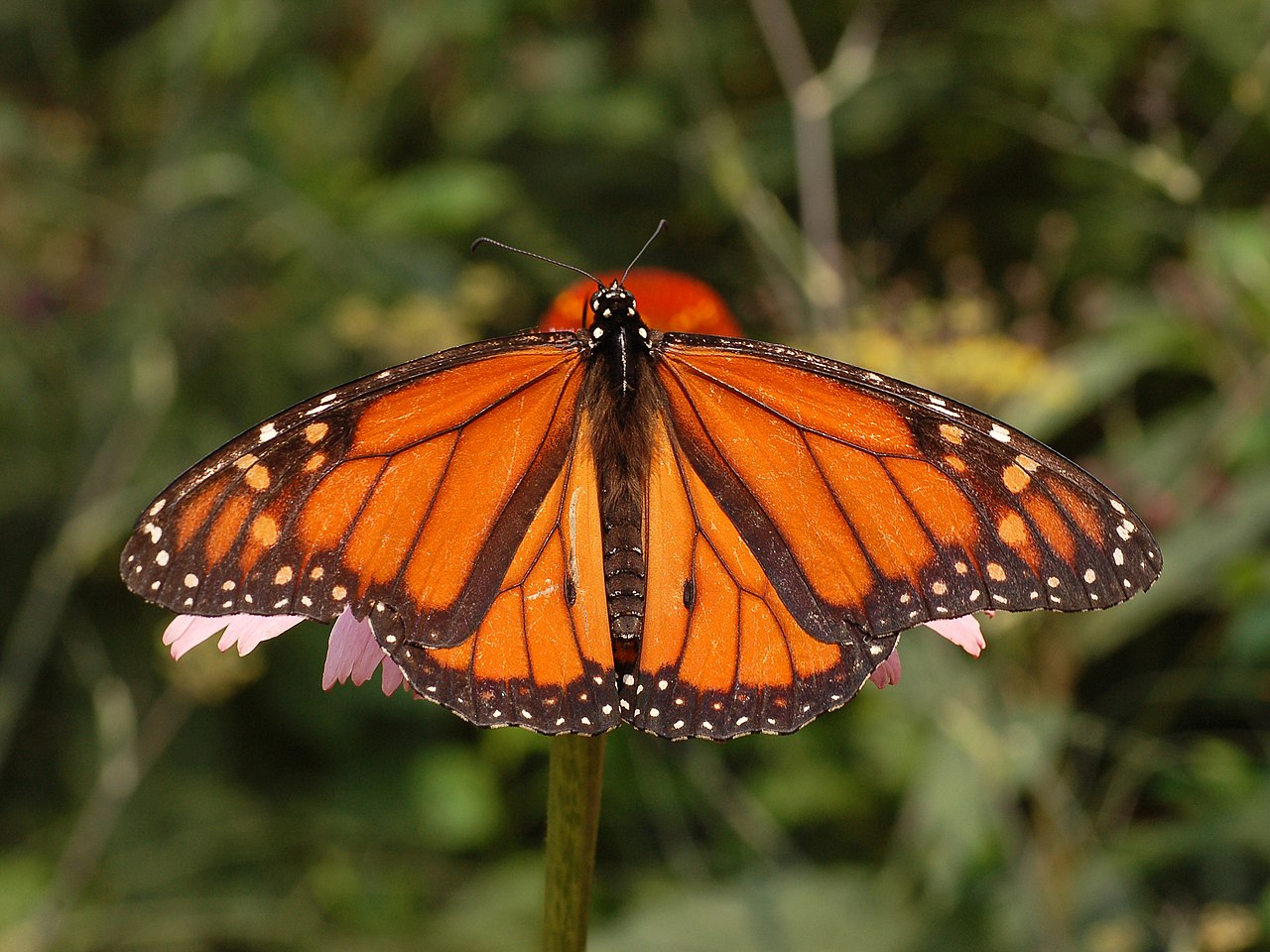
Monarch butterflies are famous for their striking orange and black wings.
Monarch butterflies face many challenges that threaten their survival 😞.
As caterpillars, monarchs love munching on milkweed 🍃, which is their favorite food.
Monarchs start their breeding process in spring when they migrate back to North America.
The life of a monarch butterfly starts as a tiny egg 🥚, usually laid on a milkweed plant.
The monarch butterfly belongs to the family Nymphalidae, which includes many colorful butterflies.
Photos of Danaus Plexippus

Danaus Plexippus — photo 1

Distribution of Monarch Butterfly Danaus plexippus (small, with dates)

Male D. p. plexippus on Tithonia flower

D. p. plexippusPiedra Herrada, Mexico

White morph of the monarch in Hawaii called the white monarch

The life cycle of the monarch butterfly

Sequential stages of monarch development - an egg, five caterpillars, and a chrysalis on common milkweed leaves


🕒 Interesting Facts
Did you know that monarch butterflies can live up to 9 months? 🕒That's much longer than most butterflies! They also have an amazing ability to sense the Earth’s magnetic field, which helps them navigate during their long migration. Monarchs are the only butterflies known to make a two-way migration, just like birds! Furthermore, they can smell flowers from miles away with their antennae 👃. Monarchs are truly remarkable creatures with many secrets waiting to be discovered! It's exciting to learn about them and do our best to protect them for the future! 🌎💖
Go deeper🌍 Migration Patterns
One of the coolest things about monarch butterflies is their migration! Every year, millions of monarchs travel from the United States and Canada to central Mexico 🌍. This migration can be up to 3,000 miles long! They usually start this journey in late summer and arrive in Mexico by November. During their travel, they fly in groups and often rest at night in trees. In the spring, they make the return trip to the north, laying eggs on milkweed plants along the way. This incredible journey is a true testament to their strength and determination!
Go deeper🎉 Cultural Significance
Monarch butterflies are not only important for nature but also for many cultures! In Mexico, they are celebrated during the Day of the Dead (Día de los Muertos) 🎉. Many people believe that the butterflies represent the souls of their loved ones who have passed away. Additionally, monarchs are popular symbols of transformation and beauty in many stories and artworks. Schools and communities also hold butterfly festivals, where children learn about their migration and life cycle, making these butterflies a cherished part of our natural and cultural world!
Go deeper🏞️ Habitat And Distribution
Monarch butterflies are found mainly in North America, especially in the United States and Canada 🇺🇸🇨🇦. They prefer open fields, gardens, and areas with milkweed plants, which are very important for them! During winter, they travel to specific areas in Mexico, like the Monarch Butterfly Biosphere Reserve in Michoacán 🏞️. They like warm and sunny places because they need warmth to fly and stay active. Monarchs are also found in parts of South America. Their bright wings help them survive and be very popular in different habitats!
Go deeper📏 Physical Characteristics
Monarch butterflies are famous for their striking orange and black wings. The wings have a wingspan of about 3 to 4 inches (7.6 to 10.2 cm) 📏. The males have a black spot on their wings, while females are usually a bit larger. Monarchs also have special markings on their underwings that help them blend in with the leaves. Their bodies are covered in tiny scales that help them stay dry. When a monarch spreads its wings, they can look very bright and beautiful, especially when the sunlight shines through them! 🌞
Go deeper😞 Threats And Conservation
Monarch butterflies face many challenges that threaten their survival 😞. One major threat is habitat loss, as many fields and gardens are turned into urban spaces. Pesticides used in farming can also harm them and their milkweed plants. Climate change affects their migration patterns too, causing them to arrive at their destinations earlier or later than usual. To help protect monarchs, people can plant milkweed and avoid using harmful chemicals in their gardens. Organizations and schools encourage butterfly conservation, helping these beautiful insects thrive! 🦋🌱
Go deeper🍃 Diet And Feeding Behavior
As caterpillars, monarchs love munching on milkweed 🍃, which is their favorite food. This plant is special because it contains toxins that make monarchs taste bad to predators! As adult butterflies, they drink nectar from colorful flowers. Some of their favorite flowers include milkweed, asters, and coneflowers 🌼. To sip nectar, monarchs use a long straw-like mouthpart called a proboscis. This helps them reach deep into flowers. Monarchs play an essential role in helping flowers grow by pollinating them while they feed!
Go deeper🥚 Reproduction And Breeding
Monarchs start their breeding process in spring when they migrate back to North America. Female monarchs lay about 300 to 400 eggs on milkweed plants 🥚🍃. After the eggs hatch, the caterpillars eat the milkweed to grow big and strong. Once they reach the chrysalis stage, they undergo a remarkable transformation. When they become adult butterflies, they are ready to mate and continue the cycle by laying eggs, starting the process all over again! This cycle is essential for the survival of this beautiful species.
Go deeper🥚 Life Cycle And Development
The life of a monarch butterfly starts as a tiny egg 🥚, usually laid on a milkweed plant. After about 4 days, the egg hatches into a caterpillar called a larva. This caterpillar eats lots of milkweed leaves, growing and shedding its skin several times! After about 10 days, it forms a chrysalis, a hard shell around its body. Inside the chrysalis, the caterpillar undergoes metamorphosis, transforming into a butterfly. After 10 more days, the beautiful monarch emerges! This whole process from egg to butterfly takes about 4 weeks.
Go deeper🦗 Taxonomy And Classification
The monarch butterfly belongs to the family Nymphalidae, which includes many colorful butterflies. The scientific name for the monarch is Danaus plexippus. In the butterfly world, they are classified as insects! 🦗Insects are tiny creatures with six legs, and they have three main body parts: head, thorax, and abdomen. Monarchs belong to a larger group called Lepidoptera, which includes butterflies and moths. There are many similar species, like the Viceroy butterfly, which looks like the monarch but is smaller and has a black stripe across its wings.
Go deeper