Crime And Punishment Facts For Kids
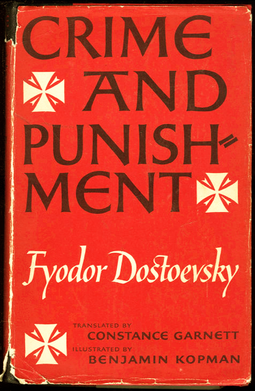
Crime and Punishment is a psychological novel by Fyodor Dostoevsky that follows the moral dilemmas of Raskolnikov, a former student who commits murder and grapples with guilt and redemption in 19th-century Russia.
Select reading age
Crime And Punishment Facts For Kids
Videos & Quizzesincluded
About this topic
Crime is when someone breaks the law 🚔. Laws are rules made by governments so everyone can live safely and happily. Kids can break laws too, like stealing candy from a store or not listening to a teacher. When a crime happens, the police investigate to find out what happened. People who commit crimes may need to be punished, but it’s also important to understand why they did it. The world of crime and punishment can be complex, but learning about it helps us all stay safe and make better choices in our lives! 🌟
Explore with ChatDinoKey Points
Every country has a legal system to keep things fair!
Crime can hurt people in many ways.
There are many ways to prevent crime!
Why do people commit crimes?
A long time ago, different cultures had unique ideas about crime.
Throughout history, there have been fascinating (and sometimes frightening) criminal cases.
Punishment for crime has changed a lot!
People often debate whether it’s better to punish someone for doing wrong or to help them change their behavior 👥.
🧩 Legal Systems And Justice
Every country has a legal system to keep things fair! In the United States 🇺🇸, there are judges, juries, and lawyers who work together to decide if someone is guilty or innocent. The Constitution is a very important document that protects everyone’s rights and outlines how laws should be created and enforced. Judges make decisions based on laws, while juries—made up of regular people—listen to the evidence and help make fair choices. It's like a big game of puzzle-solving to find out what really happened! 🧩
Go deeper🚨 Impact Of Crime On Society
Crime can hurt people in many ways. When a crime happens, it can make people feel scared or unsafe in their community. 🚨For example, if someone steals from a store, that store owner may lose money and have to close their doors. It can also lead to problems like mistrust; people might not feel safe walking outside at night. However, communities can work together to reduce crime by supporting one another, creating safe places for everyone, and helping those in need. When people come together, they build stronger and safer neighborhoods! 🏡❤️
Go deeper🚦 Crime Prevention Strategies
There are many ways to prevent crime! Communities can set up neighborhood watch programs, where people look out for each other 🚦. Installing security cameras and bright street lights can help ensure safety. Schools can teach children about making good choices and the importance of reporting suspicious activity. Programs introducing youth to positive activities like sports or arts can also keep them busy and away from crime 🚴♂️🎨. The more we work together to share ideas and solutions, the safer and happier our neighborhoods can be!
Go deeper🤔 Theories Of Crime Causation
Why do people commit crimes? 🤔There are many theories! Some believe it’s about their environment; for example, if someone grows up in a neighborhood with lots of crime, they might think it’s normal. Others think it might be linked to mental health. For example, a person who feels very sad or angry might act out. Additionally, some researchers believe social influence plays a role; if your friends are taking part in unlawful activities, you might be tempted to join in too! Understanding these reasons helps us find better ways to prevent crime in the future. 🛡️
Go deeper⚖️ Historical Perspectives On Crime
A long time ago, different cultures had unique ideas about crime. In ancient Babylon, King Hammurabi made laws around 1754 B.C., like "an eye for an eye" ⚖️. This means if someone harmed another, they would receive the same harm. In medieval England, the punishment for stealing could be hanging! 😱Over time, people started thinking about fairness and why crimes happen. Now, we focus more on rehabilitation, which means helping people learn from their mistakes instead of just punishing them. Countries like Norway have very different approaches, focusing on education and helping criminals reintegrate into society. 🌍
Go deeper🍺 Notable Criminal Cases In History
Throughout history, there have been fascinating (and sometimes frightening) criminal cases. One famous case is that of Al Capone, a gangster in the 1920s who was caught for not paying taxes! He lived in Chicago and was involved in organized crime, like bootlegging alcohol 🍺. Another known case is the trial of the infamous “Jack the Ripper” in Victorian London, where the identity of the killer was never discovered 🔍. Learning about these cases helps us understand the importance of justice and the ongoing fight against crime in society. It’s like solving a real-life mystery! 🕵️♂️
Go deeper😮 Forms Of Punishment Through The Ages
Punishment for crime has changed a lot! In ancient Rome, people might be thrown to the lions for being bad 😮. Then, in Middle Ages, the stocks 👢 were used where people would have to stand outside in shame. Fast forward to today—prisons keep lawbreakers safe and separated from society, but many also have programs to help people learn new skills. Community service is a common way to repay for crimes too. Imagine picking up litter or helping at a soup kitchen to make up for a mistake! People are learning that kindness and understanding can lead to better results. 💕
Go deeper👥 Debates On Rehabilitation Vs. Punishment
People often debate whether it’s better to punish someone for doing wrong or to help them change their behavior 👥. Some believe in strict punishments, thinking it keeps people from repeating their crimes. Others argue for rehabilitation, which helps them learn how to make better choices in the future. In some countries, like Sweden 🇸🇪, rehabilitation is prioritized, focusing on education and mental health support. Educators and society can create programs that help those who left the path, so they can become positive members of the community again! Let’s build a world of understanding! 🌈
Go deeper