Cosmology Facts For Kids
Cosmology is the scientific study of the large-scale properties and evolution of the universe as a whole.
Select reading age
Cosmology Facts For Kids
Videos & Quizzesincluded
About this topic
Cosmology is the study of the universe! 🌌It helps us learn how everything began and how it has changed over time. Astronomers and scientists look at stars, planets, and galaxies to understand their shapes and movements. Did you know that our universe is about 13.8 billion years old? That's a really long time! 🌠Cosmologists use telescopes and space probes to explore the farthest things from Earth to uncover the secrets of the universe. From tiny atoms to huge galaxies, cosmology opens our minds to the mysteries of space. Let's take a fun journey to learn more about the universe! 🚀✨
Explore with ChatDinoKey Points
The Big Bang Theory is a super cool idea about how the universe began!
Cosmology has a rich history!
What will happen to the universe in the future?
Did you know there are things in our universe we can't see?
Galaxies are incredibly cool!
The universe is like a giant puzzle!
Imagine the universe having a cozy blanket!
Scientists are always exploring space!
Photos of Cosmology

Cosmology — photo 1

Representation of the observable universe on a logarithmic scale. Distance from the Sun increases from center to edge. Planets and other celestial bodies were enlarged to appreciate their shapes.
💥 The Big Bang Theory
The Big Bang Theory is a super cool idea about how the universe began! 💥Scientists believe that about 13.8 billion years ago, everything in the universe was squished into a tiny, hot point. Then, boom! This tiny point exploded and spread out into everything we see today! 🌌After the explosion, it took a long time for stars, galaxies, and planets to form. The universe keeps growing, like a balloon being blown up! 🎈The Big Bang Theory helps us learn how everything is connected and how our universe came to be, even the stars we see at night! 🌠
Go deeper🌟 History Of Cosmology
Cosmology has a rich history! 🌟Long ago, people believed in myths to explain the universe. Ancient Greeks like Aristotle and Ptolemy thought the Earth was the center of everything! In the 1500s, a Polish scientist named Nicolaus Copernicus discovered that the Sun was the center instead. This idea changed everything! 🌞Over the years, scientists like Galileo and Isaac Newton studied the stars and planets more closely. In the 20th century, Edwin Hubble proved that our universe is expanding. Thanks to these scientists, we now understand our place in the cosmos and how it all started! 🔭
Go deeper🌌 The Fate Of The Universe
What will happen to the universe in the future? 🌌That's a big question! Scientists think there are three main possibilities for its fate: The Big Crunch, The Big Freeze, and The Big Rip!
The Big Crunch suggests the universe might stop expanding and then collapse back on itself! 💣The Big Freeze means the universe keeps expanding and eventually becomes too cold for stars to shine! ❄️ Lastly, The Big Rip could tear everything apart if the dark energy gets stronger over time! Each of these theories depends on what we learn about dark matter and dark energy! 🔭So, the future of the universe remains one of the greatest mysteries of cosmology! 🌟
Go deeperThe Big Crunch suggests the universe might stop expanding and then collapse back on itself! 💣The Big Freeze means the universe keeps expanding and eventually becomes too cold for stars to shine! ❄️ Lastly, The Big Rip could tear everything apart if the dark energy gets stronger over time! Each of these theories depends on what we learn about dark matter and dark energy! 🔭So, the future of the universe remains one of the greatest mysteries of cosmology! 🌟
🌑 Dark Matter And Dark Energy
Did you know there are things in our universe we can't see? 🌑That's dark matter and dark energy! Dark matter is like an invisible friend that helps hold galaxies together. Even though we can't see it, scientists know it's there because galaxies spin around!
Dark energy, on the other hand, is even more mysterious! 🌌It is thought to make up about 68% of the universe! Dark energy seems to be pushing things apart and making the universe expand even faster. Imagine blowing up a balloon so fast that it might pop! 🎈Understanding dark matter and dark energy is important because they affect how the universe grows and changes. Scientists are working hard to solve these cosmic puzzles! 🧩
Go deeperDark energy, on the other hand, is even more mysterious! 🌌It is thought to make up about 68% of the universe! Dark energy seems to be pushing things apart and making the universe expand even faster. Imagine blowing up a balloon so fast that it might pop! 🎈Understanding dark matter and dark energy is important because they affect how the universe grows and changes. Scientists are working hard to solve these cosmic puzzles! 🧩
🌠 Galaxies And Galactic Spheres
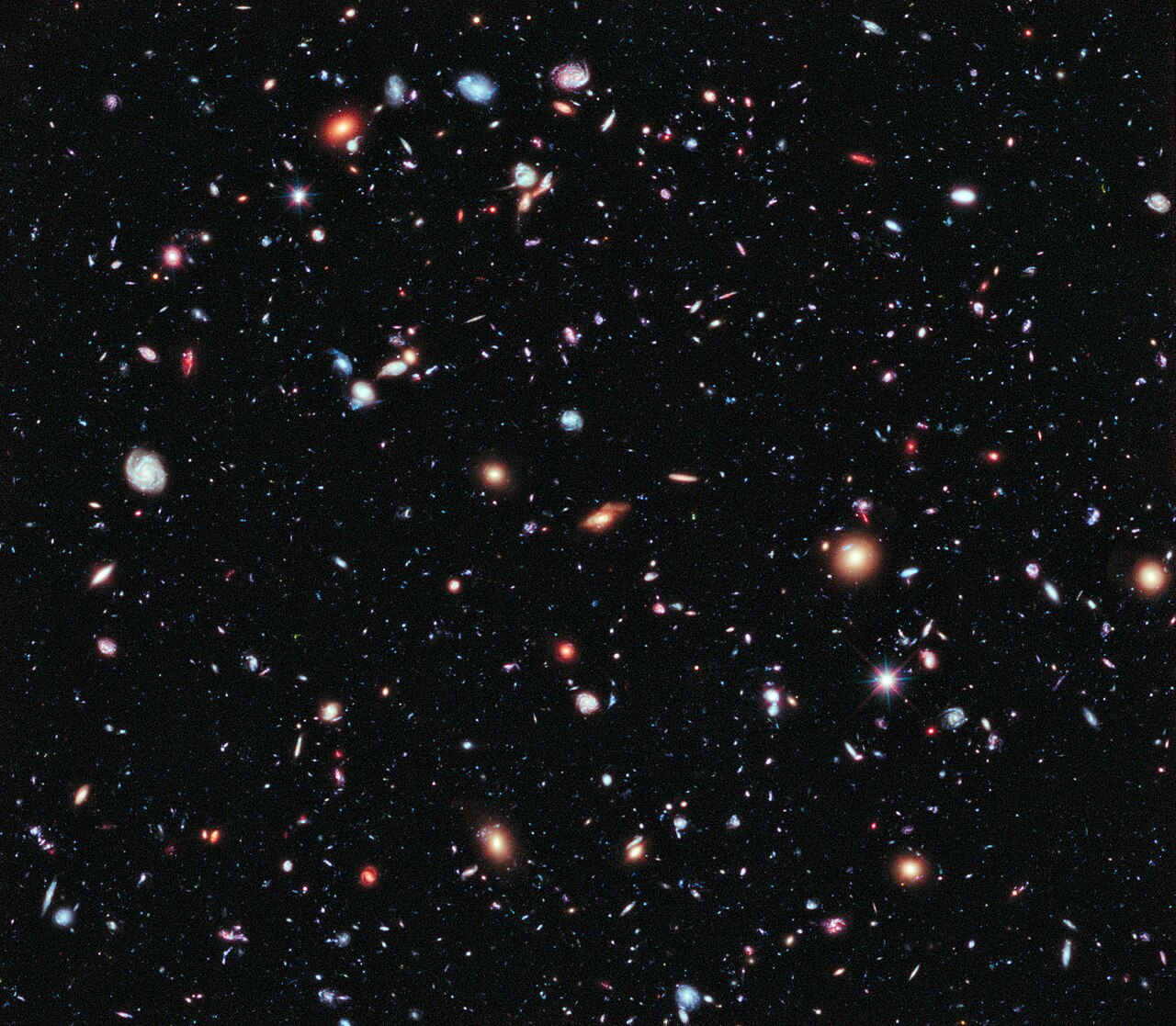
Galaxies are incredibly cool! 🌠They come in different shapes like spirals, ellipses, and irregular forms. The Milky Way, our home galaxy, is a spiral and is about 100,000 light-years wide! 🌌There are many other galaxies too, like the Andromeda Galaxy, which is part of our Local Group of galaxies. Outside the Milky Way, scientists have spotted many galactic spheres, meaning galaxies are grouped in clusters. 💫Each galaxy can have billions of stars, fascinating planets, and even black holes! Studying galaxies helps us understand how stars are born and how they live and die. Exploring galaxies is like opening a treasure chest full of cosmic wonders! 🗝️
Go deeper🧩 The Structure Of The Universe
The universe is like a giant puzzle! 🧩It has a structure made up of galaxies, which are huge collections of stars, gas, and dust, held together by gravity. There are billions of galaxies in the universe! 🌌Our galaxy is called the Milky Way and has about 100 billion stars! ✨Galaxies are grouped into clusters and superclusters, which make giant “bubbles” in the cosmic web. 🌐The space between galaxies is called the void, and it can be really empty. Understanding how this cosmic structure works helps scientists learn more about where we live! It’s a giant, beautiful mystery waiting to be explored! 🔍
Go deeper🔭 Cosmic Microwave Background Radiation
Imagine the universe having a cozy blanket! 🔭That blanket is called Cosmic Microwave Background Radiation (CMB). This radiation is the leftover heat from the Big Bang! ✨It’s like the universe’s baby picture. Scientists discovered CMB in 1965, and it helps us learn about the early universe. The temperature of CMB is only about 2.7 degrees above absolute zero! ❄️ It fills the entire universe and is found everywhere we look. By studying CMB, scientists can understand how the universe was formed and how it has changed since then. It’s a fascinating way to peek into the past! 📸
Go deeper🔭 Current Research And Future Discoveries
Scientists are always exploring space! 🔭They use telescopes like the Hubble Space Telescope and the James Webb Space Telescope to look deeper into the universe than ever before! 🌌They want to find new planets, understand black holes, and learn more about dark matter and dark energy!
Exciting discoveries are happening daily! 🎉Scientists are even sending robots to Mars to learn if life ever existed there! Future missions might include traveling to distant planets and observing other galaxies! 🌠Every new discovery can help answer huge questions about our universe and our place in it. With so many adventures ahead, the future of cosmology is bright and full of possibilities! 🤩🚀
Go deeperExciting discoveries are happening daily! 🎉Scientists are even sending robots to Mars to learn if life ever existed there! Future missions might include traveling to distant planets and observing other galaxies! 🌠Every new discovery can help answer huge questions about our universe and our place in it. With so many adventures ahead, the future of cosmology is bright and full of possibilities! 🤩🚀