Common Redpoll Facts For Kids
The common redpoll is a small, sociable finch known for its striking plumage and ability to thrive in cold climates.
Select reading age

Common Redpoll Facts For Kids
Videos & Quizzesincluded
About this topic
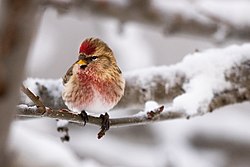
The Common Redpoll is a small, cheerful bird found in the northern parts of North America and parts of Europe. 🌍It measures about 4.5 to 5.5 inches long and has a lovely brown streaky body with a splash of red on its head, hence the name "redpoll." These birds are known for their cheerful chirping and often travel in flocks, making them fun to watch! They're very active and can be seen flitting around trees and shrubs in search of food. Redpolls are like little acrobats, hanging upside down to reach seeds! 🎶
Explore with ChatDinoKey Points
Here are some fun facts about Common Redpolls for you!
Common Redpolls don't migrate like many other birds.
Good news!
During summer, Common Redpolls build their nests in tree branches or shrubs, often in high locations.
The Common Redpoll is a favorite among birdwatchers and nature lovers due to its charming nature and beautiful song!
Common Redpolls love cold places and can be found in areas like Canada, Alaska, and the northern parts of the U.S.
Common Redpolls are very small birds, weighing only about 0.5 to 0.7 ounces!
These birds primarily eat seeds, especially from birch, willow, and alder trees.
Photos of Common Redpoll


Common Redpoll — photo 2
Common Redpoll — photo 3

Common Redpoll — photo 4

Common Redpoll — photo 5
🌟 Fun Facts
Here are some fun facts about Common Redpolls for you! 🌟Did you know that they can survive in super cold temperatures? They have special feathers that keep them warm! These little birds have been observed "singing" to each other, making lovely melodies! 🎶Lastly, when they find a good place to eat, they often share with their friends. It's all about sharing in the world of redpolls! Keep your eyes peeled, and you might spot one on a snowy day! 🥰
Go deeper☃️ Migration Patterns
Common Redpolls don't migrate like many other birds. Instead, they base their movement on food availability! ☃️ In winter, they may travel south if the seeds in their northern habitats run low. They like to stay together in flocks, making their journey more fun and safe! If you’re in a cold region, keep an eye out; you might see them hopping around in search of food or searching for a cozy place to stay! The snowy landscapes often become their playground! ❄️
Go deeper🎉 Conservation Status
Good news! The Common Redpoll is not currently considered endangered. 🎉However, like many birds, they face threats from climate change and habitat loss. Protecting their habitats and planting trees helps provide shelter and food for them. Bird watchers actively participate in helping to protect these delightful birds. You can help by keeping your backyard bird-friendly with feeders stocked with seeds! 🌱Every little effort counts to keep them flying high and chirping happily!
Go deeper🏠 Breeding And Nesting
During summer, Common Redpolls build their nests in tree branches or shrubs, often in high locations. 🏠The female bird chooses the best spot and builds her nest using twigs, grass, and feathers to keep the eggs safe and warm. She typically lays about 2 to 5 eggs that are a lovely pale color with tiny spots. After about 10 to 12 days, the eggs hatch, and both parents work hard to feed the babies. The baby redpolls grow quickly and learn to fly in just a few weeks! 🐦💨
Go deeper🎵 Cultural Significance
The Common Redpoll is a favorite among birdwatchers and nature lovers due to its charming nature and beautiful song! 🎵In some cultures, these birds symbolize good luck, as they often bring joy to the winter months when many other birds are absent. They remind us of the beauty of nature and the importance of creating safe homes for wildlife. In many northern communities, children look forward to seeing these colorful birds as they play outdoors in the snow! 🥳
Go deeper❄️ Habitat And Distribution
Common Redpolls love cold places and can be found in areas like Canada, Alaska, and the northern parts of the U.S. ❄️ In winter, they sometimes come down south to find food. They enjoy living in open woodlands and areas with lots of birch trees since they love eating birch seeds. 🌳This bird is known for being social and often hangs out in large groups, which helps them stay safe from predators. You may find them in parks or near gardens during the colder months!
Go deeper🐦 Physical Characteristics
Common Redpolls are very small birds, weighing only about 0.5 to 0.7 ounces! 🐦Their feathers are mostly brown with lighter streaks, and they have a cute little red cap on their heads. Males have a rosy blush on their chests, while females have a more subtle coloration. They also have a short, conical bill that helps them crack open seeds. With their round bodies and small eyes, they are really adorable! Some people say they look like fluffy little balls of feathers! 🥰
Go deeper🌰 Diet And Feeding Behavior
These birds primarily eat seeds, especially from birch, willow, and alder trees. 🌰They have excellent memory and can store seeds in cracks of the bark for later! Sometimes, they will also munch on insects, especially when feeding their young. Common Redpolls are very active and often feed together in flocks. They look like they are playing while they hop around and search for their favorite seeds. That’s why you’ll often hear their cheerful chirps while they snack! 🐥
Go deeper