Cobol Facts For Kids
COBOL is a high-level programming language primarily used in business, finance, and administrative systems for companies and governments.
Select reading age
Cobol Facts For Kids
Videos & Quizzesincluded
About this topic
COBOL stands for Common Business-Oriented Language! 🌟It was created in 1959 to help businesses keep track of their information. Think of it as a special language that computers use to help people with tasks like banking, payroll, and inventory. 🎉Over the years, COBOL has helped millions of people work more efficiently, and today, many banks and insurance companies still use it! Some of the best-known COBOL programs are used in places like the United States and Europe. It’s like a superhero for managing data! 🦸♂️
Explore with ChatDinoKey Points
What does the future hold for COBOL?
COBOL was born in 1959 during a meeting of computer experts!
Let’s look at how COBOL code is structured!
COBOL is used in lots of different places!
COBOL is special for many reasons!
Even though COBOL is over 60 years old, it’s still very important today!
When programming in COBOL, it's essential to follow best practices!
To write and run COBOL programs, we need special tools called compilers!
Photos of Cobol

COBOL program deck of punched cards, from the 1970s

🌠 Future Of Cobol
What does the future hold for COBOL? 🌠Even with new programming languages like Python and Java, COBOL is still sticking around! Many businesses are investing in COBOL training for new programmers. Also, there’s a big demand for COBOL programmers to help manage old systems! ⚡With technology changing fast, COBOL will continue to be important as companies modernize their systems. Young programmers can learn COBOL to help keep important data safe and make sure it’s running smoothly for years to come! 💡So, who knows? You could be the next COBOL expert! 👩💻
Go deeper🖥️ History Of Cobol
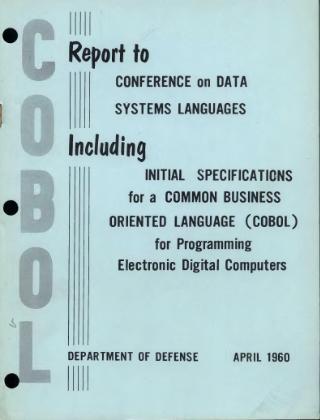
COBOL was born in 1959 during a meeting of computer experts! 🖥️ The meeting took place in the United States, and many companies wanted a common way to program their computers. One of the key figures behind COBOL was Grace Hopper, a brilliant woman who helped create early computer languages. 👩💻 COBOL grew quickly and was used in big mainframe computers during the 1960s and 1970s. Over the years, many updates were made to make it even better! Today, COBOL far exceeds 60 years of being useful. Sometimes old languages are still the best! 📜
Go deeper🧩 Syntax And Structure
Let’s look at how COBOL code is structured! 🧩COBOL uses a specific format with four main divisions: Identification, Environment, Data, and Procedure. Each division has its own purpose. For example, the Identification Division tells the computer about the program, and the Procedure Division contains the steps the program will follow. 🌈Also, COBOL uses indentation and periods (.) to show the end of a sentence. This makes it easier for computers to understand. Think of it like following a recipe to bake a cake! 🎂
Go deeper🌍 Applications Of Cobol
COBOL is used in lots of different places! 🌍It's mainly found in banks, insurance companies, and government offices where they handle lots of data. For instance, payroll systems that pay employees and accounting systems that manage finances often use COBOL. Many social security programs also rely on COBOL. 📑Because COBOL is great with numbers, it helps businesses keep track of all their products, customers, and sales. Imagine every time you buy a toy, COBOL helps keep track of that sale! 🧸
Go deeper🛠️ Key Features Of Cobol
COBOL is special for many reasons! 🛠️ First, it uses English-like words that make it easier for people to read and understand code. For example, we use words like "ADD" and "SUBTRACT." It also has strong tools for handling numbers, making it perfect for business tasks! Additionally, COBOL can work well with large amounts of data—great for companies that need to store lots of information! 📊Another cool feature is that COBOL can run on different types of computers. This helps businesses save money! 💰
Go deeper✅ Cobol In Modern Computing
Even though COBOL is over 60 years old, it’s still very important today! ✅Many big banks and governments use COBOL programs every day to manage their data. For example, in 2020, a lot of world data processing was done with COBOL. 📈It’s estimated that about 80% of all financial transactions in the world are managed by COBOL! This means if you've ever used a bank card or sent money online, COBOL might be behind the scenes helping your transaction happen! 💳
Go deeper📝 Best Practices For Cobol Programming
When programming in COBOL, it's essential to follow best practices! 📝Here are some tips: First, always write comments in your code so others (or your future self!) can understand what you did. Secondly, use clear naming for variables, like "totalSales" instead of "a." 📈 Lastly, always test your programs before using them to make sure they work right. Remember, just like doing your homework, checking your work pays off! By practicing these tips, you’ll become a COBOL superstar! 🌟
Go deeper⚙️ Cobol Compilers And Development Tools
To write and run COBOL programs, we need special tools called compilers! ⚙️ Think of a compiler as a translator that helps the computer understand COBOL code. Some popular COBOL compilers include Micro Focus and IBM Enterprise COBOL. These help programmers turn their code into working applications. 💻There are also development tools, like code editors, that make it easier to write COBOL code. Some of them have helpful features like highlighting mistakes or suggesting fixes—like a helpful teacher guiding you while you write! 😊
Go deeper