Clyde Tombaugh Facts For Kids
Clyde William Tombaugh was an influential American astronomer best known for discovering the dwarf planet Pluto and contributing significantly to the field of astronomy.
Select reading age
Clyde Tombaugh Facts For Kids
Videos & Quizzesincluded
About this topic
Clyde William Tombaugh was a famous American astronomer who discovered Pluto! 🪐He was born on February 4, 1906, in Streator, Illinois. Clyde loved looking at the stars and dreaming about space when he was a kid. After years of hard work, he found Pluto in 1930 while working at the Lowell Observatory in Arizona. His discovery changed how we think about our solar system! 🌌Clyde became well-known at just 24 years old and is celebrated for his important contributions to astronomy. Let's learn more about his life and the amazing things he did!
Explore with ChatDinoKey Points
Clyde Tombaugh received many awards for his work in astronomy.
In March 1930, Clyde Tombaugh officially announced that he had discovered Pluto!
Clyde started working at the Lowell Observatory in Flagstaff, Arizona, in 1929.
Clyde Tombaugh used a special method called "comparative astrophotography" to find Pluto.
Clyde grew up on a farm in Illinois, where he enjoyed nature and exploring the night sky.
Clyde Tombaugh had many interests besides astronomy!
After discovering Pluto, Clyde Tombaugh continued his work in astronomy.
Clyde Tombaugh's discovery of Pluto changed our understanding of the solar system.
In addition to finding Pluto, Clyde Tombaugh also studied Mars!
Clyde Tombaugh's discovery of Pluto has inspired many cultural references!
Photos of Clyde Tombaugh

Tombaugh created his photographic plates using this 13-inch (330 mm) astrograph.

Pluto

Tombaugh compared his photographic plates using this blink comparator.
🏆 Awards And Honors
Clyde Tombaugh received many awards for his work in astronomy. 🏆One of the most notable was the John F. Kennedy Memorial Award in 1970. Clyde's name is also honored through various locations, like Pluto’s moon called Charon, and asteroid 2064 Tombaugh! 🌕He was dedicated to science education and received recognition for sharing knowledge with others. In 1994, the International Astronomical Union named a crater on the Moon "Tombaugh" in tribute to his groundbreaking work. These honors celebrate his contributions to astronomy and inspire future generations of scientists!
Go deeper🚀 Discovery Of Pluto
In March 1930, Clyde Tombaugh officially announced that he had discovered Pluto! 🚀He compared photographs and noticed a tiny speck that moved against the starry background. Scientists were excited because Pluto was the first new planet discovered in 76 years! At first, people thought Pluto was a large planet, but later studies showed it is much smaller than Earth. 🌍Clyde named the planet Pluto after the Roman god of the underworld. His hard work and determination helped to change the way we see our solar system forever!
Go deeper🌟 Career And Discoveries
Clyde started working at the Lowell Observatory in Flagstaff, Arizona, in 1929. 🌟He was tasked with finding a mysterious planet called "Planet X," which many scientists believed existed. Using a special technique of comparing photographs taken on different nights, Clyde worked tirelessly. In February 1930, he discovered Pluto! 🎉This was a big moment in astronomy as it added a new planet to our solar system. Clyde’s discovery taught people more about planets and sparked interest in exploring space even further!
Go deeper📷 Astronomical Techniques
Clyde Tombaugh used a special method called "comparative astrophotography" to find Pluto. 📷This technique involved taking pictures of the same area of the sky on different nights and comparing them. By looking carefully, he could spot objects that moved between the photos. Clyde also used a “blink comparator,” a device that allowed him to switch quickly between images to find the moving planet. 🪐His methods were groundbreaking and helped other astronomers in their search for objects beyond our planet. Today, telescopes and technology have improved, but Clyde's techniques are still an important part of astronomy!
Go deeper🌠 Early Life And Education
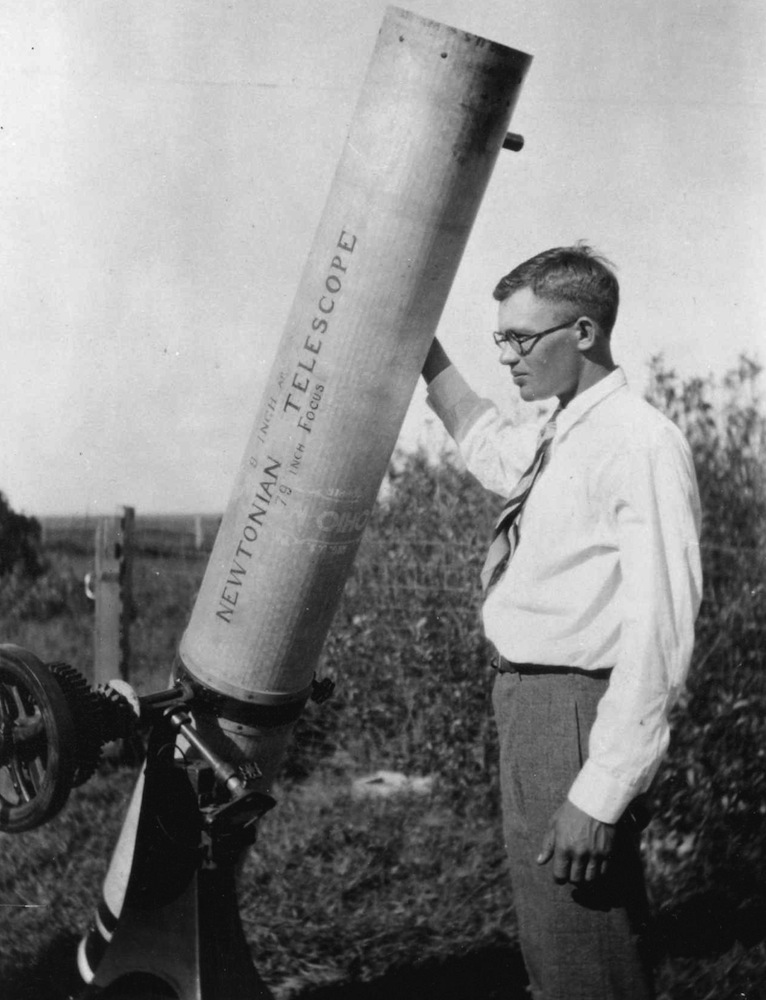
Clyde grew up on a farm in Illinois, where he enjoyed nature and exploring the night sky. 🌠His parents encouraged his curiosity, and Clyde studied hard in school. He loved reading about science and astronomy. At the age of 15, he built his own telescope to look at stars and planets! 📚After high school, he worked at a different observatory and learned more about astronomy, which prepared him to work with the famous astronomer Percival Lowell. His passion for space guided him on his journey to becoming a great astronomer!
Go deeper🌠 Personal Life And Interests
Clyde Tombaugh had many interests besides astronomy! 🌠He loved gardening and enjoyed being outdoors. Clyde also had a passion for music and played the piano. 🎹He advocated for science education, believing it was important for everyone to learn about the universe. He often shared stories of his interests with his family and friends, making him a beloved community member. Clyde married Patricia S. Tombaugh in 1935, and together they had two children. Family meant a lot to Clyde, and he always encouraged them to pursue their dreams!
Go deeper🌌 Later Career And Contributions
After discovering Pluto, Clyde Tombaugh continued his work in astronomy. 🌌He researched other celestial objects and helped map the Milky Way galaxy! He also taught astronomy at several universities, sharing his love for space with students. 📘Clyde was passionate about making science accessible to everyone. He worked on projects about meteors and helped to advance our understanding of the universe. His eagerness to teach and share knowledge inspired many young astronomers. Even after Pluto's status was changed, Clyde's work remains crucial in the field of astronomy!
Go deeper🌍 Legacy And Impact On Astronomy
Clyde Tombaugh's discovery of Pluto changed our understanding of the solar system. 🌍Even though Pluto is no longer classified as a planet, Clyde's work made people curious about exploring space. He showed that patience and dedication can lead to amazing discoveries! 🚀His impact continues as new technologies help us explore the universe even further. New planets and celestial objects are found regularly, but the excitement Clyde created helps inspire scientists today. He is remembered as a pioneer, and his love for astronomy still ignites interest in the stars!
Go deeper🪐 Clyde Tombaugh's Research On Mars
In addition to finding Pluto, Clyde Tombaugh also studied Mars! 🪐He made observations of the Red Planet, looking for details about its surface. Clyde noticed changes in Mars' features, such as dark spots that appeared and disappeared. 📸He believed these changes might be linked to Martian seasons. His work contributed to our understanding of Mars, which is now often explored by rovers and spacecraft. Clyde paved the way for future research on Mars, including missions to study its climate and search for signs of life. His work continues to influence Mars exploration today!
Go deeper📺 Cultural References And Influence
Clyde Tombaugh's discovery of Pluto has inspired many cultural references! 📺Pluto often appears in books, movies, and even cartoons. For example, Disney's Mickey Mouse has a dog named Pluto! 🐕People remember Clyde for his important find and his passion for astronomy. Schools, documentaries, and websites honor Clyde's achievements, teaching kids about space and science. As a result, many children dream of becoming scientists, just like Clyde. His legacy encourages a sense of wonder about the universe, showing that one person's curiosity can lead to remarkable discoveries! 🌠
Go deeper