Claude Bernard Facts For Kids
Claude Bernard was a significant French physiologist who made foundational contributions to the science of physiology and medical research, particularly in experimental medicine.
Select reading age
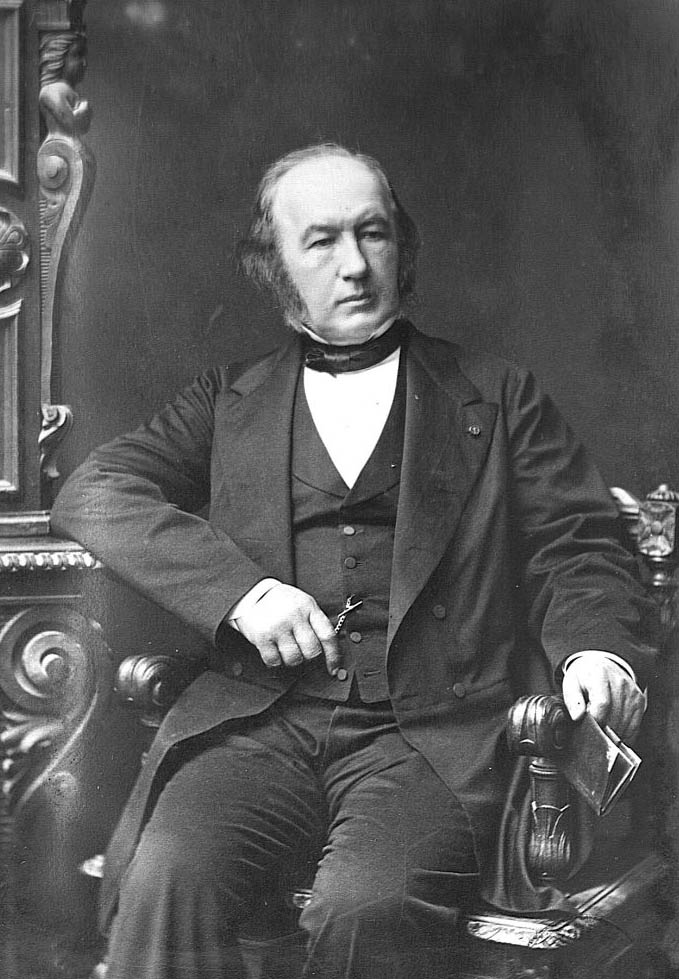
Claude Bernard Facts For Kids
Videos & Quizzesincluded
About this topic
Claude Bernard was a famous French scientist born on July 12, 1813, in the city of St. Julien, France. 🎉He is known as the “father of modern physiology,” which means he studied how living things work! Bernard made many important discoveries about the human body and how it stays healthy. 🧠💪 He was curious and loved to explore new ideas, which helped him create experiments that taught the world about life.
Explore with ChatDinoQuick Facts
Key Points
Claude Bernard passed away on February 10, 1878, but his legacy lives on!
Although Claude Bernard was not famous in his lifetime, his work gained recognition later on.
Claude grew up in a small village, and his family was not very wealthy.
Claude Bernard believed in using experiments to learn about science.
One of Bernard’s greatest discoveries was about the liver!
Bernard introduced the idea of “homeostasis,” which is how living things keep their insides stable!
Bernard's work changed medicine forever!
Claude Bernard is mentioned in science books and documentaries!
Photos of Claude Bernard

Memorial plaque in Paris marking the site of Claude Bernard's laboratory from 1847 until his death in 1878.

Portrait by Marcel Mangin

Oil painting depicting Bernard with his pupils

Claude Bernard
🌿 Later Life And Legacy
Claude Bernard passed away on February 10, 1878, but his legacy lives on! 🌿He inspired many scientists and doctors who followed him. Schools and universities around the world continue to teach his discoveries. Today, science is still influenced by his ideas about how living things work, and many people remain grateful for his contributions to health and medicine! 🏆
Go deeper🥇 Awards And Recognitions
Although Claude Bernard was not famous in his lifetime, his work gained recognition later on. 🥇He held many prestigious positions in universities and was loved by students! The French government honored him for his contributions. His work continues to be celebrated in science and medicine, and many organizations recognize him as a pioneering scientist who made a big difference in our understanding of health. 🎖️
Go deeper💸 Early Life And Education
Claude grew up in a small village, and his family was not very wealthy. 💸He loved reading and learning from a young age. When he was 18, he moved to Paris to study medicine. There, he learned about anatomy, which is the study of the body’s structure. 📚Bernard faced many challenges, but he never gave up. His hard work paid off, and he became a well-respected doctor and a great scientist!
Go deeper🧪 Experimental Methodology
Claude Bernard believed in using experiments to learn about science. 🧪🔬 He came up with new techniques to test his ideas. Instead of just guessing, he tried things out to see what happened. For instance, he experimented with animals to study how their bodies worked. 🐭This method of testing became very important in science. Today, scientists still use experiments to find answers to new questions!
Go deeper🏥 Scientific Contributions
One of Bernard’s greatest discoveries was about the liver! 🏥He found that the liver helps control sugar in our blood. Thanks to him, we learn that our bodies have a way of keeping balanced levels of things like sugar, which is super important for staying healthy. ⚖️ He also studied how the nervous system works and how it controls our organs. His experiments changed scientists’ understanding of biology and medicine!
Go deeper🌡️ Physiology And Homeostasis
Bernard introduced the idea of “homeostasis,” which is how living things keep their insides stable! 🌡️ For example, our bodies regulate temperature. When it's cold outside, we shiver to stay warm. ❄️ Bernard realized that the body works like a well-tuned machine. If something goes wrong, our body uses different systems to fix the problem. This knowledge is useful today as doctors treat illnesses and help people stay healthy.
Go deeper🩺 Influence On Modern Medicine
Bernard's work changed medicine forever! 🩺He taught doctors about the importance of experimentation, which helped them discover new treatments and medications. His research led to better understanding of diseases and how to cure them. 💊Today, many medical practices, like how we test new medicines, are based on what Bernard taught us. Many doctors and scientists still study his work to protect our health!
Go deeper📖 Claude Bernard In Popular Culture
Claude Bernard is mentioned in science books and documentaries! 📖🎬 Many students learn about him in science classes. Some medical schools even name their awards after him to honor his legacy! His contributions to the study of physiology are celebrated every year on special days for scientists. 🎉His life story teaches us that curiosity and hard work can lead to amazing discoveries!
Go deeper