Chinese Civil War Facts For Kids
The Chinese Civil War was a significant conflict between the Kuomintang (KMT) and the Chinese Communist Party (CCP) from 1927 to 1949, ending with a communist victory and the establishment of the People's Republic of China.
Select reading age
Chinese Civil War Facts For Kids
Videos & Quizzesincluded
About this topic
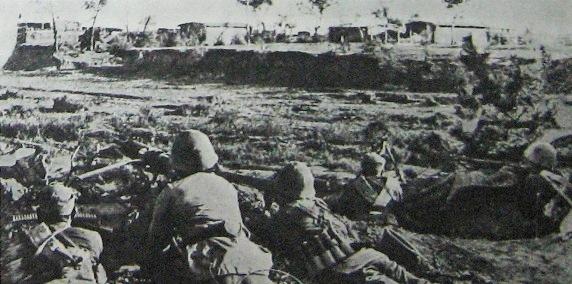
The Chinese Civil War was a big fight between two groups in China: the Kuomintang (pronounced "Kwo-ming-tong") and the Communist Party. This fight started on August 1, 1927, and lasted for over 22 years! 🚀The Kuomintang were led by a man named Chiang Kai-shek. On the other side, the Communist Party, led by Mao Zedong, wanted different ideas for how China should be run. 🏯The war ended on December 7, 1949, when the Communists won, and they made their own government in mainland China. This war changed China's history forever! 🌏
Explore with ChatDinoKey Points
Propaganda played an important role during the Chinese Civil War!
After the Chinese Civil War, many changes took place in China.
Many important battles happened during the Chinese Civil War.
The Chinese Civil War had a huge effect on China's people and their lives!
The Chinese Civil War had many causes!
The Chinese Civil War officially ended on December 7, 1949.
The Chinese Civil War highlighted two different ideologies: nationalism and communism.
During the Chinese Civil War, other countries got involved too!
The Chinese Civil War had a lasting impact on culture too!
In the Chinese Civil War, two groups fought against each other.
Photos of Chinese Civil War

Chinese Civil War — photo 1

上黨戰役中,國民革命軍第十八集團軍圍攻長治

Chinese Civil War — photo 3

Chinese Civil War — photo 4

Chinese Civil War — photo 5

Chinese Civil War — photo 6

Proclamation of the People's Republic of China
Chinese Civil War — photo 8

Chinese Civil War — photo 9
📺 Role Of Propaganda
Propaganda played an important role during the Chinese Civil War! 📺This means spreading information to influence people's opinions. The Kuomintang and the Communist Party used posters, radio broadcasts, and newspapers to share their ideas and tell stories. 📰For example, the Communists shared stories of brave soldiers and promised to help the poor. This encouraged support for their cause! 🌟The Kuomintang also shared their successes and made their leaders look strong. Propaganda changed how people viewed each side and helped sway public opinion before battles began!
Go deeper🌈 Aftermath And Legacy
After the Chinese Civil War, many changes took place in China. 🌈The Communist Party began implementing many new policies. People were given land, and industries were nationalized, meaning the government took control of businesses. 🏭However, not everyone was happy with the changes. Many folks missed the old government. In Taiwan, the Kuomintang still ruled and held onto their beliefs. Over time, the world started recognizing the People's Republic of China, and it became an important player on the global stage, forever changing how countries viewed China! 🌍
Go deeper⚔️ Key Battles And Campaigns
Many important battles happened during the Chinese Civil War. One notable battle was the Battle of Nanchang in 1927, where the Communist forces showed their power! ⚔️ Another significant event was the Long March, which took place in 1934. 🚶♂️ The Communists walked a long journey of about 6,000 miles to escape their enemies. This march helped them stay strong and gather more support! 🌄There were many other battles like the Huaihai Campaign and the Battle of the Yangtze River, each playing a huge role in determining the war's outcome.
Go deeper💔 Social And Economic Impact
The Chinese Civil War had a huge effect on China's people and their lives! 💔Many families were separated, and lots of towns were destroyed during the fighting. People faced food shortages and difficult living conditions. 🌾The Communists wanted to improve agricultural practices and help the poor after they won. They introduced land reforms, giving land to farmers. 🌱This led to a change in how people lived and worked. The war made everyone very aware of social issues, changing people's thoughts about government and their role in society!
Go deeper📜 Causes Of The Chinese Civil War
The Chinese Civil War had many causes! One main reason was that people in China wanted change. 📜After many years of problems with leaders and foreign countries, many Chinese were unhappy. The Kuomintang wanted a strong and modern government, while the Communist Party wanted to help the poor and improve their lives. 💰In 1926, the Kuomintang were in control, but they didn't help everyone equally. This made people angry and they began to support the Communists. As ideas clashed, tensions rose, leading to this intense conflict! 🔥
Go deeper🏁 The End Of The Chinese Civil War
The Chinese Civil War officially ended on December 7, 1949. 🏁The Communist Party, led by Mao Zedong, declared victory after many years of fighting! They established the People's Republic of China, which was a new government focused on communism. 🇨🇳 The Kuomintang, meanwhile, retreated to Taiwan, where they continued to operate their own government. This marked a significant turning point in history, as China would now follow different rules and ideas about how to run the country! The end of the war changed China forever! 🔑
Go deeper🌍 Comparative Analysis Of Ideologies
The Chinese Civil War highlighted two different ideologies: nationalism and communism. 🌍The Kuomintang believed in a strong, centralized government that supported private businesses and individual freedoms. They wanted to modernize China and make it more powerful internationally. ✈️ On the other hand, the Communist Party focused on sharing wealth and helping the poor. They thought everyone should have equal access to resources! 💰These differing views caused major disagreements and conflict, ultimately shaping the future of China. Understanding these ideologies helps us learn about China today and how its history influences its choices! 📖
Go deeper🌍 Foreign Involvement In The Conflict
During the Chinese Civil War, other countries got involved too! 🌍The United States supported the Kuomintang with money and weapons. They believed in Chiang Kai-shek's plans for a strong China. Meanwhile, the Soviet Union helped the Communist Party, providing them with resources and ideas. 💡This foreign support made the war even more complicated, as different countries favored different sides! Both groups worked hard to gain allies from around the world, hoping to secure victory in China! 🌐
Go deeper🎨 Cultural Influences Of The Civil War
The Chinese Civil War had a lasting impact on culture too! 🎨After the war, new ideas emerged, leading to fresh art, literature, and music in China. Writers and artists had to adapt their work to reflect the new Communist government. 📚Movies began telling stories about the brave soldiers and everyday life under communism. Even traditional festivals were celebrated in new ways! 🐉This war influenced how people viewed their heritage and how they expressed their feelings about the past, creating a rich tapestry of cultural change!
Go deeper💥 Major Players: Kuomintang Vs. Communist Party
In the Chinese Civil War, two groups fought against each other. 💥The Kuomintang was led by Chiang Kai-shek and was supported by many wealthy people. They wanted a government with strong control and modernization. 🌆The Communist Party, led by Mao Zedong, focused on helping the poor and making things better for farmers. 🌾They believed in sharing land and resources. This fight between the two groups was about who would run the country. The war lasted a long time because both sides were very determined to win! 🏅
Go deeper