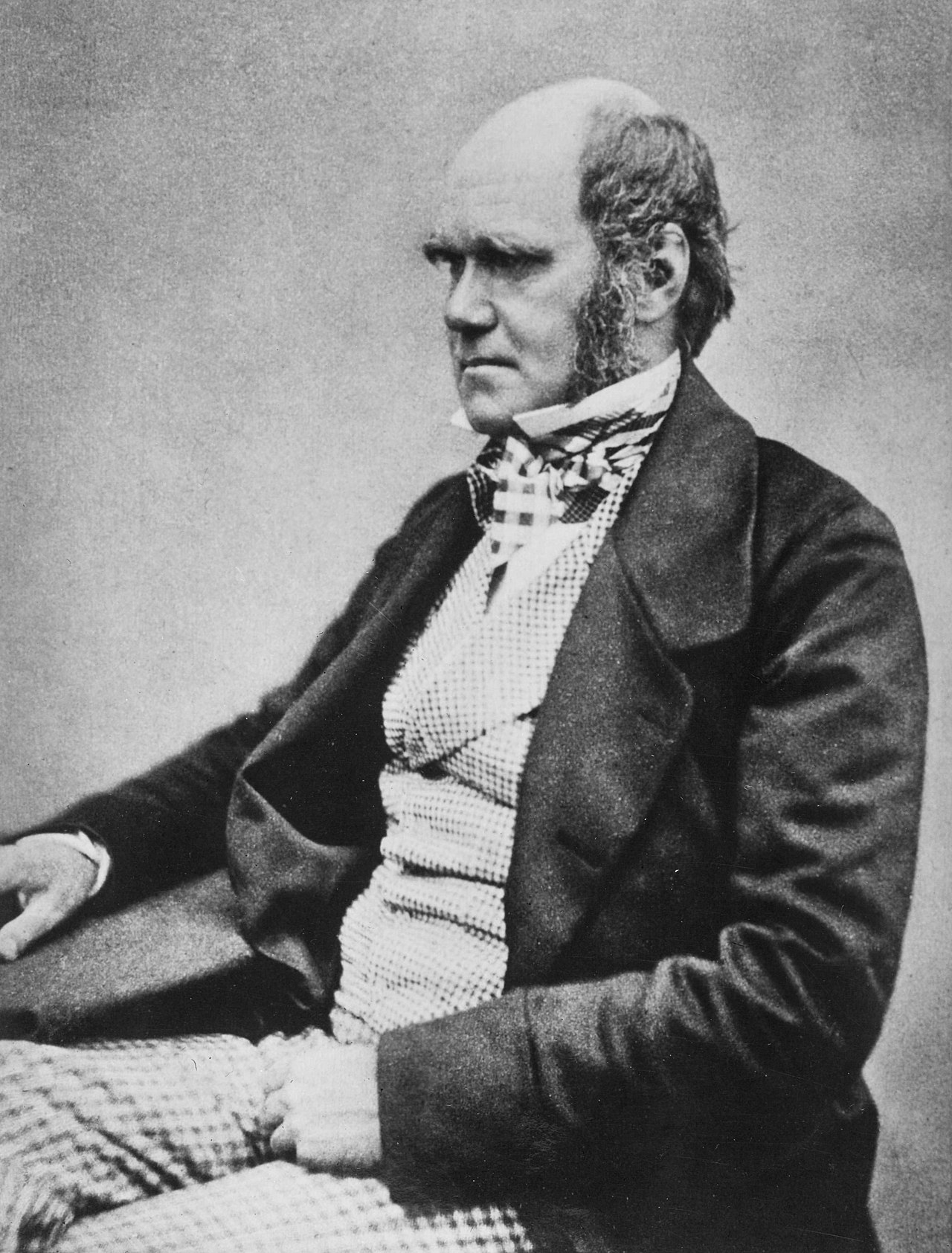
Charles Darwin was a British naturalist whose contributions to biology, particularly his theory of evolution by natural selection, revolutionized our understanding of life on Earth.
Set reading age
View for Kids
Easy to read and understand
View for Students
Clear, detailed explanations
View for Scholars
Deep dives and big ideas
Charles Darwin was a famous scientist who lived from 1809 to 1882 🇬🇧. He is best known for his theory of evolution, which explains how living things change over time. Darwin traveled the world, observing different animals and plants, and collected ideas that helped him understand how species adapt to their environment. One of his most important works is called "On the Origin of Species" (1859), where he explained how natural selection works. His discoveries have helped us learn about the amazing variety of life on Earth! 🌍
Charles Darwin published several important books during his life! 📖His most famous book is "On the Origin of Species," published in 1859. In it, he explained his theory of evolution through natural selection. He also wrote "The Descent of Man" in 1871, where he discussed human evolution and how humans are related to other primates like monkeys. Other works included "The Expression of the Emotions in Man and Animals" (1872) and "The Variation of Animals and Plants Under Domestication" (1868). These publications helped spread his groundbreaking ideas! ✍️
In 1831, when Charles was 22 years old, he set sail on a ship called the HMS Beagle 🚢. This journey lasted five years and took him to places like the Galápagos Islands and South America 🌎. While on the voyage, Darwin studied many unique plants and animals. He noticed how creatures on different islands were similar yet different from each other. For example, he saw finches with different beaks that fit their food sources. This gave him important clues about how species adapt to their environment over time! 🐦
Charles Darwin was born in Shrewsbury, England, on February 12, 1809 🎉. He grew up in a large family and loved nature as a child. Darwin was curious about plants and animals, often exploring the countryside. He attended Edinburgh University to study medicine but didn't like it much. Instead, he went to Christ's College, Cambridge, where he studied theology (the study of religion) and became friends with other curious thinkers. During this time, he developed his love for nature which led him to embark on great adventures! 🔎
Charles Darwin’s legacy continues today! 🌟He is often celebrated for his contributions to science. Many places honor him, like the Darwin Centre in London and the Galápagos Islands, where he made important observations. Every year on February 12, people celebrate "Darwin Day" to remember his birthday and his impact on science. Statues and museums around the world keep his memory alive, reminding us of his curiosity and discoveries that helped explain the wonders of life! 🏛️
Not everyone agreed with Charles Darwin’s ideas! 😲Some people felt upset because his theory of evolution challenged traditional beliefs about how life began. They thought living things were created in a special way. Some scientists questioned his ideas too, asking if he had enough evidence for natural selection. Despite the disagreements, as more evidence from fossils and genetics appeared, people started to accept Darwin’s theory more widely. Today, most scientists believe that evolution is a key part of understanding life on Earth! 🔬
Darwin's ideas are the foundation of modern biology! 🧬His theory of evolution through natural selection explains many things, from animal behavior to how diseases spread. Today, researchers use his ideas to study genetics, helping us understand how traits are passed down from parents to offspring. This knowledge has improved medicine, agriculture, and conservation. Scientists continue to explore evolutionary biology, making exciting discoveries that help us learn about our planet and the life it supports! 🌱
Darwin's ideas changed the way people think about life on Earth! 🌼Many scientists began to study evolution and how different species are connected. His work laid the groundwork for modern biology and changed fields like ecology and genetics. Darwin's ideas also had a social impact, challenging beliefs about creation and sparking discussions about human origins. Some people accepted his ideas right away, while others disagreed, leading to debates that continue today! 🗣️
After his voyage, Darwin began to develop his famous theory called natural selection. This idea says that living things with helpful traits are more likely to survive and have baby animals. 🌱For instance, a rabbit that is faster might escape predators more easily. Darwin thought this helps explain how species change over long periods of time. He spent years studying and collecting evidence before sharing his ideas with the world. In 1859, he published "On the Origin of Species," which made many people rethink how life on Earth developed! 📚
🌍 Charles Darwin developed the theory of evolution by natural selection.
📖 He published his groundbreaking book 'On the Origin of Species' in 1859.
🚢 Darwin embarked on a voyage around the world on HMS Beagle for five years.
🦜 He studied finches on the Galapagos Islands, which led to key insights about adaptation.
🔬 Darwin was a pioneer in the field of biology and his work laid the foundation for modern evolutionary studies.
👨👧👦 He was the fifth of six children in his family.
🎓 Darwin studied medicine at the University of Edinburgh but later switched to natural history.
⚗️ He maintained a lifelong interest in geology and collected numerous fossils.
🌱 Darwin introduced the concept of sexual selection in addition to natural selection.
🏆 His contributions have earned him recognition as one of the most influential scientists in history.


DIY is a creative community where kids draw, build, explore ideas, and share.
No credit card required