Caudipteryx Facts For Kids
Caudipteryx is a small theropod dinosaur known for its feathered body and role in the evolutionary transition from dinosaurs to birds.
Select reading age
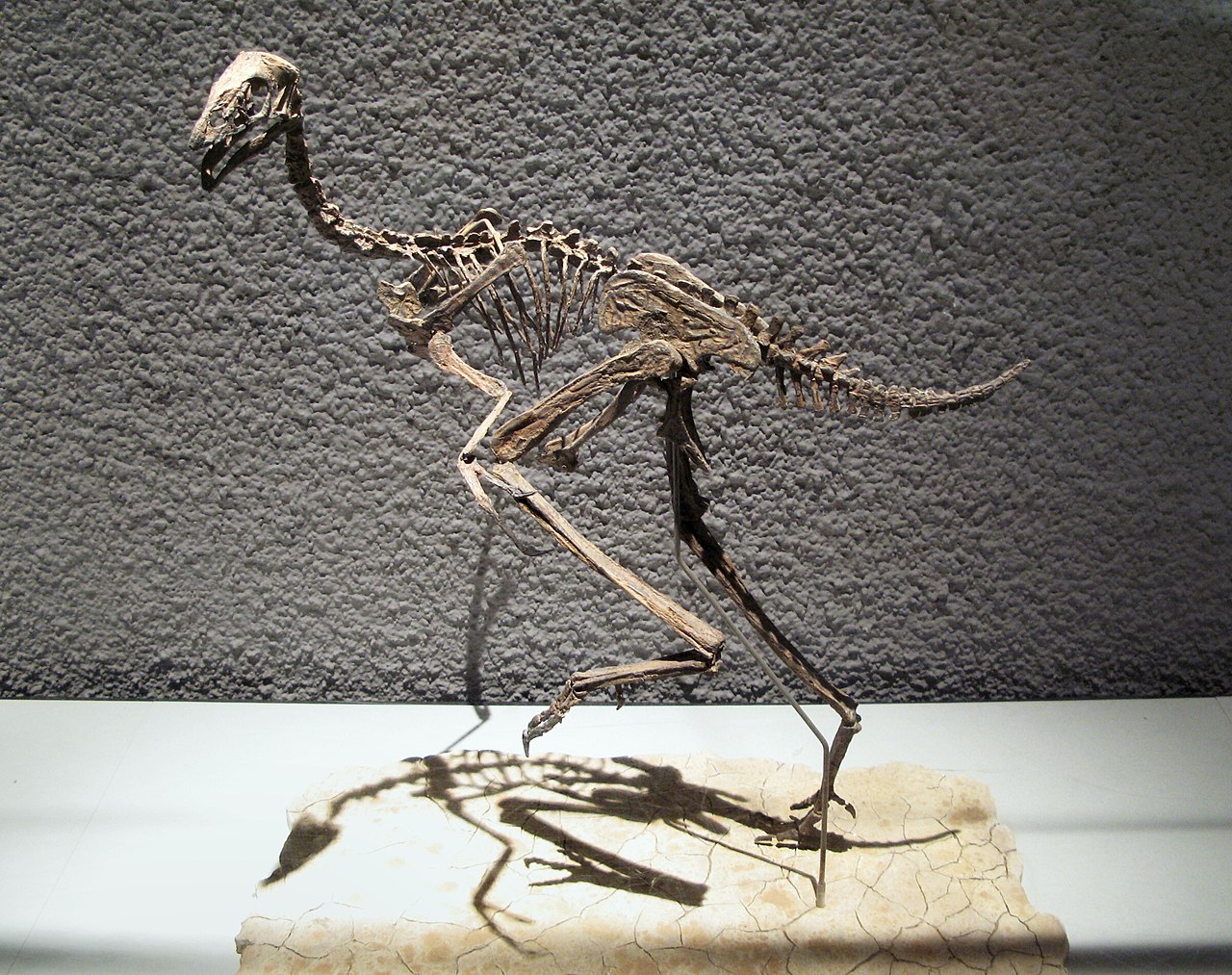
Caudipteryx Facts For Kids
Videos & Quizzesincluded
About this topic
Caudipteryx was a small dinosaur that lived around 125 million years ago during the Early Cretaceous period! 🌍It was about the size of a turkey, measuring about 1.5 meters (5 feet) long. Caudipteryx is special because it had feathers, making it one of the earliest feathered dinosaurs discovered. 🦖This dinosaur lived in what is now China and was a member of a group called theropods, which also includes larger dinosaurs like Tyrannosaurus rex. It may have been able to run quickly on two legs and used its feathers for balance or display, rather than flying.
Explore with ChatDinoKey Points
Caudipteryx lived in what is today northeastern China, specifically in a region known as Liaoning Province.
Caudipteryx had many unique features!
Caudipteryx was an omnivore, which means it ate both plants and animals!
Caudipteryx laid eggs like many other dinosaurs!
Caudipteryx is often compared to other dinosaurs, especially theropods and birds!
Scientists continue to find new fossils and learn more about Caudipteryx and its relatives!
The first Caudipteryx fossil was discovered in 1997 in China and has given scientists a lot of important information.
Caudipteryx isn't as famous as some bigger dinosaurs, but it has made a splash in popular culture!
Photos of Caudipteryx

Caudipteryx — photo 1

Caudipteryx — photo 2

Specimen STM4-3 and line diagram

Size comparison of Caudipteryx species to a human

Wing reconstruction and feather impressions of Caudipteryx sp. (a) and C. dongi (b)


Skeletal restorations of three specimens

Gastroliths in stomach region of C. zoui specimen BPV 085, National Museum of Natural Science
🗺️ Habitat And Distribution
Caudipteryx lived in what is today northeastern China, specifically in a region known as Liaoning Province. 🗺️ During the Early Cretaceous, this area was rich in forests and lakes, providing a great habitat for various dinosaurs and other creatures. Caudipteryx thrived in this environment, as it was a good place to find food and shelter from predators. The warm climate of that time allowed many types of plants to grow, making it a vibrant place to live! 🌳
Go deeper🌱 Physical Characteristics
Caudipteryx had many unique features! It had a small head with a beak-like mouth that helped it eat plants or small animals. 🌱Its body was covered with feathers, similar to birds, making it look fluffy and cute! The dinosaur was bipedal, meaning it walked on two legs, and it had long arms with feathers too. Its long tail helped with balance. Caudipteryx had strong legs, which enabled it to run fast, and it could also use its feathers to wave around, making it look extra stylish! 😄
Go deeper🍃 Diet And Feeding Behavior
Caudipteryx was an omnivore, which means it ate both plants and animals! 🍃🦗 It likely fed on small insects, seeds, and leaves. Its beak was good for picking tasty snacks off plants and catching insects. 🐦Caudipteryx would probably have foraged around on the ground or in low bushes, using its keen eyesight to spot food. This dinosaur's diet helped it survive and grow strong in its habitat filled with diverse vegetation and small creatures!
Go deeper🥚 Reproduction And Development
Caudipteryx laid eggs like many other dinosaurs! 🥚These eggs were similar to bird eggs, showcasing that they might have shared nesting habits. Scientists believe that once the eggs hatched, tiny Caudipteryx would rely on their parents for protection. As they grew, they probably learned how to find food and stay safe from predators. The growth process of Caudipteryx is crucial to understand how dinosaurs raised their young and how they may have behaved in their environment.
Go deeper🦖 Comparison With Other Dinosaurs
Caudipteryx is often compared to other dinosaurs, especially theropods and birds! 🦖🦅 While it had a dinosaur body, its feathers and lightweight structure link it closely to modern birds. Another notable dinosaur, Velociraptor, also had feathers and was a fast runner. However, Caudipteryx was smaller and less aggressive. Understanding these differences helps scientists learn about how important traits developed in dinosaurs and eventually led to the evolution of birds!
Go deeper🔍 Current Research And Discoveries
Scientists continue to find new fossils and learn more about Caudipteryx and its relatives! 🔍Recent discoveries focus on the details of their feathers and how they may have helped with survival. Researchers also study the environment in which they lived to better understand their behavior. As technology improves, paleontologists are using tools like advanced imaging to uncover even more details about this fascinating dinosaur! 🚀Every new finding brings us closer to understanding the world of dinosaurs and how they lived.
Go deeper🦴 Fossil Discovery And Significance
The first Caudipteryx fossil was discovered in 1997 in China and has given scientists a lot of important information. 🦴These well-preserved fossils show us the feathers and features of this dinosaur. Researchers found that Caudipteryx was closely related to modern birds! 🐦This discovery has changed our understanding of how dinosaurs evolved and adapted over millions of years, making Caudipteryx an essential piece of the puzzle in dinosaur studies!
Go deeper🎬 Cultural Impact And Representation
Caudipteryx isn't as famous as some bigger dinosaurs, but it has made a splash in popular culture! 🎬It appears in documentaries and books about dinosaurs, giving kids and adults a glimpse into what it might have looked like. ✨The discovery of feathered dinosaurs like Caudipteryx has inspired artists and filmmakers to create exciting stories, showing how they can fly and interact with other creatures. This helps show kids the amazing connection between dinosaurs and birds!
Go deeper