Cattle Facts For Kids
Cattle are large, domesticated mammals that are widely raised as livestock for meat, milk, and other products.
Select reading age
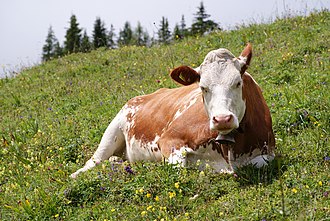
Cattle Facts For Kids
Videos & Quizzesincluded
About this topic
Cattle are large animals that belong to a group called bovids. They are often seen on farms and ranches, and they help humans in many ways! 🐄Cattle can weigh between 1,000 to 1,800 pounds (450-800 kg) and can grow to be about 4 to 5 feet tall at the shoulder. They come in different colors like brown, black, and white. Cattle are social creatures, which means they like to be with each other. They have been domesticated for over 10,000 years and play an important role in agriculture all around the world! 🌍
Explore with ChatDinoKey Points
Cattle have been part of human history for thousands of years!
Cattle can be found in many parts of the world!
Like all animals, cattle can get sick.
Cattle play a big role in agriculture!
Cattle are important in many cultures around the world!
Cattle are herbivores, which means they only eat plants!
Cattle are known for their sturdy bodies and strong legs.
Cattle are divided into two main types: Bos taurus (beef cattle) and Bos indicus (dairy cattle).
Cattle usually reach maturity between 1 and 2 years.
Cattle farming can have both positive and negative effects on the environment.
Photos of Cattle


Cattle — photo 3
![Bacteria dominate the rumen microbiome; composition can change substantially with diet.[12]](https://upload.wikimedia.org/wikipedia/commons/thumb/d/d8/Kibegwa_2023_rumen_microbiome.png/960px-Kibegwa_2023_rumen_microbiome.png)
Bacteria dominate the rumen microbiome; composition can change substantially with diet.[12]

A cow giving birth
![Individual cattle differ in personality traits such as fearfulness and sociability.[23]](https://upload.wikimedia.org/wikipedia/commons/thumb/9/9c/Lecorps_2018_calf_sociability.jpg/960px-Lecorps_2018_calf_sociability.jpg)
Individual cattle differ in personality traits such as fearfulness and sociability.[23]

Spectators in Oman watch a fight between bulls.

A Charolais bull grazing
![Ear postures of cows indicate emotional state and overall welfare.[51]](https://upload.wikimedia.org/wikipedia/commons/thumb/e/e3/CowPosture_20150612.jpg/960px-CowPosture_20150612.jpg)
Ear postures of cows indicate emotional state and overall welfare.[51]
🚜 Cattle In History
Cattle have been part of human history for thousands of years! 🚜The first domesticated cattle appeared around 10,500 years ago in the Middle East. Ancient civilizations, such as the Egyptians and Greeks, relied on cattle for food and labor. 🌾As civilizations grew, cattle traveled with people and became a vital part of societies worldwide. Today, they still hold historical significance, reminding us of our agricultural roots, and are celebrated in various traditional festivals and artworks around the globe. Cattle will always be important in our story!
Go deeper🌏 Habitat And Range
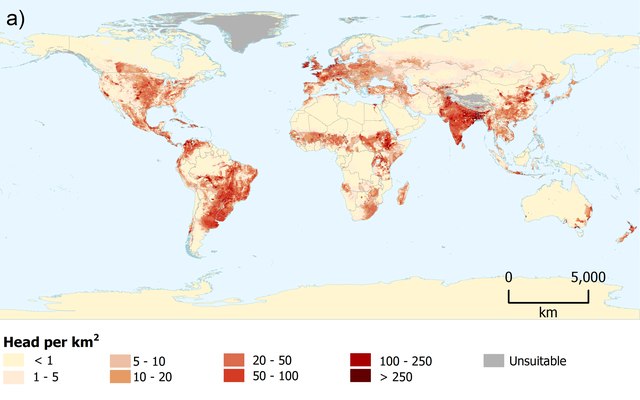
Cattle can be found in many parts of the world! 🌏They live on farms, ranches, and grasslands. In the United States, Texas has the most cattle, followed by states like Nebraska and Kansas. Cattle need plenty of open space to graze, socialize, and roam around. They prefer grassy areas, but they can adapt to different environments, including fields and pastures. Some cattle are also raised in colder climates, like Canada or northern Europe, while others thrive in warm places like Brazil or India! 🌞
Go deeper🦠 Health And Diseases
Like all animals, cattle can get sick. 🦠Some common diseases include bovine tuberculosis and foot-and-mouth disease. Farmers work hard to keep their cattle healthy by giving them vaccinations and regular check-ups. Good nutrition, clean water, and healthy living conditions help prevent diseases. It's crucial for cattle to stay healthy because sick cattle can affect food supplies. 🥩Farmers often collaborate with veterinarians to monitor cattle health and ensure they are well taken care of, which helps maintain a healthy food system.
Go deeper🌾 Cattle In Agriculture
Cattle play a big role in agriculture! 🌾They provide us with meat (beef) and milk (dairy products). This means we get yummy foods like hamburgers, cheese, and yogurt! Farmers often take care of thousands of cattle at a time. They provide shelter, food, and health care to keep them healthy. In addition to food, cattle also help fertilize the land and even provide leather for clothing and accessories. This makes them super important for farming and supplies many jobs for people!
Go deeper🌍 Cultural Significance
Cattle are important in many cultures around the world! 🌍In India, cows are considered sacred in Hinduism, and people take special care of them. Some cultures hold festivals to celebrate cattle, like the Running of the Bulls in Spain. 🐂Cattle are also featured in art, stories, and songs. They appear in many traditions, showcasing their importance in food, farming, and as companions over time. Understanding how cattle are woven into culture helps us appreciate their role in community life!
Go deeper🍃 Diet And Feeding Habits
Cattle are herbivores, which means they only eat plants! 🍃They mainly graze on grass, hay, and silage (fermented plants) in pastures. Cattle have a specific way of eating called "rumination," where they chew and swallow their food, then bring it back up to chew more before fully digesting it. This helps them get all the nutrients they need! 🐄They also drink water regularly, sometimes consuming around 30 gallons (about 113 liters) a day! It’s important for farmers to provide healthy food and clean water to keep cattle strong and happy.
Go deeper👂 Physical Characteristics
Cattle are known for their sturdy bodies and strong legs. They have big, expressive eyes to see around them and large ears that help hear sounds. 👂Their skin is covered with short hair, which helps keep them warm or cool depending on the weather. Cattle also have a special digestive system with four stomachs! This helps them break down tough grass and plants. 🌱A unique feature is their horns, which can be pointed and strong, found in some breeds, while others have none. Their tails help keep pesky flies away!
Go deeper🐮 Classification And Breeds
Cattle are divided into two main types: Bos taurus (beef cattle) and Bos indicus (dairy cattle). 🐮There are many different breeds of cattle, each with its own special traits! Some popular breeds include Angus, Holstein, and Hereford. Angus cattle are known for their high-quality beef, while Holsteins are famous for producing a lot of milk! 🥛Hereford cattle are recognized by their white faces and brown bodies. Understanding these breeds helps farmers choose the right cattle for their needs, whether for meat or milk production!
Go deeper🐂 Reproduction And Life Cycle
Cattle usually reach maturity between 1 and 2 years. 🐂After a cow (female) mates with a bull (male), it takes about nine months to have a calf. Just like humans, cows carry their babies for a long time! After a calf is born, it drinks its mother's milk for several months. As the calf grows, it starts eating grass. 🍼Cattle can live up to 15 years or more, and they become part of a herd, which is a group of cattle that stay together. This helps them feel safe and protected!
Go deeper🍃 Sustainability And Environmental Impact
Cattle farming can have both positive and negative effects on the environment. 🍃On the one hand, well-managed pastures can help improve soil health and support biodiversity. On the other hand, raising too many cattle can lead to deforestation and increased greenhouse gases! 🌱That’s why many farmers are learning better ways to take care of the land. Sustainable practices like rotational grazing, which allows pastures to recover, can help lessen the impact on our planet, creating a better balance between cattle farming and nature.
Go deeper