Caspian Tern Facts For Kids
The Caspian Tern is a large, elegantly streamlined bird known for its striking appearance and exceptional fishing abilities.
Select reading age
Caspian Tern Facts For Kids
Videos & Quizzesincluded
About this topic
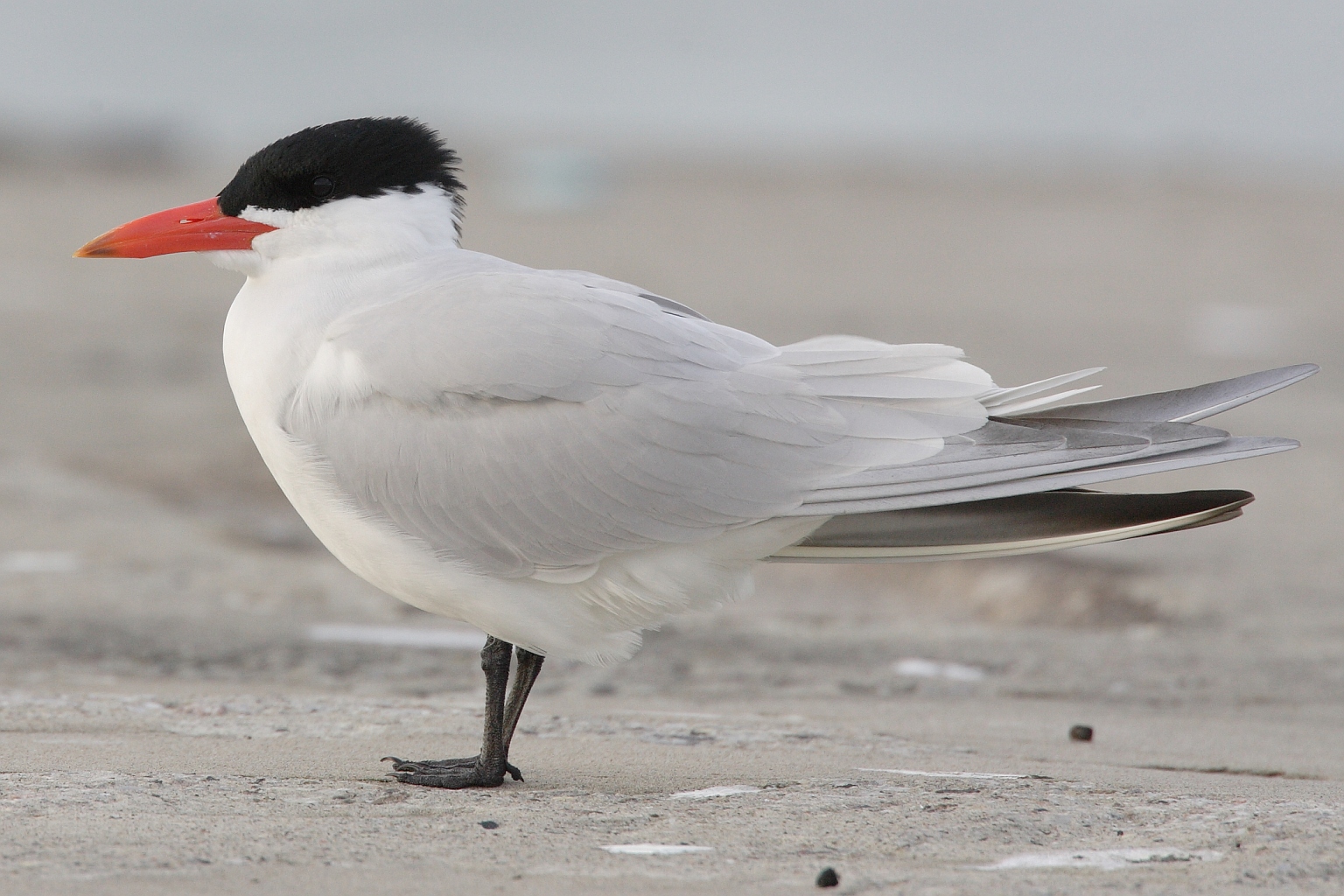
The Caspian tern is a large and elegant bird known for its striking appearance and impressive hunting skills. 🐦With its white body, black cap on its head, and long, slender wings, the Caspian tern can easily be spotted near water! These birds are found across many places, such as North America, Europe, and Asia. They are usually about 20-24 inches long (50-61 cm), making them one of the largest terns in the world! The Caspian tern is famous for its loud, raspy calls that can be heard when they are nesting or hunting. 🗣️
Explore with ChatDinoKey Points
Did you know that Caspian terns are excellent at flying?
Caspian terns are migratory birds, which means they travel from one place to another with the changing seasons.
The Caspian tern is currently classified as Least Concern by the IUCN (International Union for Conservation of Nature), meaning they are not at immediate risk of extinction.
Caspian terns are social birds and like to breed in colonies, where they build nests close together for safety.
Caspian terns have inspired many cultures around the world.
Caspian terns can be found in a variety of habitats, but they especially love coastlines, lakes, and rivers.
Caspian terns have distinctive features that make them easy to identify!
Caspian terns are excellent fishers and primarily eat small fish, like anchovies and minnows.
Photos of Caspian Tern

Caspian Tern — photo 1

Egg, Collection Museum Wiesbaden
Caspian Tern — photo 3

Caspian Tern — photo 4

Caspian Tern — photo 5

Caspian Tern — photo 6
🕊️ Interesting Facts
Did you know that Caspian terns are excellent at flying? 🕊️ They can reach speeds of up to 40 mph (64 km/h)! They also have excellent eyesight, allowing them to spot fish from high in the sky! Caspian terns can live for over 20 years, making them long-lived birds. Their feathers keep them warm and dry, similar to a fluffy winter coat! ☔In some cultures, the Caspian tern’s call is said to be a sign of good luck! These amazing creatures are truly fascinating and an essential part of our ecosystem! 🌎
Go deeper❄️ Migration Patterns
Caspian terns are migratory birds, which means they travel from one place to another with the changing seasons. ❄️ In the summer, they can be found in breeding areas near lakes and coasts, but during winter, they move to warmer regions. Many North American terns migrate to the southern United States and even Central America to escape the cold. ✈️ They usually travel alone or in small groups, flying high in the sky to avoid predators. Migrating is a journey of over a thousand miles for some terns, which means they need to be strong and energetic to reach their destination!
Go deeper🌍 Conservation Status
The Caspian tern is currently classified as Least Concern by the IUCN (International Union for Conservation of Nature), meaning they are not at immediate risk of extinction. 🌍However, they face threats from habitat loss, pollution, and human activities that interfere with their nesting areas, such as beach development. Organizations are working hard to protect these beautiful birds and their habitats to ensure they remain safe for future generations. By protecting these places, we help the Caspian tern thrive and continue to soar in our skies! 🕊️
Go deeper🏠 Breeding And Nesting
Caspian terns are social birds and like to breed in colonies, where they build nests close together for safety. 🏠Their nests are simple scrapes on the ground lined with pebbles, shells, and sometimes plant materials. Female terns typically lay 1 to 3 eggs, which they take turns incubating with their partner. Both parents help take care of the chicks, teaching them how to fish and fly. 🐣After about 4 weeks, the chicks are ready to leave the nest, but they might stay around their parents for a little while as they learn to find food on their own!
Go deeper🦄 Cultural Significance
Caspian terns have inspired many cultures around the world. For example, in some coastal communities, these birds are seen as symbols of freedom and resilience. 🦄Their impressive fishing skills have captivated bird-watchers and photographers alike. In literature, they are sometimes depicted as courageous birds ranging over vast oceans. In some Indigenous cultures, terns are associated with water and are considered important for balancing nature. 🌊By learning about the Caspian tern, we gain a deeper appreciation for wildlife and the natural world around us!
Go deeper🌊 Habitat And Distribution
Caspian terns can be found in a variety of habitats, but they especially love coastlines, lakes, and rivers. 🌊They make their nests on sandy beaches or rocky shorelines, building small scrapes in the ground. They are widespread, with populations in places like the Great Lakes in North America, the coasts of Europe, and Asia. These birds migrate to warmer regions in the winter, leaving their breeding grounds as the temperature drops. In the summer, they can often be seen fishing along the shores of these beautiful bodies of water! ☀️
Go deeper🎣 Physical Characteristics
Caspian terns have distinctive features that make them easy to identify! They have a red-orange bill that is long and pointed, perfect for catching fish. 🎣Their wings are long and pointed, which help them glide gracefully in the sky. Adult Caspian terns have a striking black cap on their heads, while their body is mostly white with some gray on the wings and back. Juveniles, or young terns, are mottled brown and white, making them look quite different from adults. They also have strong, webbed feet that allow them to swim well when necessary! 🐾
Go deeper🎣 Diet And Feeding Behavior
Caspian terns are excellent fishers and primarily eat small fish, like anchovies and minnows. 🎣They are skilled hunters and can dive into the water from the air to catch their meals! When they spot a fish swimming below, they quickly fold their wings and plunge into the water, often completely submerging themselves! 🐟These birds also hunt during the early morning and late evening when fish are most active. They are known for their teamwork, often feeding together in groups to catch more fish!
Go deeper