Caliper Facts For Kids
Calipers are precision instruments used to measure the linear dimensions of objects, including their length, width, thickness, diameter, and depth.
Select reading age
Caliper Facts For Kids
Videos & Quizzesincluded
About this topic
A caliper is a measuring tool that helps us find the size of an object. 🛠️ It can measure how long, wide, or deep things are! There are different kinds of calipers, but they all have two arms to grab onto the object. They can measure things like the thickness of a book or the diameter of a bottle. Some calipers are really high-tech, showing numbers on a screen! Did you know that calipers are used by builders, scientists, and even doctors? This handy tool helps us understand the world around us, from tiny parts to big structures! 🌍
Explore with ChatDinoKey Points
There are several types of calipers, each with its special job!
Using calipers can be fun, but safety is important!
Calipers have been around for a long time, dating back to ancient Greece around 400 BC!
Using a caliper is easy and fun!
To keep your caliper working well, regular maintenance is key!
Calipers are fantastic tools used in many fields!
Calibration is a way to make sure your caliper gives accurate measurements!
Calipers come in two main types: digital and analog.
When using a caliper, people can make some common mistakes!
Calipers can be made from many different materials!
Photos of Caliper

Oddleg calipers

A bronze sliding pinch scale (collected by the Yangzhou Museum) excavated from the tombs belonging to the Eastern Han dynasty (Gansenshan tombs in Hanjiang District, Yangzhou City)

Two inside calipers

Three outside calipers

A pair of dividers

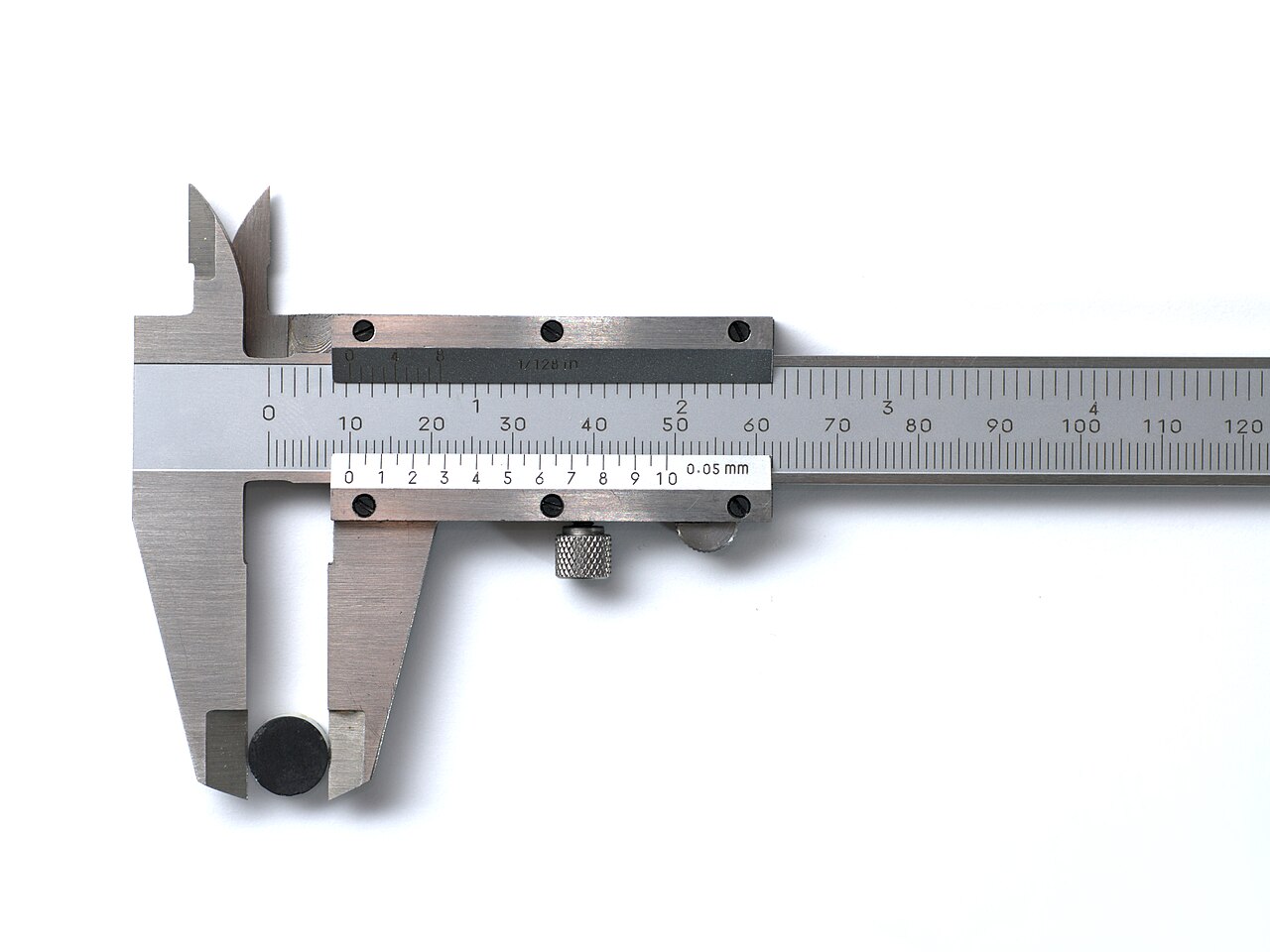
Diagram of a vernier caliper


📏 Types Of Calipers
There are several types of calipers, each with its special job! 📏The most common ones are Vernier calipers, which slide to get precise measurements. Digital calipers have a screen that shows numbers, making it super easy to read. Dial calipers have a dial with a needle that points to the measurement. Then, there are micrometers, which can measure really small things like a piece of paper! Goose neck calipers can even measure curved shapes. Each type of caliper is used in different jobs, so there is always the right one for you! 🦢
Go deeper⚠️ Safety Precautions
Using calipers can be fun, but safety is important! ⚠️ Always handle the caliper carefully to avoid pinching your fingers when the arms close. If a caliper is sharp, like the tips of a depth gauge, use it with caution to avoid cuts. Make sure to keep the measuring part clean and dry, as dirt can impact accuracy. Also, use the tool in a safe place and avoid distractions while measuring. When you're done, store your caliper safely so it doesn't get damaged. Staying safe helps us enjoy learning and using cool tools like calipers! 👍
Go deeper📜 History Of Calipers
Calipers have been around for a long time, dating back to ancient Greece around 400 BC! 📜They were made from wood or metal and helped artisans measure things for buildings and sculptures. Famous mathematicians, like Archimedes, used them. During the 16th century, scientists started making more accurate versions for studying nature. In the 19th century, the modern Vernier caliper was invented, named after Pierre Vernier, a French mathematician. Since then, calipers have become very important tools in engineering and manufacturing. They help people create amazing inventions every day! 🏗️
Go deeper💡 How To Use A Caliper
Using a caliper is easy and fun! First, open the caliper by pulling the arms apart. 💡Next, place the object between the two arms. Make sure they touch the sides without squeezing too much! Close the caliper until it snugly fits around the object. For a Vernier caliper, slide the smaller scale (the Vernier scale) to see the exact measurement. In digital calipers, just read the number on the screen. If you want to measure the depth of a hole, use the smaller tip on one arm. Remember to look closely and keep it steady while measuring! 👀
Go deeper⚙️ Maintenance Of Calipers
To keep your caliper working well, regular maintenance is key! ⚙️ After using a caliper, wipe it gently with a soft cloth to remove dirt or grease. Store it in a protective case to prevent scratches. If you notice any rust, use a fine rust remover and keep it dry. Regularly check the calibration to ensure accurate measurements. If you have a digital caliper, replace the batteries as needed to keep the display bright. With proper care, your caliper will last a long time and help you measure like a pro! 🛠️
Go deeper👷♂️ Applications Of Calipers
Calipers are fantastic tools used in many fields! 👷♂️ In construction, they help builders get the right sizes for materials. In medicine, doctors use calipers to measure body parts, like how wide a bone is. Scientists use them to measure specimens in the lab, like the thickness of a leaf. Even artists use calipers to help in sculptures or models! Calipers are used in schools for science projects, too. They help kids learn about measurements, which is super important for understanding how big or small things are! 🌿
Go deeper🔧 Calibration And Accuracy
Calibration is a way to make sure your caliper gives accurate measurements! 🔧It helps check that the tool measures the same way each time. To calibrate a caliper, you can use a standard object with a known size, like a metal gauge block. Measure it with your caliper and see if the number matches. If it doesn't, you can adjust the caliper or consider its condition. Regular calibration is important, especially for engineers and scientists who need to know their measurements are correct! 🎯Accurately measuring helps save time and money.
Go deeper📱 Digital Vs. Analog Calipers
Calipers come in two main types: digital and analog. 📱Digital calipers have an electronic display, showing numbers that make measuring easy and precise. They can even change between different measurement units, like inches and millimeters! Analog calipers have a dial or scale, and you read the measurements by aligning the needle. Both types are very useful but serve different preferences. Digital calipers are often used when accuracy counts, while analog calipers are great for classrooms. Choosing the right kind depends on what you need to measure and if you like reading numbers or dials! ⚖️
Go deeper🤷♂️ Common Mistakes In Measurement
When using a caliper, people can make some common mistakes! 🤷♂️ One major mistake is not holding it straight. This can lead to incorrect measurements. It's also important to read the correct scale on the caliper, especially on analog calipers with dials. If you apply too much pressure, the caliper could squeeze the object, causing inaccurate readings. Forgetting to zero the caliper before measuring can also lead to mistakes! Always double-check your measurements before thinking you've got the right size. Paying attention helps everyone measure correctly! 🔍
Go deeper🏗️ Materials Used In Caliper Design
Calipers can be made from many different materials! 🏗️ Most calipers are made of stainless steel, which is strong and won’t rust. Some are made of plastic, making them lighter and easier to use for kids. High-end calipers might be made from titanium for extra strength. The jaws or measuring parts can have special coatings to make reading marks easier. Some calipers even use materials like carbon fiber, which is super lightweight. Each material has its perks, so whether it's for school or a job, there’s a perfect caliper for you! 🌟
Go deeper