Cabbage White Butterfly Facts For Kids
The cabbage white butterfly is a common pest and pollinator, recognized for its white wings and association with cruciferous plants.
Select reading age
Cabbage White Butterfly Facts For Kids
Videos & Quizzesincluded
About this topic
The cabbage white butterfly 🦋 is a charming insect that belongs to the family Pieridae. There are two main types: the imported cabbage white (Pieris rapae) and the garden cabbage white (Pieris brassicae). These butterflies are often seen fluttering around gardens, especially where plants like cabbage and broccoli grow. They are around 1.5 to 2 inches wide when their wings are spread. 🌼Fun fact: the cabbage white is known for laying its eggs on the leaves of plants in the mustard family, which includes cabbage, kale, and mustard greens!
Explore with ChatDinoKey Points
Cabbage white butterflies play an important role in nature!
Currently, the cabbage white butterfly is not considered endangered.
Cabbage white butterflies love to eat!
Cabbage white butterflies have interesting behaviors and clever adaptations!
Cabbage white butterflies are found in many parts of the world!
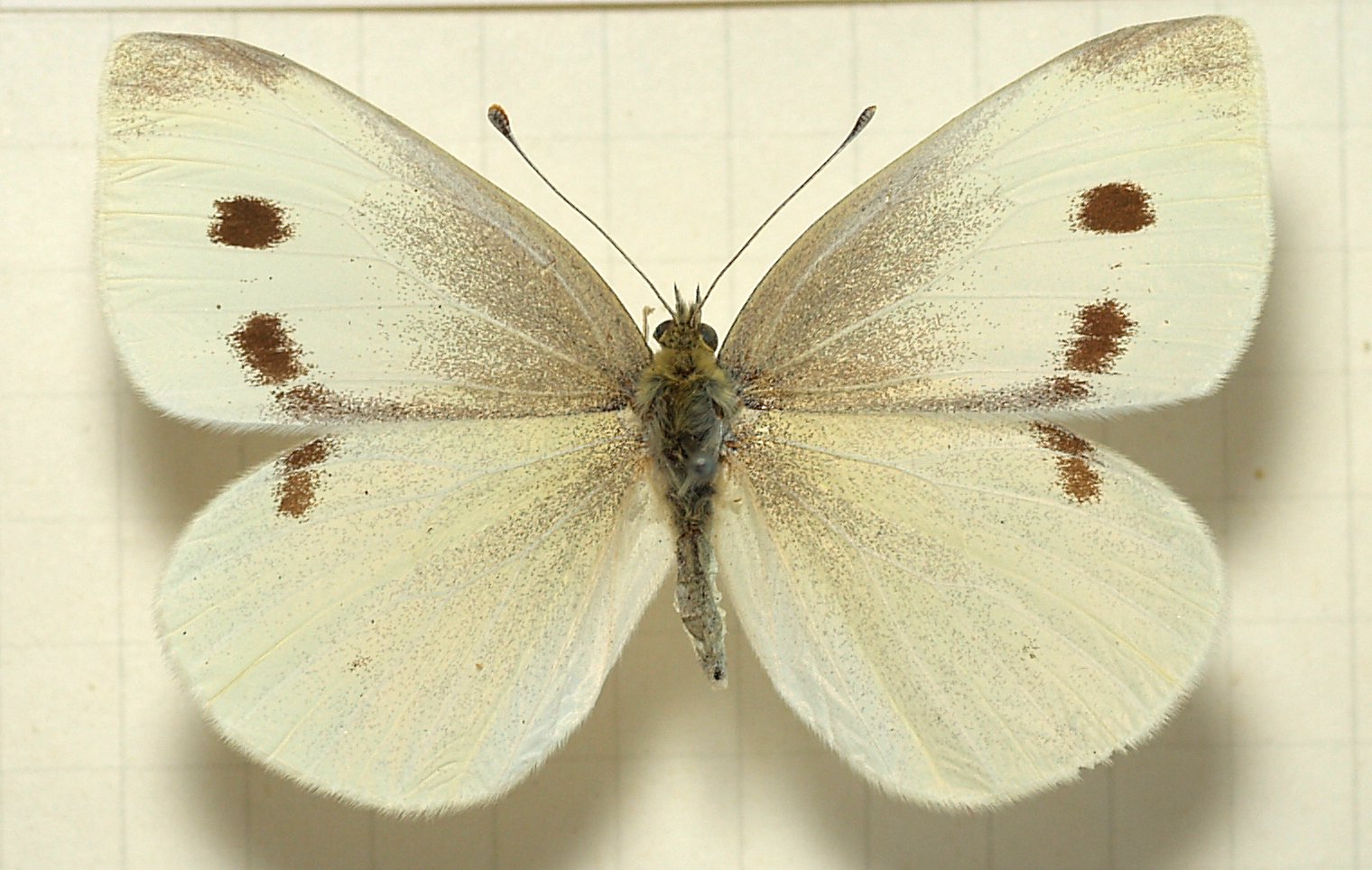
Cabbage white butterflies have beautiful white wings with black spots at the tip.
The life cycle of a cabbage white butterfly has four main stages: egg, larva (caterpillar), pupa (chrysalis), and adult butterfly.
Cabbage white butterflies are part of the class Insecta, which means they are insects.
Photos of Cabbage White Butterfly

Cabbage White Butterfly — photo 1

Feeding on the nectar of Aster amellus

Cabbage white butterfly (Pieris rapae), wings closed

Global invasion history of Pieris rapae

Small whites mating (German/Dutch border region)


Pupa

Pieris rapae feeding on a lavender flower
🌱 Ecological Role
Cabbage white butterflies play an important role in nature! 🌱As pollinators, they help many flowers grow by spreading pollen. This is crucial for plant reproduction, which allows fruits and seeds to form. Many birds and other animals rely on these butterflies (and their caterpillars) for food as well. 🍽️ The balance between these insects, plants, and animals helps keep the ecosystem healthy. By adding variety to gardens and habitats, cabbage whites contribute to a vibrant and diverse environment! 🌼
Go deeper✅ Conservation Status
Currently, the cabbage white butterfly is not considered endangered. ✅Their populations are stable; however, they can be affected by climate change and habitat loss. It’s important to protect gardens and farms where they live! 🌿By planting native flowers and avoiding harmful pesticides, we can support their populations. Teachers and students can get involved by creating butterfly gardens to provide food and a safe place for them to thrive. Be a buddy to the cabbage white and help nature stay balanced! 🌈
Go deeper🥗 Diet And Feeding Habits
Cabbage white butterflies love to eat! 🥗As caterpillars, they munch on leaves from plants in the cabbage family, including kale, broccoli, and, of course, cabbage. They can eat a lot and quickly grow bigger! 🌱When they become adults, they feed on nectar from flowers, which gives them energy. Some of their favorite flowers include daisies and clover. 🌼By sipping nectar, they help flowers grow by spreading pollen, which is important for making new plants!
Go deeper🦋 Behavior And Adaptations
Cabbage white butterflies have interesting behaviors and clever adaptations! 🦋They are most active during the day, fluttering from flower to flower. Their white wings help them blend in with the sunlight, making it harder for predators to spot them. When threatened, they may flutter away quickly or hide among the leaves. 🌿They also have a special sniffing ability through their antennae, allowing them to find flowers and mates. This helps them thrive in their habitats!
Go deeper🌍 Habitat And Distribution
Cabbage white butterflies are found in many parts of the world! 🌍You can see them in North America, Europe, and parts of Asia. They love sunny gardens, farmland, and areas with lots of flowers. These butterflies prefer habitats where their favorite plants, like cabbage and other mustard greens, grow. By visiting these places, they can easily find food and lay their eggs. 🌻If you’re in your backyard and see a butterfly fluttering around, it might just be a cabbage white!
Go deeper🌈 Physical Characteristics
Cabbage white butterflies have beautiful white wings with black spots at the tip. 🌈The males typically have all-white wings, while the females have two black spots on each wing. Their bodies are covered with tiny scales, which makes them look colorful and bright! The caterpillars, known as larvae, are usually green and have a smooth surface, blending in with the leaves they feed on. 🐛They go through several stages, or instars, before transforming into a butterfly, which is called metamorphosis!
Go deeper🥚 Life Cycle And Development
The life cycle of a cabbage white butterfly has four main stages: egg, larva (caterpillar), pupa (chrysalis), and adult butterfly. 🥚The female lays tiny eggs on the leaves of plants. After a few days, the eggs hatch into caterpillars that munch on the leaves! 🍃They eat a lot and grow quickly, shedding their skin several times. Then they form a pupa, which looks like a cozy sleeping bag for a few weeks. 🐛Finally, they emerge as beautiful butterflies ready to explore the world!
Go deeper🦋 Taxonomy And Classification
Cabbage white butterflies are part of the class Insecta, which means they are insects. They're in the order Lepidoptera, which includes butterflies and moths. In the family Pieridae, they are classified under the subfamily Pierinae. 🦋The scientific name for the imported cabbage white is Pieris rapae, and their cousin, the garden cabbage white, is called Pieris brassicae. These butterflies belong to the animal kingdom and are crucial for understanding how insects impact our world.
Go deeper