Buster Keaton was a pioneering silent film actor and director known for his innovative visual comedy, remarkable stunts, and unique deadpan expression, making him a legendary figure in film history.
Buster Keaton was a famous actor and director in the early days of movies! π¬He was born on October 4, 1895, in Piqua, Kansas, but grew up in a big city called Chicago. Buster was known for his hilarious silent films where he acted without speaking! Instead of talking, he used funny movements and facial expressions to make people laugh. His unique style and funny stunts made him a superstar in the 1920s! πToday, Buster is remembered as one of the greatest comedians in film history, and his movies are still loved by many people worldwide.
Keaton, who did his own stunt work, in a potentially life-threatening scene from Steamboat Bill, Jr. (1928)
Buster Keaton β photo 6
Photograph of Buster Keaton with his writing staff. Caption reads as follows: Buster Keaton's gag department at work, with (left to right) Joe Mitchell, Clyde Bruckman, Buster himself, Jean Havez and Eddie Cline.
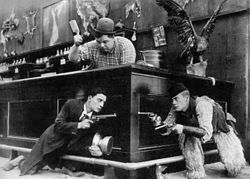
Still from the film Out West from 1918, directed by Roscoe 'Fatty' Arbuckle and starring Arbuckle, Buster Keaton and Al St. John
With Charlotte Greenwood in one of his first "talkies", Parlor, Bedroom and Bath (1931)
π Early Life
Buster Keaton was born into a family of performers! πHis parents were vaudeville entertainers, and they had fun shows that made people laugh. When Buster was four years old, he started performing with his family! His real name was Joseph Frank Keaton, but everyone called him "Buster" because he was really good at falling without getting hurt! π₯³When he was a child, Buster loved to watch movies and was inspired to create his own. This love for comedy and acting helped him become a famous star later on!
Although Buster Keaton didn't win many awards during his lifetime, he is celebrated today for his remarkable work! ποΈ In 1957, he received an Academy Award for his lifetime achievements in film. Buster was honored with star placement on the Hollywood Walk of Fame. πHis films remain popular, and many people watch them to learn about the history of cinema. In 1999, he was even named one of the 100 Greatest Movie Stars of all time by the American Film Institute, reminding us of his incredible impact!
Buster Keaton's big break came when he made short films in the 1910s! π½οΈ He worked with a film company called Comique Film Corporation. His early films were funny and exciting, filled with pratfalls and amazing stunts. Buster often wrote, directed, and starred in his own films! One of his first famous shorts was called "One Week," where he built a house in just one week! π People loved his creativity, and soon theaters all around the country were showing his films. Buster was truly on his way to becoming a superstar!
As talkies (talking films) became popular in the late 1920s, Buster Keaton's career faced challenges. π€He struggled to adapt to the new style of movies. However, he continued to work in Hollywood with some success. In the 1940s, people rediscovered his silent films, and he became popular again! πBuster continued acting in movies and TV shows until his death on February 1, 1966. His legacy lives on, as many filmmakers and comedians today look up to him for inspiration.
Buster Keaton's influence on modern cinema is tremendous! πMany comedians, like Mr. Bean and Jim Carrey, admire Buster's ability to create laughter without words. His clever use of physical comedy and stunts has shaped the style of many animated films and shows too! πMovies like "The Incredibles" and even video games borrow elements from Buster's quirky humor. His unique storytelling and creativity remind us that laughter is a universal language that brings people together! π€
Some of Buster Keaton's most famous films include "Sherlock Jr." (1924) and "The General" (1926). "Sherlock Jr." is about a projectionist who dreams of being a detective! πThe movie has amazing tricks and funny scenes, like Buster levitating and jumping into the movie screen! "The General" tells the story of a soldier during the Civil War trying to rescue his train! πBoth films showed how creative Buster was. He directed and acted in many movies that changed the way people made films. His contributions to cinema are celebrated even today!
Buster Keaton was known for his unique "stone face," meaning he never showed much emotion on his face while performing! πThis made his funny actions even more hilarious! He loved doing his own stunts and even had a knack for using special effects. For example, in his movie "The General," he performed daring train stunts that amazed audiences. πHis films used clever physical comedy instead of words, which helped people from different countries understand and laugh together. Buster's style was special and influenced many comedians today!