All Articles

Bolivia

Bolivia Facts For Kids

Bolivia is a landlocked country in South America known for its diverse culture, rich history, and stunning natural landscapes.
🎨 Reading age for 6-8
Background blob
Bolivia
Bolivia
Facts for Kids!

Do more with AI

Introduction

Bolivia is a beautiful country in South America! 🗺️ It is known for its stunning landscapes, including the Andes Mountains, the world's highest capital, La Paz, and the vast salt flats called Salar de Uyuni. Bolivia is unique because it has many cultures and languages. People also enjoy delicious food like salteñas (meat-filled pastries) and llama steak! While the country is landlocked (surrounded by land and with no oceans), it still has beautiful lakes like Lake Titicaca, which is the highest navigable lake in the world. 🌊

Images of Bolivia

The Kalasasaya Temple of the Tiwanaku Polity (200 BC)[23][page needed]Image by Danielle Pereira, licensed under Creative Commons Attribution 2.0

The Kalasasaya Temple of the Tiwanaku Polity (200 BC)[23][page needed]

The Villa Imperial de Potosí, established in 1545, held great significance for the Spanish colonial empire, as its abundant mineral wealth accounted for over half of the global silver production during the colonial period.[31]

The Villa Imperial de Potosí, established in 1545, held great significance for the Spanish colonial empire, as its abundant mineral wealth accounted for over half of the global silver production during the colonial period.[31]

Metropolitan Cathedral of Sucre in Sucre, a UNESCO World Heritage cityImage by Adam Jones, Ph.D., licensed under Creative Commons Attribution-Share Alike 2.0

Metropolitan Cathedral of Sucre in Sucre, a UNESCO World Heritage city

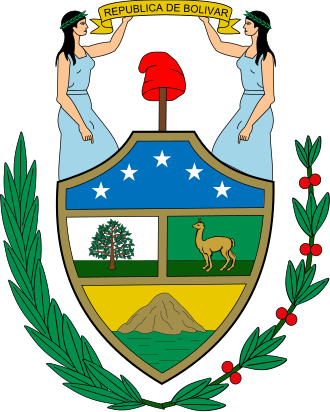
The first coat of arms of Bolivia, formerly named the Republic of Bolívar in honor of Simón Bolívar

The first coat of arms of Bolivia, formerly named the Republic of Bolívar in honor of Simón Bolívar

Historic headquarters of Banco Nacional de Bolivia in SucreImage by Massiel Z C, licensed under Creative Commons Attribution-Share Alike 3.0

Historic headquarters of Banco Nacional de Bolivia in Sucre

Bolivia's territorial losses (1867–1938)

Bolivia's territorial losses (1867–1938)

In 1971, Hugo Banzer Suárez, supported by the CIA, forcibly ousted President Torres in a coup.

In 1971, Hugo Banzer Suárez, supported by the CIA, forcibly ousted President Torres in a coup.

Former President, Evo MoralesImage by Ministerio de Relaciones Exteriores from Perú, licensed under Creative Commons Attribution-Share Alike 2.0

Former President, Evo Morales

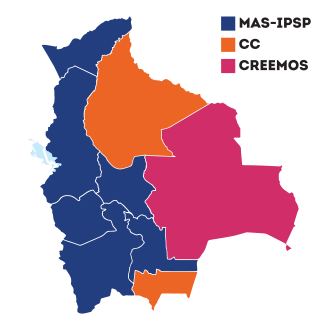
2020 Bolivian general election, results by departmentImage by P Cesar Maldonado, licensed under Creative Commons Attribution-Share Alike 4.0

2020 Bolivian general election, results by department

Inauguration of Luis Arce and David Choquehuanca on 8 November 2020Image by Ministerio de Relaciones Exteriores de Chile, licensed under Creative Commons Attribution 3.0 cl

Inauguration of Luis Arce and David Choquehuanca on 8 November 2020

The Villa Imperial de Potosí, established in 1545, held great significance for the Spanish colonial empire, as its abundant mineral wealth accounted for over half of the global silver production during the colonial period.[31]

The Villa Imperial de Potosí, established in 1545, held great significance for the Spanish colonial empire, as its abundant mineral wealth accounted for over half of the global silver production during the colonial period.[31]

Metropolitan Cathedral of Sucre in Sucre, a UNESCO World Heritage city
Metropolitan Cathedral of Sucre in Sucre, a UNESCO World Heritage city

The first coat of arms of Bolivia, formerly named the Republic of Bolívar in honor of Simón Bolívar

The first coat of arms of Bolivia, formerly named the Republic of Bolívar in honor of Simón Bolívar

Historic headquarters of Banco Nacional de Bolivia in Sucre

Historic headquarters of Banco Nacional de Bolivia in Sucre

Bolivia's territorial losses (1867–1938)

Bolivia's territorial losses (1867–1938)

In 1971, Hugo Banzer Suárez, supported by the CIA, forcibly ousted President Torres in a coup.

In 1971, Hugo Banzer Suárez, supported by the CIA, forcibly ousted President Torres in a coup.

Former President, Evo Morales
Former President, Evo Morales

2020 Bolivian general election, results by department

2020 Bolivian general election, results by department

Inauguration of Luis Arce and David Choquehuanca on 8 November 2020

Inauguration of Luis Arce and David Choquehuanca on 8 November 2020

The Kalasasaya Temple of the Tiwanaku Polity (200 BC)[23][page needed]

The Kalasasaya Temple of the Tiwanaku Polity (200 BC)[23][page needed]

The Kalasasaya Temple of the Tiwanaku Polity (200 BC)[23][page needed]Image by Danielle Pereira, licensed under Creative Commons Attribution 2.0

The Kalasasaya Temple of the Tiwanaku Polity (200 BC)[23][page needed]

The Villa Imperial de Potosí, established in 1545, held great significance for the Spanish colonial empire, as its abundant mineral wealth accounted for over half of the global silver production during the colonial period.[31]

The Villa Imperial de Potosí, established in 1545, held great significance for the Spanish colonial empire, as its abundant mineral wealth accounted for over half of the global silver production during the colonial period.[31]

Metropolitan Cathedral of Sucre in Sucre, a UNESCO World Heritage cityImage by Adam Jones, Ph.D., licensed under Creative Commons Attribution-Share Alike 2.0

Metropolitan Cathedral of Sucre in Sucre, a UNESCO World Heritage city

The first coat of arms of Bolivia, formerly named the Republic of Bolívar in honor of Simón Bolívar

The first coat of arms of Bolivia, formerly named the Republic of Bolívar in honor of Simón Bolívar

Historic headquarters of Banco Nacional de Bolivia in SucreImage by Massiel Z C, licensed under Creative Commons Attribution-Share Alike 3.0

Historic headquarters of Banco Nacional de Bolivia in Sucre

Bolivia's territorial losses (1867–1938)

Bolivia's territorial losses (1867–1938)

In 1971, Hugo Banzer Suárez, supported by the CIA, forcibly ousted President Torres in a coup.

In 1971, Hugo Banzer Suárez, supported by the CIA, forcibly ousted President Torres in a coup.

Former President, Evo MoralesImage by Ministerio de Relaciones Exteriores from Perú, licensed under Creative Commons Attribution-Share Alike 2.0

Former President, Evo Morales

2020 Bolivian general election, results by departmentImage by P Cesar Maldonado, licensed under Creative Commons Attribution-Share Alike 4.0

2020 Bolivian general election, results by department

Inauguration of Luis Arce and David Choquehuanca on 8 November 2020Image by Ministerio de Relaciones Exteriores de Chile, licensed under Creative Commons Attribution 3.0 cl

Inauguration of Luis Arce and David Choquehuanca on 8 November 2020

The Kalasasaya Temple of the Tiwanaku Polity (200 BC)[23][page needed]Image by Danielle Pereira, licensed under Creative Commons Attribution 2.0

The Kalasasaya Temple of the Tiwanaku Polity (200 BC)[23][page needed]

The Villa Imperial de Potosí, established in 1545, held great significance for the Spanish colonial empire, as its abundant mineral wealth accounted for over half of the global silver production during the colonial period.[31]

The Villa Imperial de Potosí, established in 1545, held great significance for the Spanish colonial empire, as its abundant mineral wealth accounted for over half of the global silver production during the colonial period.[31]

Metropolitan Cathedral of Sucre in Sucre, a UNESCO World Heritage cityImage by Adam Jones, Ph.D., licensed under Creative Commons Attribution-Share Alike 2.0

Metropolitan Cathedral of Sucre in Sucre, a UNESCO World Heritage city

The first coat of arms of Bolivia, formerly named the Republic of Bolívar in honor of Simón Bolívar

The first coat of arms of Bolivia, formerly named the Republic of Bolívar in honor of Simón Bolívar

Historic headquarters of Banco Nacional de Bolivia in SucreImage by Massiel Z C, licensed under Creative Commons Attribution-Share Alike 3.0

Historic headquarters of Banco Nacional de Bolivia in Sucre

Bolivia's territorial losses (1867–1938)

Bolivia's territorial losses (1867–1938)

In 1971, Hugo Banzer Suárez, supported by the CIA, forcibly ousted President Torres in a coup.

In 1971, Hugo Banzer Suárez, supported by the CIA, forcibly ousted President Torres in a coup.

Former President, Evo MoralesImage by Ministerio de Relaciones Exteriores from Perú, licensed under Creative Commons Attribution-Share Alike 2.0

Former President, Evo Morales

2020 Bolivian general election, results by departmentImage by P Cesar Maldonado, licensed under Creative Commons Attribution-Share Alike 4.0

2020 Bolivian general election, results by department

Inauguration of Luis Arce and David Choquehuanca on 8 November 2020Image by Ministerio de Relaciones Exteriores de Chile, licensed under Creative Commons Attribution 3.0 cl

Inauguration of Luis Arce and David Choquehuanca on 8 November 2020

Economy

Bolivia's economy is based on agriculture, mining, and natural gas. 🌾The country grows many crops like quinoa, potatoes, and coca leaves. Did you know that Bolivia is the world's largest producer of quinoa? It's a superfood! 🥗In addition to crops, Bolivia has valuable minerals like silver, tin, and lithium, which is used in batteries. The country is working to improve its economy to help its people and provide better living conditions. 🏭

History

Bolivia has a rich history that dates back thousands of years! The ancient civilization of Tiwanaku thrived here around 600 A.D. This place, near Lake Titicaca, was famous for its impressive stone structures. 🏛️ In the 16th century, the Spanish conquered Bolivia, and it became part of the Spanish Empire. People fought for independence, and on August 6, 1825, Bolivia became a free country! The country is named after Simón Bolívar, a leader in the South American independence movement. 🎉

Tourism

Bolivia is a wonderful place to explore! 🏞️ Tourists visit for its breathtaking landscapes, rich history, and vibrant culture. Popular attractions include the Salt Flats of Uyuni, where visitors can take amazing pictures in the reflection of the sky. 🌌Lake Titicaca, known for its unique floating islands made of reeds, is another must-see! Tourists also enjoy trekking in the Andes and exploring the colorful markets in cities like La Paz and Sucre. 🌟

Geography

Bolivia is located in the middle of South America, sharing borders with Peru to the west, Brazil to the north and east, Paraguay to the southeast, Argentina to the south, and Chile and Peru to the southwest. The country has diverse geography, featuring high mountains, plains, and tropical rainforests. 🌳The Andes Mountains, which are among the highest in the world, run through the country, while the Amazon rainforest covers the northern part. The Salar de Uyuni, a salt flat that covers over 10,000 square kilometers, is the largest in the world! 🌞

Languages

Bolivia is a multilingual country with over 36 official languages! 📚The most common language is Spanish, spoken by many people, but there are also many indigenous languages, like Quechua and Aymara. Each language carries its own history and culture. 🌏In schools, children learn both their native languages and Spanish to help them communicate with their communities and the rest of the world. Understanding different languages is a great way to learn about different cultures!

Political System

Bolivia is a democratic country, which means the people vote to choose their leaders! 🗳️ It has a president who is in charge of the government, and elections happen every five years. The country has a constitution that protects citizens' rights. Bolivia is also known for its indigenous population, which has representation in politics. The country is divided into nine departments, similar to states, each with its own local government. 🇧🇴

Culture And Traditions

Bolivia is full of colorful traditions and festivals! 🎊There are 36 official indigenous groups, each with its own customs. One popular festival is Carnaval de Oruro, held before Lent. It features vibrant parades with costumes, dancing, and music! 💃Another tradition is Día de los Muertos (Day of the Dead), where families honor their loved ones who have passed away with special altars, food, and flowers. 🌼Bolivian music often includes instruments like the charango (a small guitar) and pan flutes.

Festivals And Celebrations

Bolivia loves to celebrate! 🎉One of the most exciting festivals is the Carnaval de Oruro, filled with colorful costumes, traditional dances, and music. It celebrates the indigenous culture and is recognized by UNESCO! 🎭Another important day is Día de la Independencia (Independence Day) on August 6, where parades and fireworks light up the sky. Additionally, the Japanese and Chinese communities celebrate New Year in their unique ways. These celebrations reflect the country's rich mix of cultures and traditions! ✨

Biodiversity And Natural Resources

Bolivia is home to many unique plants and animals! 🌿It has diverse ecosystems, from the Amazon rainforest to the Andes Mountains. Some animals found here include llamas, alpacas, and the jaguar. Did you know there are over 1,400 types of birds in Bolivia? 🦜The country also has valuable natural resources like lithium, which is used in batteries, and gas, found under the earth. The diverse environment makes Bolivia a key spot for scientists studying nature!

Did you know?

🇧🇴 Bolivia is one of the two landlocked countries in South America.

🏔️ It is home to a portion of the Andes mountain range, including the world's highest capital, La Paz.

🏞️ The Salar de Uyuni is the largest salt flat in the world, covering over 10,000 square kilometers.

🌿 Bolivia has the largest percentage of indigenous population in South America, with over 60% identifying as indigenous.

🐾 The Madidi National Park in Bolivia is one of the most biodiverse places on Earth.

🏞️ Lake Titicaca, located on the border with Peru, is the highest navigable lake in the world.

🕊️ Bolivia declared independence from Spain on August 6, 1825.

🏛️ The country has 37 official languages, including Spanish, Quechua, and Aymara.

🕌 The historic city of Potosí was once one of the richest cities in the world, famous for its silver mines.

🌍 Bolivia has a diverse climate and ecosystem, ranging from tropical rainforests to high-altitude deserts.

Bolivia Quiz

Q1
Question 1 of 10

Learn more about Bolivia

Ready to create?

Make

To create a safe space for kid creators worldwide!

Create

Vibe Coding

Kids GPT

All Tools

Kibu

Resources

Worksheets

SafeTube

Blog

FAQ

Account

Pricing

Log-in

Sign-up

Data Deletion

Company

About

Community Guidelines

Privacy Policy

Terms of Service

2025, URSOR LIMITED. All rights reserved. DIY is in no way affiliated with Minecraft™, Mojang, Microsoft, Roblox™ or YouTube. LEGO® is a trademark of the LEGO® Group which does not sponsor, endorse or authorize this website or event. Made with love in San Francisco.