Black Rat Facts For Kids
The black rat, also known as the roof rat, is a highly agile rodent known for its climbing abilities and adaptability to various habitats, often living in close proximity to human settlements.
Select reading age
Black Rat Facts For Kids
Videos & Quizzesincluded
About this topic
The black rat, also known as the roof rat, is a small mammal 🐭 found all over the world! They originated from Southeast Asia but have spread to places like Europe, Africa, and the Americas. Black rats have shiny black or brown fur and are known for their long tails. They are clever and can climb trees and buildings easily! These little critters play an important role in the ecosystem as both prey and scavengers. They live in groups and are usually active at night, making them nocturnal. Understanding black rats helps us learn about our environment! 🌍
Explore with ChatDinoKey Points
Black rats have an important role in nature!
Black rats are omnivores, meaning they eat both plants and animals.
Black rats love to live in warm and coastal areas 🌊.
Black rats are small mammals, usually about 6 to 8 inches long, not including their long tails, which can reach up to another 8 inches!
Female black rats can have up to 5 litters each year, with each litter containing about 6 to 12 babies!
Black rats belong to the family Muridae 🐹, which includes many kinds of mice and rats.
Black rats are social creatures that live in family groups called colonies 🏡.
Humans often have mixed feelings about black rats!
Photos of Black Rat

Black Rat — photo 1

Black Rat — photo 2

Comparison of physique with a brown rat (Rattus norvegicus)


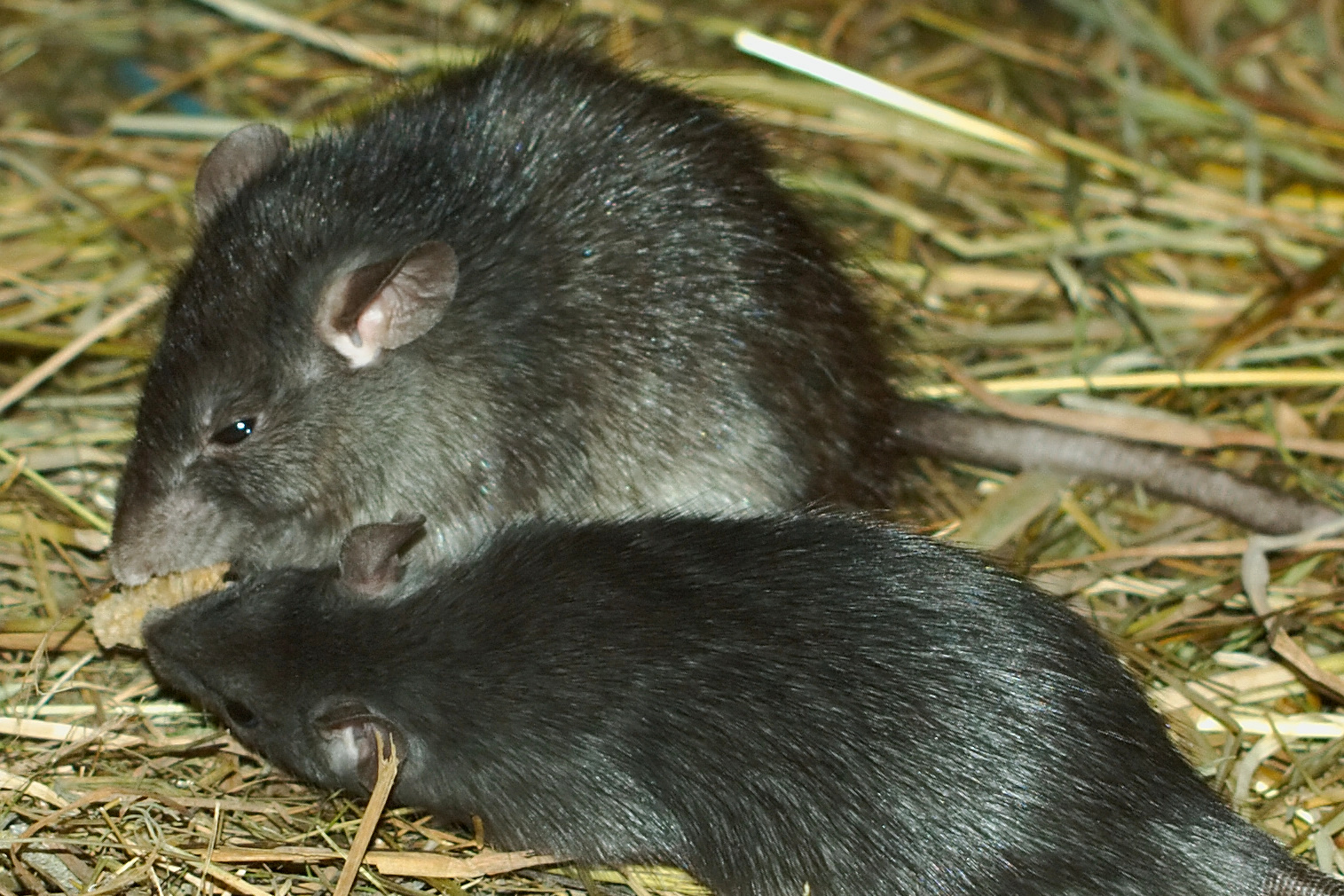
Black rat eating grain
🌿 Ecological Impact
Black rats have an important role in nature! 🌿As scavengers, they help clean up leftover food, which can prevent the spread of disease. They also serve as prey for various predators, like owls 🦉 and snakes! However, because they can reproduce quickly, they may sometimes become pests in urban areas, causing problems for people. It’s essential to keep a balance in nature, so we need to take care of both black rats and their habitats to maintain a healthy ecosystem! ⚖️
Go deeper🌱 Diet And Feeding Habits
Black rats are omnivores, meaning they eat both plants and animals. 🌱🍎 They love munching on fruits, vegetables, grains, and even small insects. In urban areas, they often scavenge for leftover food in garbage bins! They have excellent senses of smell and taste, helping them find tasty things to eat. Black rats usually feed at night when other animals are asleep, making them sneaky little eaters! They can eat up to one-third of their body weight in food every day! 🍽️
Go deeper🌊 Habitat And Distribution
Black rats love to live in warm and coastal areas 🌊. They are often found in homes, farms, and places with lots of food. They like to nest in attics, trees, and even bushes. You can find them in places like the United States, Europe, and parts of Asia. Black rats can adapt to many environments, which is why they are so widespread! They usually avoid very cold places and prefer to stay in areas where they can find food more easily. 🌳
Go deeper🐀 Physical Characteristics
Black rats are small mammals, usually about 6 to 8 inches long, not including their long tails, which can reach up to another 8 inches! 🐀Their fur is soft and can be black or dark brown. They have big ears and sharp, small eyes that help them see well at night. Their tails are thinner than those of brown rats and can be longer in relation to their body size. Black rats also have strong legs and claws, which help them climb and explore their surroundings! 🧗♂️
Go deeper👶 Reproduction And Lifespan
Female black rats can have up to 5 litters each year, with each litter containing about 6 to 12 babies! 👶The babies are born blind and hairless but grow quickly. They usually leave their mother's care after about 3 weeks. In the wild, black rats typically live for about 1 to 2 years, but in captivity, they can live longer. Their short lifespan means they often need to reproduce frequently to maintain their populations. This helps ensure that there are enough black rats around! 🌼
Go deeper🐹 Taxonomy And Classification
Black rats belong to the family Muridae 🐹, which includes many kinds of mice and rats. Their scientific name is *Rattus rattus*. They are part of the order Rodentia, which is the largest group of mammals. Rodents have two front teeth that keep growing, which is why they often gnaw on things! Black rats are closely related to brown rats (*Rattus norvegicus*), but they are usually smaller with longer tails. Understanding their classification helps scientists study animals and their relationships better! 📚
Go deeper🏡 Behavior And Social Structure
Black rats are social creatures that live in family groups called colonies 🏡. These colonies can have many members working together! They communicate using squeaks and body movements, helping them stay connected. They love to explore and will make nests from twigs, fabric, and paper. Black rats are very agile and can climb and jump easily! They prefer to be active at night, which is when they search for food and socialize. It's like having nighttime parties in their nests! 🎉
Go deeper😟 Human Interaction And Control
Humans often have mixed feelings about black rats! 😟They can be cute, but they can also cause damage to homes and spread diseases. People have found ways to control black rat populations using traps or natural repellents. Some people keep cats 🐱, who enjoy hunting rodents! It’s essential to stay clean by securing our garbage and sealing gaps in buildings. By understanding black rats, we can live in harmony with them and appreciate their role in our environment! 🤝
Go deeper