Baht Facts For Kids
The Baht is the official currency of Thailand, used in daily transactions and rich in cultural significance.
Select reading age
Baht Facts For Kids
Videos & Quizzesincluded
About this topic
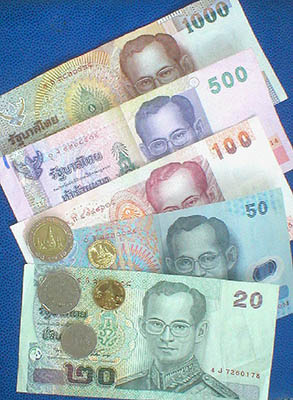
The baht (THB) is the official currency of Thailand 🇹🇭! One baht is divided into 100 satang. It was introduced in 1887 and is used for everyday purchases from snacks to toys 🎉. You can find baht coins and banknotes, each showing important Thai symbols and famous people. The currency helps people buy things, pay for services, and trade. Thailand has a rich culture, and using the baht is an important part of life. So, when you visit Thailand, you will see baht everywhere! ✈️
Explore with ChatDinoKey Points
What does the future hold for the baht?
The baht has a fascinating history!
Exchange rates can change every day, just like the weather ☀️🌧️!
The baht is also important in international trade 🌍.
The baht comes in both coins and colorful banknotes 🌈.
The baht plays a huge role in Thailand's economy 🚀!
In daily life, people use baht to buy everything!
How does the baht compare to other currencies?
The baht is more than just money; it is a symbol of Thailand's culture and identity 🇹🇭.
To keep the baht safe, special security features are added to banknotes 💪!
Photos of Baht


Baht — photo 2

Baht — photo 3

Siamese predecimal tical system

Baht — photo 5

Baht — photo 6

Baht — photo 7

Baht — photo 8


🤔 Future Of The Baht
What does the future hold for the baht? 🤔Economists try to make predictions, and they believe that as Thailand continues to grow and innovate, the baht will change too! Some people think there might be a digital baht someday, which would allow people to send money using apps and the internet! 🌐Global trade and tourism will also influence the baht's value. If more people visit Thailand or buy Thai products, the baht could become stronger! Always keep an eye on how the baht changes, as it helps us understand Thailand's exciting journey ahead! 🚀
Go deeper🎭 History Of The Baht
The baht has a fascinating history! Its name comes from an old weight measure used in Siam (the former name for Thailand) 🎭. The first baht coins were made from silver in the 14th century. In 1857, King Rama IV started modernizing currency. The current baht was officially adopted in 1902, and designs have changed over the years. Thailand's central bank, the Bank of Thailand, manages the baht today. They decide how much the baht is worth compared to other currencies 💰. As you can see, the baht has a long history linked to Thailand's growth!
Go deeper☀️ Current Exchange Rates
Exchange rates can change every day, just like the weather ☀️🌧️! As of October 2023, 1 US dollar (USD) equals about 36 baht (THB). That means if you have $1, you can get 36 baht! Other currencies like the Euro may have different exchange rates. For example, 1 Euro (EUR) might equal around 40 baht. It's important to check current rates before traveling to Thailand, so you know how much things cost when you buy yummy snacks or fun souvenirs! 🥥💵
Go deeper🌍 Baht In International Trade
The baht is also important in international trade 🌍. When Thailand sells goods like rice, rubber, or electronics to other countries, they use baht, making Thai products more attractive to buyers. By trading in baht, Thailand makes money and boosts its economy. Other countries buy goods using their currency, which is then exchanged for baht. This helps improve relationships with other nations while allowing Thailand to thrive. Next time you eat delicious Thai food, remember that the baht is an important part of that journey! 🍜
Go deeper🌈 Currency Design And Symbols
The baht comes in both coins and colorful banknotes 🌈. Coins can be found in 1, 2, 5, and 10 baht denominations, with smaller 25 and 50 satang coins. Each coin shows important symbols like the coat of arms or images of Thai kings 👑. The banknotes range from 20 to 1,000 baht! The famous 20 baht note features King Bhumibol Adulyadej, who loved his people 💖. The baht symbol looks like "฿," and it makes it easy to recognize Thai currency wherever you go in Thailand!
Go deeper🚀 Economic Impact Of The Baht
The baht plays a huge role in Thailand's economy 🚀! When people use baht to buy goods, it helps businesses grow and create jobs. Tourism in Thailand is very important; millions visit every year and spend baht in hotels, restaurants, and shopping. The more baht that is spent, the healthier the economy becomes! Good economic health allows the Thai government to invest in schools, hospitals, and roads, making life better for everyone in Thailand. So using baht is more than just spending money–it helps the country thrive! 🌏
Go deeper👟 Usage In Daily Transactions
In daily life, people use baht to buy everything! At shops, you can use baht to buy toys, candy, or even clothes 👟. Thai food stalls sell tasty treats for just a few baht! When you pay for something, you usually give cash, but digital payments with apps and cards are becoming popular too. Taxi drivers, restaurant staff, and market sellers all accept baht. It's essential to always carry some cash when traveling around Thailand, as some places may not accept cards. So keep your baht handy! 🏪
Go deeper🌏 Comparison With Other Currencies
How does the baht compare to other currencies? 🌏Well, it has its unique value. For instance, 1 baht is equal to 0.027 US dollars. That means in Thailand, things might cost differently than in other countries! Each currency is affected by how well the country's economy is doing. While the baht is popular in Southeast Asia, countries like Japan use the yen (JPY) and the USA uses dollars (USD). Understanding different currencies helps us learn about the world and how many cultures trade with each other! 💱
Go deeper🎉 Cultural Significance Of The Baht
The baht is more than just money; it is a symbol of Thailand's culture and identity 🇹🇭. People often use baht to celebrate special occasions, like giving "ang-pao" (red envelopes) during the Thai New Year🎉. Many Thai people see the baht as a representation of their hard work and dedication. Traditional markets and street vendors also use the baht to share delicious food and handmade crafts, which connect people to their culture. So when you think of the baht, remember that it tells the story of Thailand! 📖
Go deeper💪 Counterfeit Measures And Security Features
To keep the baht safe, special security features are added to banknotes 💪! You can find hidden pictures, colors that change in the light, and watermarks that show pieces of Thailand's culture. If you hold a baht banknote up to the light, you might see an image of King Rama IX! There are also special printing techniques that make it hard to copy the baht. This way, when you spend baht, you can be sure it’s real, and everyone can trust each other’s money! 🔒
Go deeper