Bahadur Shah Zafar Facts For Kids
Bahadur Shah Zafar was the last Mughal emperor and a gifted poet, known for his poignant expressions of love, loss, and longing during a time of empire decline.
Select reading age
Bahadur Shah Zafar Facts For Kids
Videos & Quizzesincluded
About this topic
Bahadur Shah Zafar was the last Mughal emperor of India. He was born on October 24, 1775, in Delhi, a bustling city full of culture! 🎉As a poet, he wrote beautiful verses and loved poetry, which made him quite famous. Even though he was the emperor, he never had much power because India was being controlled by the British Empire. Zafar ruled from 1837 to 1857. His reign ended during a major event called the Indian Rebellion of 1857, where many people fought for their freedom. After losing, he was exiled, or sent far away, and died in 1862. 😢
Explore with ChatDinoKey Points
After the British defeated the rebels, Bahadur Shah Zafar was exiled to Rangoon, Burma (now Myanmar), far away from his homeland.
In his final days, Bahadur Shah Zafar struggled with sadness and nostalgia for his homeland.
In 1837, when Zafar was 62 years old, he became emperor after the death of his father, Akbar Shah II.
Bahadur Shah Zafar is known as the last Mughal emperor, symbolizing the end of a great dynasty in India.
Bahadur Shah Zafar's life reminds us of the struggles for freedom and change.
Zafar's life and poetry have inspired many stories, plays, and movies.
Bahadur Shah Zafar was born into a royal family in Delhi.
Bahadur Shah Zafar is remembered as a symbol of resistance and hope in Indian history.
Zafar was not just a ruler; he was an amazing poet, too!
The Indian Rebellion of 1857 was a major turning point in India's history.
Photos of Bahadur Shah Zafar

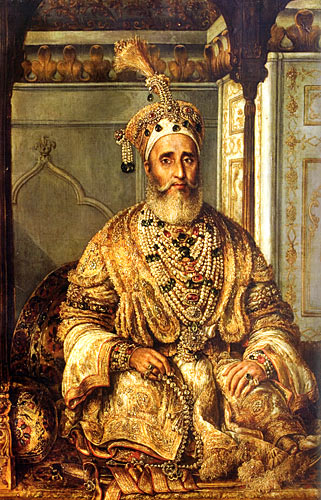
Bahadur Shah Zafar — photo 1

Map of India in 1795


Police in Delhi during the reign of Bahadur Shah II, 1842

Purported photograph of Zinat Mahal Begum, his consort

Sons of Bahadur Shah Zafar. On the left is Jawan Bakht, and on the right is Mirza Shah Abbas.

A panorama showing the imperial procession to celebrate the feast of the Eid al-Fitr, with the emperor on the elephant to the left and his sons to the right (24 October 1843)

Bahadur Shah Zafar — photo 7

Bahadur Shah Zafar — photo 8

Bahadur Shah Zafar — photo 9
🌍 Exile And Later Life
After the British defeated the rebels, Bahadur Shah Zafar was exiled to Rangoon, Burma (now Myanmar), far away from his homeland. 🌍It was very difficult for him to leave his beloved Delhi and live in a new place. He was old and did not have the power he once had. In Rangoon, he lived in a small house with a few family members. Zafar continued to write poetry, expressing his sadness and longing for his homeland. His health declined, and life became harder for him. He passed away on 7th November 1862, still dreaming of returning to India. 😔
Go deeper🍂 Final Days And Death
In his final days, Bahadur Shah Zafar struggled with sadness and nostalgia for his homeland. 🍂He missed Delhi deeply and longed to see it one last time. On November 7, 1862, he passed away in Rangoon, leaving behind a legacy of poetry and history. His last moments were filled with longing, and he is said to have dreamed of returning home. He was buried in a simple grave, far from the grand Mughal tombs in India. His death marked the end of an era, but his spirit of resistance continues to inspire generations. 🌺
Go deeper👑 Accession To The Throne
In 1837, when Zafar was 62 years old, he became emperor after the death of his father, Akbar Shah II. 👑His coronation was grand, filled with colors, music, and many guests! But being emperor during this time was not easy. The British East India Company controlled most of India, and Zafar had little real authority. He wanted to be a good ruler and improve the lives of his people. Zafar tried to bring unity among different religions, showing his love for peace and harmony. However, the British continued to take control, leading to unrest among the people.
Go deeper🏴☠️ Symbol Of The Last Mughal
Bahadur Shah Zafar is known as the last Mughal emperor, symbolizing the end of a great dynasty in India. 🏴☠️ The Mughal Empire was famous for its art, culture, and architecture. Even though Zafar could not rule as his ancestors did, he represented the heritage of his people. His story shows the struggle between the old traditions and modern times. Even today, children learn about him in history classes! Zafar remains a symbol of hope, giving courage to those who fight for justice, equality, and freedom. His legacy continues through stories and poems. 📜
Go deeper🔥 Impact On Modern Indian History
Bahadur Shah Zafar's life reminds us of the struggles for freedom and change. His involvement in the Indian Rebellion of 1857 sparked a desire for independence among many Indians. 🔥This rebellion was one of the first large fights against British rule and inspired future freedom fighters. Zafar's story teaches about resilience and the importance of standing up for one’s rights. Today, as we celebrate India’s independence, we remember the struggles of those like Zafar who fought for a better future. His impact still influences how we understand our history and our fight for freedom. ✊
Go deeper🎭 Depiction In Literature And Arts
Zafar's life and poetry have inspired many stories, plays, and movies. 🎭Writers portray him as a keen poet and a fighter for freedom. In literature, his romantic verses are often highlighted. His life’s journey is found in many historical novels, showcasing the rich Mughal history. Artists have painted scenes of Zafar’s court, filled with colors and cultural festivities. His legacy continues to inspire various art forms, reminding us of the beauty of creativity and storytelling in expressing emotions and preserving history.
Go deeper🌟 Early Life And Family Background
Bahadur Shah Zafar was born into a royal family in Delhi. 🌟His father, Akbar Shah II, was the emperor before him. The Mughal family had a long history of ruling India, but by Zafar's time, their power had lessened. He loved his family greatly, especially his mother, who introduced him to poetry. Zafar's passion for writing blossomed as a young boy, and he was inspired by famous poets. He grew up in a beautiful palace filled with gardens and rich history. 🏰Zafar had a lovely life, but he faced challenges as the British Empire grew stronger in India.
Go deeper🌟 Legacy And Historical Significance
Bahadur Shah Zafar is remembered as a symbol of resistance and hope in Indian history. 🌟Even though he was the last Mughal emperor, his love for poetry and culture inspired many. Today, he is celebrated as a martyr who fought for his people. Zafar's poetry still exists, and his verses touch the hearts of many. His life reminds us of the importance of freedom and cultural heritage. Zafar's legacy helps us remember the struggles of the past and the importance of fighting for justice and rights. 🕊️
Go deeper🎤 Cultural Contributions And Patronage
Zafar was not just a ruler; he was an amazing poet, too! 🎤He wrote in Urdu and Persian, and his poetry was full of emotion. Zafar encouraged many artists, musicians, and writers, making Delhi a vibrant cultural hub. He hosted gatherings called 'mushairas’, where poets recited their works. This helped promote Urdu poetry, making it famous! 🌼His love for art and culture showed how important creativity was to him. Zafar’s contributions helped shape rich traditions in India, which continue to influence poetry and literature today!
Go deeper⚔️ Role In The Indian Rebellion Of 1857
The Indian Rebellion of 1857 was a major turning point in India's history. Many Indians were unhappy with British rule. Zafar, seen as a symbol of hope, was asked to lead the rebellion. ⚔️ He didn’t want to fight but felt it was his duty to support his people. The rebellion started in May 1857, and many brave soldiers joined in to fight against British control. Although initially successful, the rebellion faced many challenges, and by September 1857, the British regained control. Zafar was captured, and this marked the end of the Mughal Empire as he knew it.
Go deeper