Asian Open-bill Stork Facts For Kids
The Asian Open-bill Stork is a large wading bird known for its unique open-billed shape, primarily found in South and Southeast Asia, and it plays a vital role in its ecosystem.
Select reading age
Asian Open-bill Stork Facts For Kids
Videos & Quizzesincluded
About this topic
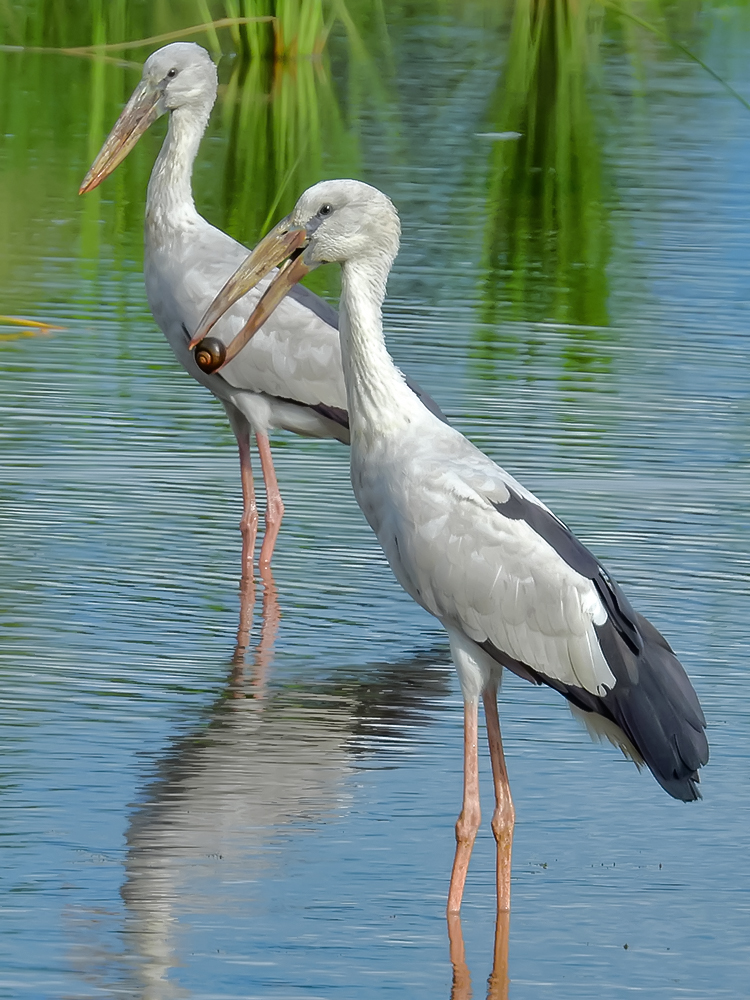
The Asian Open-bill Stork is a fascinating bird! 🌏This large wading bird belongs to the Ciconiidae family and is known for its big, long neck and unique open bill. Found in many Asian countries like India, Thailand, and Myanmar, these storks often live near wetlands, rice fields, and lakes. They are approximately 70-80 cm tall and have striking black and white feathers. The open bill helps them catch snails, their favorite food! 🐌When you spot one, look for its characteristic long legs and elegant stature as it strolls through shallow waters in search of a tasty treat.
Explore with ChatDinoKey Points
Asian Open-bill Storks are social birds!
Did you know some incredible facts about the Asian Open-bill Stork?
The Asian Open-bill Stork has a stable population, but they still need protection!
Asian Open-bill Storks have cultural importance in many Asian societies!
Despite their stable status, Asian Open-bill Storks face some challenges!
The Asian Open-bill Stork loves to live in wetlands!
The Asian Open-bill Stork has some cool features!
Asian Open-bill Storks are dedicated parents!
What do Asian Open-bill Storks eat?
Asian Open-bill Storks share their habitats with many other animals!
Photos of Asian Open-bill Stork

Asian Open-bill Stork — photo 1

1781 illustration by Sheikh Zainuddin

Asian Open-bill Stork — photo 3

Asian Open-bill Stork — photo 4

Asian Open-bill Stork — photo 5

Asian openbill in Thirunavaya Lotus Lake Wetland


Juvenile on the right. The gap between the mandibles develops with age.

🎉 Social Behavior
Asian Open-bill Storks are social birds! 🎉They enjoy living in groups called colonies and often gather in large numbers during feeding or nesting times. These storks communicate with each other using soft clattering sounds. 🗣️ When they want to show happiness or excitement, they flap their wings and make joyful noises. They also help each other spot food, acting as a team while hunting for snails and other goodies! Plus, during the rainy season, you can often see them flying together in the sky—a beautiful sight to witness! 🌈Teamwork makes the dream work for these graceful storks!
Go deeper🌟 Interesting Facts
Did you know some incredible facts about the Asian Open-bill Stork? 🌟These storks can fly as high as 1,500 meters! They have excellent eyesight to spot food from above. Additionally, they have a unique way of walking through water: rather than lifting their feet high, they gently slide their toes, making it easier to catch snails! 🐌Their scientific name is Anastomus oscitans, which means "sleepy stork" referring to their gentle demeanor. Lastly, these charming birds can live up to 20 years in the wild! Isn’t that amazing? 🌈👀
Go deeper🌿 Conservation Status
The Asian Open-bill Stork has a stable population, but they still need protection! 🌿The IUCN (International Union for Conservation of Nature) lists these birds as “Least Concern,” which is good news! However, their habitats are threatened by pollution and land development. 🌍Conservation groups are working to protect wetlands and keep the environment healthy so these beautiful birds can thrive. By raising awareness about these storks, we can help make sure they stay safe for future generations to enjoy! 🥳Every little effort counts!
Go deeper🥰 Cultural Significance
Asian Open-bill Storks have cultural importance in many Asian societies! 🥰In India, they are often seen as symbols of prosperity because they thrive in rice fields, which are vital for agriculture. Farmers respect these birds because they help control pests like snails in their crops. 🥕In some cultures, their graceful flight and social behavior are celebrated in art and stories. Festivals often include performances that honor nature and wildlife. By appreciating the Asian Open-bill Stork, people learn about the value of biodiversity and the importance of protecting our environment. 🎨🌼
Go deeper🌧️ Threats And Challenges
Despite their stable status, Asian Open-bill Storks face some challenges! 🌧️ Habitat loss due to urbanization and pollution can harm their homes and food sources. 🏙️ Additionally, climate change can affect wetlands and alter food availability for these birds. They may also become victims of hunting or illegal trapping, which poses significant threats to their population. Identifying these challenges is essential to protect their habitats. 🛡️ Awareness, conservation efforts, and sustainable practices are necessary to ensure that these stunning storks continue to thrive for years to come! 🌈🌱
Go deeper🏞️ Habitat And Distribution
The Asian Open-bill Stork loves to live in wetlands! 🏞️ They can be found in places like shallow lakes, rice paddies, and riverbanks across South and Southeast Asia. Countries like India, Nepal, Bangladesh, and Indochina are some of their favorite homes! 🌎During rainy seasons, they often gather in large groups to feed and play in the flooded fields. These storks prefer areas with plenty of food, so you’ll often spot them looking for snails and other tasty treats in the water. They can be seen nesting near villages and cities, too! 🏡
Go deeper🌟 Physical Characteristics
The Asian Open-bill Stork has some cool features! 🌟Its feathers are mostly white, with a glossy black back and wing tips that shine in the sun. These storks have a long neck and legs that help them wade through water. Their bill is unique because it’s open at the tip, like a tool for grabbing snails. 🐚Adult males and females look alike, but chicks are born covered in brown downy feathers. As they grow up, they develop their beautiful adult plumage. With a wingspan of about 130-145 cm, they can soar high in the sky like other storks. 🌤️
Go deeper🥰 Breeding And Reproduction
Asian Open-bill Storks are dedicated parents! 🥰They build their nests high in trees, usually near water. The nests are made from twigs and branches, and they can be quite large. A female lays about 2-5 eggs, which are usually white in color. Both parents take turns keeping the eggs warm until they hatch after about 30 days. 🥚When the chicks are born, they are tiny and covered in fluffy feathers! The parents work hard to feed their babies, bringing them snails and other treats. The chicks grow quickly and leave the nest about 2-3 months after hatching! 🚀
Go deeper🐦 Diet And Feeding Behavior
What do Asian Open-bill Storks eat? 🐦They primarily love snails, which they find in shallow waters! Their special open bill helps them pry snails out of their shells. 🐚Besides snails, they also enjoy insects, small fish, and frogs. To catch their food, these storks wade through water using their long legs and carefully scan the bottom. They often bend down to grab food with their bill. 🥢When they find a snail, they use their sharp bill to break the shell and enjoy a delicious meal. Eating together in groups is common during feeding time! 🍽️
Go deeper🐾 Interactions With Other Species
Asian Open-bill Storks share their habitats with many other animals! 🐾They coexist with other birds like kingfishers and egrets, often seen foraging near the same water sources. Sharing the wetlands helps control the insect population, creating a balanced ecosystem. 🦟Plus, they are sometimes joined by other wading birds in search of food. Staying alert while hunting is essential, as they might need to watch out for nearby predators, like crocodiles or larger birds of prey! 🐊To thrive, teamwork and awareness are key for the Asian Open-bill Stork and its feathered friends! 🌳💚
Go deeper