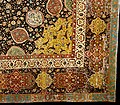
The Ardabil carpet is a monumental piece of Persian art, representing the pinnacle of carpet weaving in the Safavid period and holding immense cultural significance.

Set reading age
View for Kids
Easy to read and understand
View for Students
Clear, detailed explanations
View for Scholars
Deep dives and big ideas
The Ardabil Carpet is a famous rug from Ardabil, a city in Iran. 🌍This carpet is known for its beautiful colors and intricate patterns. It was made in the 16th century and is one of the oldest and largest carpets in the world! The carpet is so special that it was used in a mosque, a place where people pray. 🕌Today, it is displayed in a museum in London, England, where people can come and see its stunning design. The Ardabil Carpet is a treasure of art and history, showing how talented carpet makers were long ago! 🎨
The Ardabil Carpet plays a role in the economy of Iran, too! 🛍️ Carpet-making is a significant industry in the country, providing jobs for many artisans and weavers. These talented individuals create beautiful carpets, which are sold both locally and internationally. The sale of Persian carpets, including Ardabil pieces, helps support families and communities. 💵Moreover, the tourism generated by famous carpets brings visitors to Iran, allowing them to learn more about this rich culture. The Ardabil Carpet not only represents art but also helps boost the economy through its historical and cultural importance. 🌍
The Ardabil Carpet is part of an incredible collection of treasures! One of its most famous homes is the Victoria and Albert Museum in London, where it draws many visitors each year. 🏛️ This museum, established in 1852, focuses on art and design from different cultures. The Ardabil Carpet is considered one of the most precious items there! Another famous place to view Persian carpets includes the Museum of Islamic Art in Qatar. These collections show how special the Ardabil Carpet is to history and the art world! 🖼️
Preserving the Ardabil Carpet is essential so future generations can enjoy it! Many experts work in museums to carefully take care of these historic pieces. They make sure the environment is perfect, with the right temperature and light. 🌞Special cleaning methods are used to keep the carpet safe without damaging it. Museums also provide special training to staff for handling and maintaining valuable artifacts. 🌿This ensures the Ardabil Carpet remains a shining example of Persian art for many years. Everyone can appreciate its beauty while learning about its fascinating history! 🌈
The Ardabil Carpet is an important symbol of Persian culture! 🇮🇷 It represents the skill and dedication of carpet makers in Iran. For many years, woven carpets played a vital role in Iranian homes and ceremonies. The patterns and designs shown in the Ardabil Carpet have been admired worldwide, influencing many artists and craftspeople. It also showcases the value of craftsmanship and artistic expression in Iranian history. 💖This carpet reminds people of the beauty and history of different cultures, encouraging them to appreciate art from around the world. 🌏
The Ardabil Carpet has influenced many modern artists! 🎨Designers and painters consider its intricate patterns and colors inspirational. Some artists have created their own artworks based on the shapes and themes found in the carpet. 🖌️ Additionally, modern textile designers use the same weaving techniques to create new, beautiful carpets. The Ardabil Carpet shows how historical art can continue to inspire creativity and innovation even today. 🌟By connecting the past with the present, it helps remind us that art is always evolving and changing!
Making an Ardabil Carpet requires special materials and techniques! 🧶Skilled weavers use wool, silk, and cotton to create these beautiful rugs. Wool keeps the carpet warm, while silk adds a shiny, colorful touch. The Ardabil Carpet is knotted using a technique called "Persian knot," which makes it strong and durable. 🌟Weavers carefully create each knot by hand, taking a long time to finish. This means the carpets are not just pretty; they are made to last for many years! The Ardabil Carpet showcases how talented artisans can create art using simple materials. ✨
The history of the Ardabil Carpet is quite interesting! It was woven during the Safavid dynasty, which ruled Iran between 1501 and 1736. 🏰The carpet is believed to have been made in the city of Ardabil by skilled artisans. It is approximately 34 feet long and 17 feet wide! The famous carpet was originally created for the Sheikh Lotfollah Mosque in Ardabil. A man named Shah Abbas I commissioned the carpet, making it very important to Iranian culture. It represents the creativity and craftsmanship of the Persian people. 📜
The Ardabil Carpet is famous for its unique and beautiful patterns! 🌺The most notable design on the carpet includes a large central medallion, surrounded by intricate floral motifs. Flowers like tulips and roses are often depicted, symbolizing beauty and nature. 🌷The colors used in the carpet are rich and vibrant, including deep reds, blues, and golds, which make it eye-catching. Each part of the design has meaning; for example, the medallion represents unity, and the borders symbolize protection. The patterns tell stories about the artists' lives and the culture of Iran. 📖


DIY is a creative community where kids draw, build, explore ideas, and share.
No credit card required