All Articles

Arabian Horse

Arabian Horse Facts For Kids

The Arabian horse is a breed with ancient roots, known for its elegance, endurance, and strong bond with humans, originating from the Arabian Peninsula.
🎨 Reading age for 6-8
Background blob
Arabian Horse
Arabian Horse
Facts for Kids!
Image by Ealdgyth, licensed under Creative Commons Attribution-Share Alike 3.0

Do more with AI

Introduction

The Arabian horse is one of the oldest breeds in the world! 🐴It originated from the Arabian Peninsula, a desert region in Southwest Asia covering countries like Saudi Arabia, Kuwait, and the United Arab Emirates. These horses are famous for their endurance and beauty. They usually have a distinctive shape, with a high tail and a refined head. Arabian horses can be found in many colors, like bay, gray, and chestnut. They are not only fast runners but also very smart, making them great for riders of all ages! 🌍

Images of Arabian Horse

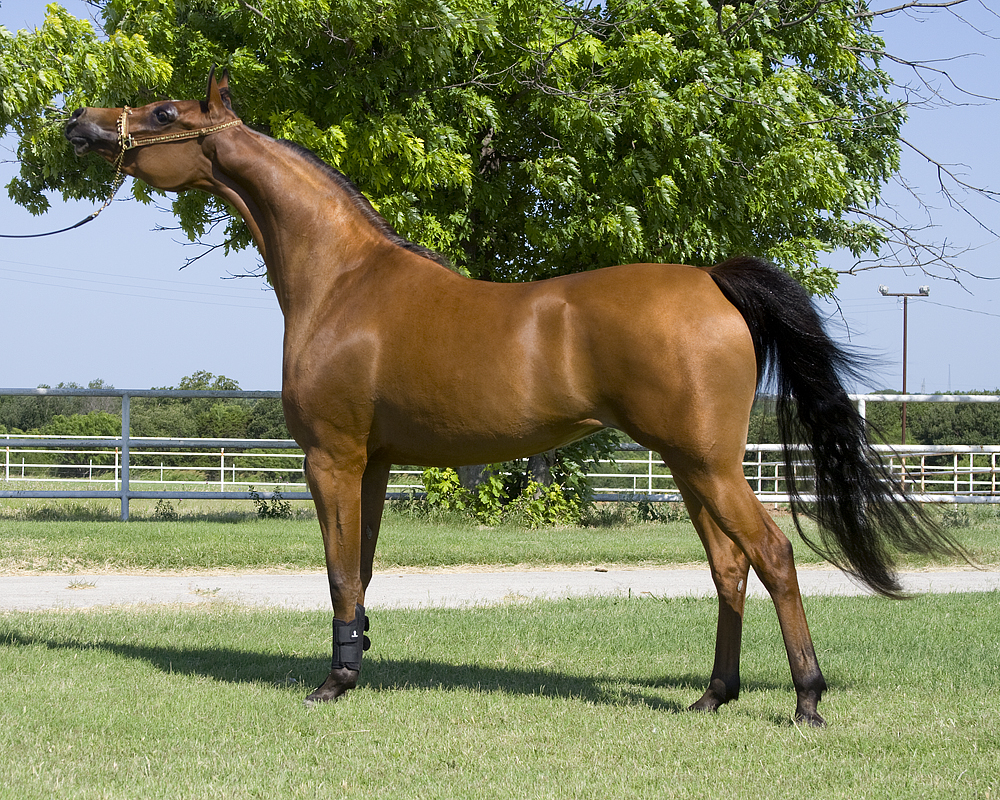
A purebred Arabian stallion, showing dished profile, arched neck, level croup and high-carried tailImage by Photographer: Aline Sagrabelny, licensed under Creative Commons Attribution-Share Alike 3.0

A purebred Arabian stallion, showing dished profile, arched neck, level croup and high-carried tail

Mounted skeleton of an Arabian horse, showing underlying structure of breed characteristics including concave profile, short back, high-set tail, distinction between level croup and well-angulated hip. This specimen also has only 5 lumbar vertebrae.

Mounted skeleton of an Arabian horse, showing underlying structure of breed characteristics including concave profile, short back, high-set tail, distinction between level croup and well-angulated hip. This specimen also has only 5 lumbar vertebrae.

Arabians are noted for both intelligence and a spirited dispositionImage by Ealdgyth, licensed under Creative Commons Attribution-Share Alike 3.0

Arabians are noted for both intelligence and a spirited disposition

A gray Arabian; note white hair coat but black skinImage by Trescastillos, licensed under Creative Commons Attribution-Share Alike 4.0

A gray Arabian; note white hair coat but black skin

A chestnut rabicano Arabian horseImage by Montanabw, licensed under Creative Commons Attribution-Share Alike 3.0

A chestnut rabicano Arabian horse

A tobiano patterned National Show Horse, a type of partbred ArabianImage by Just chaos, licensed under Creative Commons Attribution 2.0

A tobiano patterned National Show Horse, a type of partbred Arabian

An Arabian horse in the desert. Antoine-Jean Gros, c. 1810

An Arabian horse in the desert. Antoine-Jean Gros, c. 1810

Carl Raswan pictured on an Anazeh warmare

Carl Raswan pictured on an Anazeh warmare

Hittite chariot (drawing of an Egyptian relief)

Hittite chariot (drawing of an Egyptian relief)

A purebred Arabian stallion, showing dished profile, arched neck, level croup and high-carried tailImage by Photographer: Aline Sagrabelny, licensed under Creative Commons Attribution-Share Alike 3.0

A purebred Arabian stallion, showing dished profile, arched neck, level croup and high-carried tail

Mounted skeleton of an Arabian horse, showing underlying structure of breed characteristics including concave profile, short back, high-set tail, distinction between level croup and well-angulated hip. This specimen also has only 5 lumbar vertebrae.

Mounted skeleton of an Arabian horse, showing underlying structure of breed characteristics including concave profile, short back, high-set tail, distinction between level croup and well-angulated hip. This specimen also has only 5 lumbar vertebrae.

Arabians are noted for both intelligence and a spirited dispositionImage by Ealdgyth, licensed under Creative Commons Attribution-Share Alike 3.0

Arabians are noted for both intelligence and a spirited disposition

A gray Arabian; note white hair coat but black skinImage by Trescastillos, licensed under Creative Commons Attribution-Share Alike 4.0

A gray Arabian; note white hair coat but black skin

A chestnut rabicano Arabian horseImage by Montanabw, licensed under Creative Commons Attribution-Share Alike 3.0

A chestnut rabicano Arabian horse

A tobiano patterned National Show Horse, a type of partbred ArabianImage by Just chaos, licensed under Creative Commons Attribution 2.0

A tobiano patterned National Show Horse, a type of partbred Arabian

An Arabian horse in the desert. Antoine-Jean Gros, c. 1810

An Arabian horse in the desert. Antoine-Jean Gros, c. 1810

Carl Raswan pictured on an Anazeh warmare

Carl Raswan pictured on an Anazeh warmare

Hittite chariot (drawing of an Egyptian relief)

Hittite chariot (drawing of an Egyptian relief)

Training And Care

Taking care of an Arabian horse involves proper training and grooming. 🏇Regular training should start when they are young to help them learn and grow. It's important to use gentle methods so they trust and bond with their riders. Grooming involves brushing their smooth coat, cleaning their hooves, and checking their health regularly. Arabian horses need a balanced diet with hay, grains, and vitamins to stay strong. 💪Exercise is also essential, as it keeps them healthy and happy. A well-trained horse can build a great friendship with its rider!

Uses And Disciplines

Arabian horses are versatile and can be used for various activities! 🏇They excel in endurance riding, where they can race for long distances, sometimes over 100 miles! Due to their athleticism, many people also use them in shows, jumping, and dressage. Additionally, Arabian horses are often used in films because of their beauty. Their gentle and loving nature allows them to be great companions for children learning to ride. Their skills make them fantastic for both competitive sports and leisure riding! 🎉

Breeding And Genetics

The breeding of Arabian horses is a careful process that focuses on pure lineage. 🌍The most famous stud farm for Arabian horses is Al Khalediah Stables in Saudi Arabia. Breeders pay close attention to the personality, conformation, and racing abilities of both parent horses to produce healthy foals. This ensures that the horses' desirable traits are passed on. Arabians are also the foundation for many other horse breeds, like the Thoroughbred. This means they've contributed to improving other horse breeds worldwide! 🌟

Cultural Significance

Arabian horses hold great cultural meaning, especially in the Middle East. 🌙Bedouin tribes have long considered them an essential part of their heritage and way of life. These beautiful horses are often a symbol of pride and honor, sometimes even given as gifts! In various art forms, such as poetry and paintings, Arabian horses are celebrated for their grace. Additionally, they appear in traditional fairs and festivals where people showcase their riding skills. 🐾This highlights the strong bond between horses and humans throughout history!

Famous Arabian Horses

Several Arabian horses have made history or are famous in culture. One of the most iconic is *Bashkir Curly*, known for its unusual curly coat! 🌟Another legendary Arabian horse is *Marwan Al Shaqab*, who has won many championships. In literature, the Arabian horse is often featured in stories, like in James Howes’ "The Horse Diaries." Additionally, Arabian horses played significant roles in historical battles, such as the famous War Horse of the Bedouins. 🏇✨

Health Considerations

Just like humans, Arabian horses need good healthcare to stay healthy! 🏥They are generally strong but can sometimes have special needs due to their unique bodies. Regular check-ups from veterinarians can help prevent illnesses. One common condition to watch for is "arabian horse syndrome," which may affect some horses’ muscles. It’s crucial to provide them with enough water, especially if it's hot outside, to prevent dehydration. With proper care, Arabian horses can live up to 25-30 years, making them great companions for a long time! 🥳

Physical Characteristics

Arabian horses are known for their unique physical traits. They typically stand between 14.1 and 15.3 hands tall (about 4.5 to 5.1 feet). 🐎Their faces have a distinct shape, with a short, straight profile and large nostrils. Arabian horses have strong, rounded bodies and long, slender legs. Their tails are carried high, which makes them look elegant! Their short coat is smooth and shiny, and they usually have a distinctive "dish" face. Because of their incredible build, these horses can travel long distances quickly! 🌟

Temperament And Behavior

Arabian horses are known for being friendly and intelligent. 😊They tend to bond closely with their riders and require gentle handling. Despite their strength, they are sensitive creatures that can pick up on their owner's feelings. This special connection makes them great companions! However, sometimes they can be a little spirited or energetic. This means they may need training to behave well. With patience and love from their owners, they can become calm, well-mannered horses that are fun to ride! 🥰

History Of The Arabian Horse

Arabian horses have a long and rich history, dating back over 4,500 years! 🏜️ Bedouin tribes, who lived in the harsh desert, bred these horses for their strength and stamina. They even believed that their horses were sacred gifts from God! Some famous horses, like the legendary mare *Bukhatir*, were valued for their exceptional skills. These horses traveled with their owners, helping them in battles and trade. Through history, they spread to different parts of the world, including Europe and Asia, where they were used in different riding styles. 📜

Arabian Horse Quiz

Q1
Question 1 of 10

Learn more about Arabian Horse

Ready to create?

Make

To create a safe space for kid creators worldwide!

Create

Vibe Coding

Kids GPT

All Tools

Kibu

Resources

Worksheets

SafeTube

Blog

FAQ

Account

Pricing

Log-in

Sign-up

Data Deletion

Company

About

Community Guidelines

Privacy Policy

Terms of Service

2025, URSOR LIMITED. All rights reserved. DIY is in no way affiliated with Minecraft™, Mojang, Microsoft, Roblox™ or YouTube. LEGO® is a trademark of the LEGO® Group which does not sponsor, endorse or authorize this website or event. Made with love in San Francisco.