Anura Facts For Kids
Anura, or frogs, are short-bodied, tailless amphibians known for their jumping abilities and vital ecological roles.

Do more with AI
Introduction
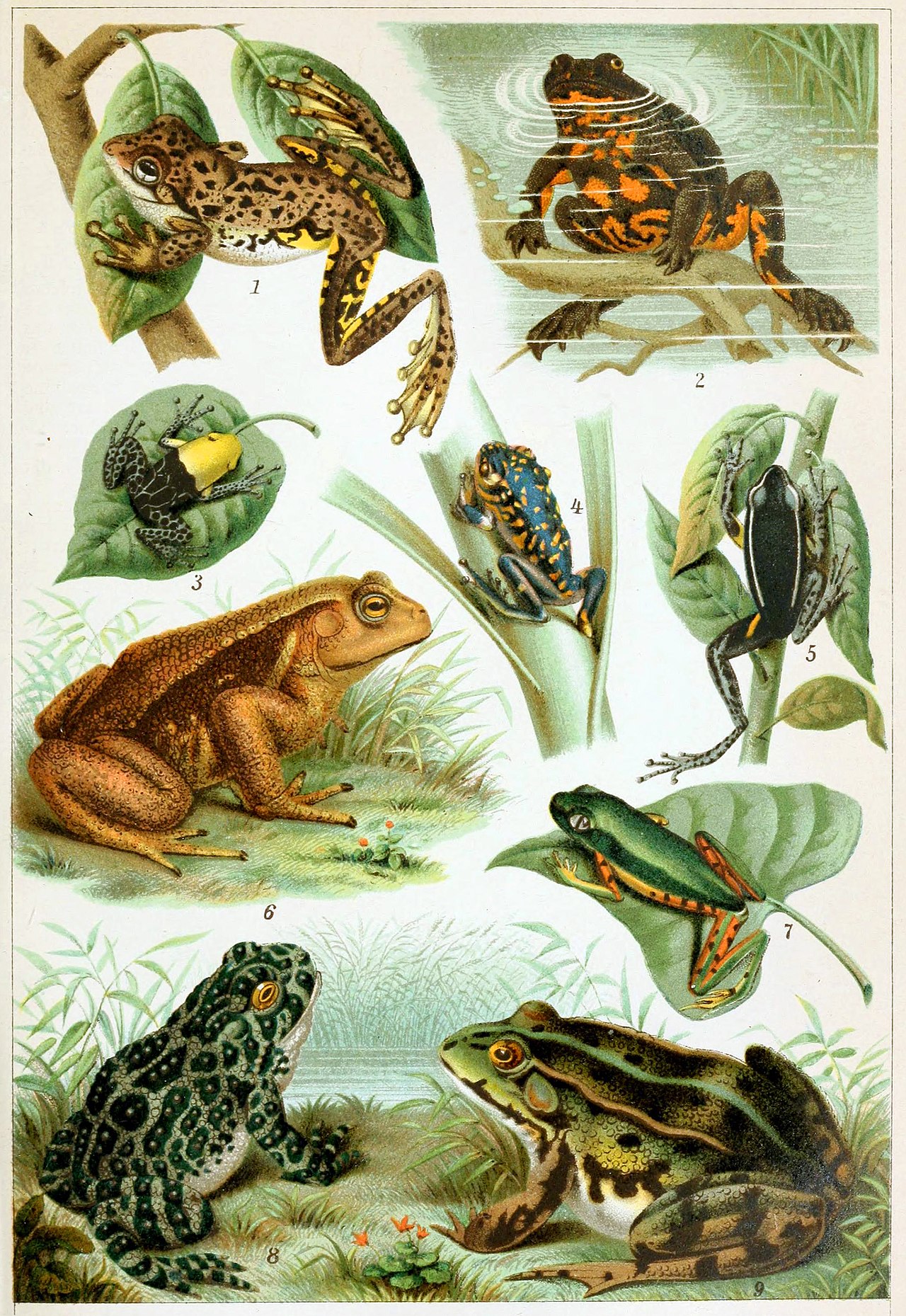
Anura is the scientific name for frogs and toads! 🐸These amazing creatures are found all over the world, except for Antarctica. Frogs have smooth skin, long legs for jumping, and are known for their croaking sounds. The name "Anura" comes from Greek words meaning “without tail,” since frogs don’t have tails like other animals when they grow up. There are over 7,000 species of frogs, showing just how diverse they can be! 🌎They come in many shapes and sizes and have brightly colored skin to help with hiding from predators. Isn’t that cool?
Images of Anura

Known world distribution of Anura (Amphibians).

European fire-bellied toad (Bombina bombina)

Panamanian golden frog (Atelopus zeteki)

A fossilised frog from the Czech Republic, possibly Palaeobatrachus gigas

A bullfrog skeleton, showing elongated limb bones and extra joints. Red marks indicate bones which have been substantially elongated in frogs and joints which have become mobile. Blue indicates joints and bones which have not been modified or only somewhat elongated.

Webbed hind foot of common frog (Rana temporaria)

Tyler's tree frog (Litoria tyleri) has large toe pads and webbed feet.

Northern leopard frog (Rana pipiens) moulting and eating its skin

Pouched frog (Assa darlingtoni) camouflaged against leaf litter
Conservation Status
Many frog species worldwide are facing dangers due to habitat loss and pollution. 🚧Frogs are considered indicators of a healthy environment; when they are in trouble, it's a sign that something is wrong. Some species are endangered, like the California Red-legged Frog and the Golden Toad. 🌧️ Conservation efforts, like protecting their habitats and cleaning water sources, are important to help them survive! Organizations around the world are working hard to save these amazing amphibians from going extinct.
Cultural Significance
Frogs are more than just cool creatures; they also hold cultural significance! 🌏In many cultures, frogs are seen as symbols of good luck and transformation. For example, in ancient Egypt, the frog goddess Heqet was associated with fertility. Frogs appear in fairy tales too, like "The Frog Prince!" 🐸 They also inspire art, music, and toys. People love frogs so much that they even have frog festivals! Frogs remind us of nature's wonders and play a part in various traditions around the world!
Common Species Of Anura
There are so many different species of frogs out there! 🐸Some common ones include the American Bullfrog, known for its big size and loud croak, and the Red-eyed Tree Frog, famous for its bright colors and large red eyes! 🌳Another popular species is the Leopard Frog, which has spotted skin like a leopard. In Australia, you might find the colorful Corroboree Frog. With so much variety, each frog has unique features that help it live in its specific environment!
Habitat And Distribution
Frogs are found on every continent except Antarctica! 🌍They love habitats that are wet and moist, such as ponds, lakes, and rainforests. Frogs like places where they can find plenty of water and shelter. For example, the Amazon Rainforest in South America has many colorful frogs like the poison dart frog! 🌈Frogs can also live in deserts, grasslands, and even some cities. However, they do need water for their eggs and to survive. They are truly adaptable creatures!
Physical Characteristics
Frogs come in all sorts of shapes and sizes! 🦠Some can be as small as a pea (1.5 cm) while others can grow to be over a foot long! Their bodies are smooth or bumpy, and many have bright colors like green, red, and blue, which can help them blend in or warn predators. Frogs have big eyes for good vision, and their strong legs allow them to jump far and swim quickly. 🏊These amphibians breathe through their skin, in addition to their lungs, which helps them stay wet. Their skin must stay moist to stay healthy!
Adaptations And Evolution
Frogs have special features called adaptations that help them survive! 🎨For example, some frogs are brightly colored, warning predators that they are poisonous. Others can change their skin color to blend into their surroundings. 🦟Frogs also have webbed feet for swimming and unique calls to attract mates. Over millions of years, frogs have evolved different abilities to live in various environments. This evolution helps them adjust to climate changes and find food, making them resilient animals!
Diet And Feeding Behavior
Frogs are carnivores! 🐍They enjoy eating insects like flies, ants, and grasshoppers. Some larger frogs might even eat small animals like mice! Frogs have a sticky tongue that they use to catch their food. They sit patiently and wait for a meal to come near, and then—whoosh!—they stick out their tongue and snatch it up! 🍽️ Tadpoles, the young frogs, are a little different; they eat plants and algae. As they grow and change, they switch to eating insects!
Reproduction And Life Cycle
Frogs start their lives as eggs! 🥚The mother frog lays her eggs in water, and then a tadpole hatches from the egg. Tadpoles are small and have tails to help them swim. 🏊Over time, they grow legs and lose their tails, turning into frogs. This change is called metamorphosis. The life cycle takes about 12 weeks to a year. Once they become frogs, they can live many years—up to 10 or more! Isn’t it fascinating how they change from tiny eggs to jumping frogs?
Interactions With Ecosystems
Frogs play an important role in their ecosystems! 🍃They are both predators and prey—eating insects helps control their populations while providing food for animals like birds and snakes. Frogs also become part of the food web, interacting with plants, insects, and other animals in their habitat. 🌍They help keep ponds and lakes healthy by eating algae when they are young. Protecting frogs means protecting the entire ecosystem they help thrive!
Threats And Conservation Efforts
Frogs face several threats, including pollution, climate change, and habitat loss. 🌧️ Pesticides and chemicals in water can harm them, and many frogs depend on healthy wetlands. To protect these creatures, scientists and conservationists are working to preserve their habitats and raise awareness about their importance. 🦋Programs like breeding in captivity and creating protected areas help frog populations recover. Everyone can help by keeping our environment clean and protecting nature, because every frog counts!
Anura Quiz
Learn more about Anura
