Amber Facts For Kids
Amber is a beautiful, fossilized tree resin that has formed over millions of years, encapsulating ancient life and natural history.
Select reading age
Amber Facts For Kids
Videos & Quizzesincluded
About this topic
Amber is a beautiful and shiny substance that comes from trees! 🌳Over millions of years, the sticky resin from trees hardens and turns into what we call amber. It's usually golden-yellow or orange in color but can also be found in other shades, such as green or blue. People love to use amber to make pretty jewelry like necklaces and earrings. ✨There are even some awesome fossils trapped inside amber that help scientists learn about ancient times! Let’s dive into the amazing world of amber and discover its secrets! 🐞
Explore with ChatDinoKey Points
There are several types of amber, and they all come in different colors and choices.
Amber is not a rock or a gemstone; it is actually fossilized tree resin!
Amber is created from tree resin that began its life millions of years ago!
Amber is a popular material for making jewelry!
Amber has a special connection to the environment because it comes from trees!
Amber has become a treasure for scientists!
Amber has been important in many cultures for thousands of years!
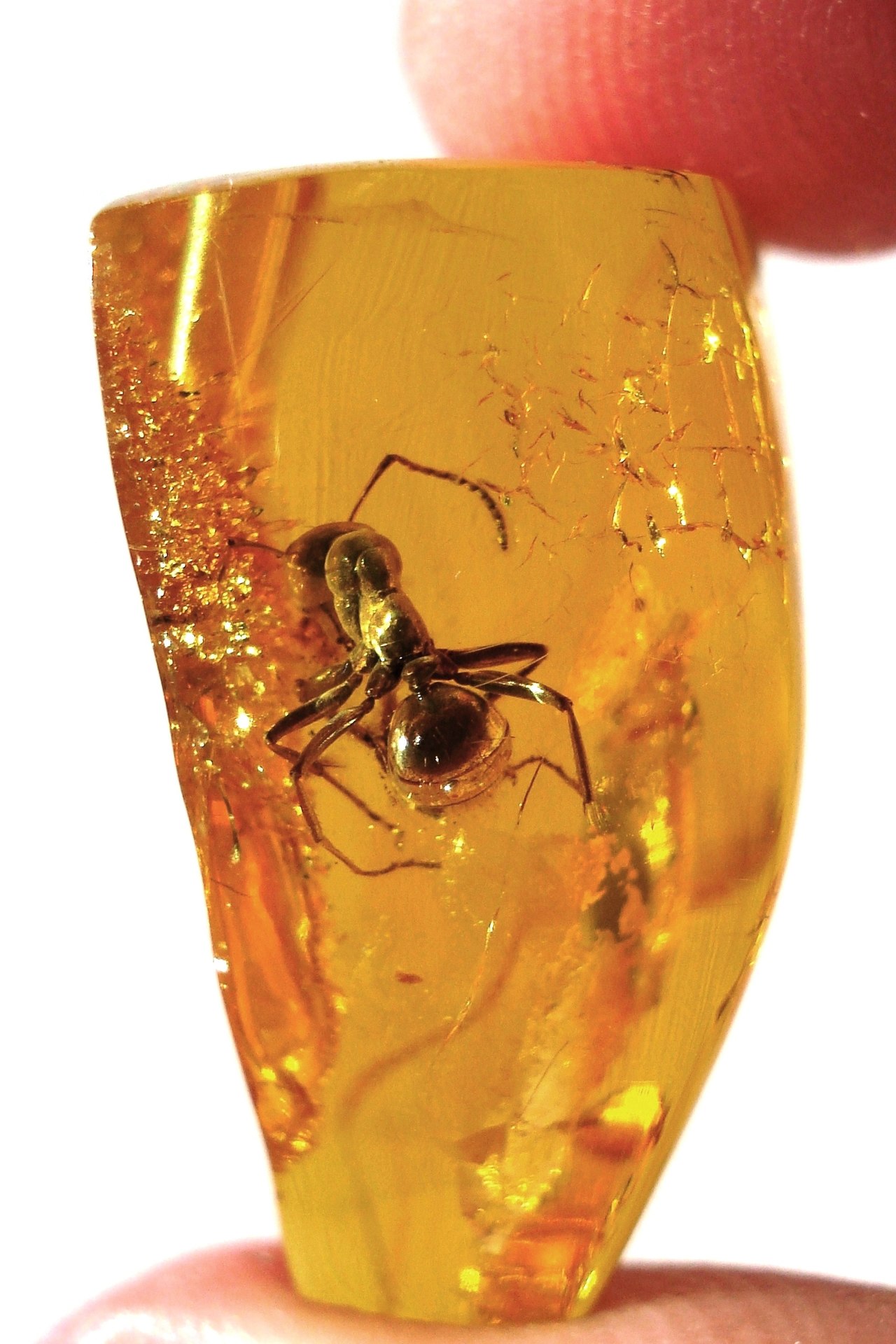
One of the coolest things about amber is that it can contain fossils!
Amber has some unique physical and chemical properties that make it special!
It’s essential to take care of amber treasures!
Photos of Amber

Blue amber from Dominican Republic

Unpolished amber stones

Fishing for amber on the coast of Baltic Sea. Winter storms throw out amber nuggets. Close to Gdańsk, Poland.

Wood resin, the source of amber

Baltic amber with inclusions

Amber from Bitterfeld

Open cast amber mine "Primorskoje" in Jantarny, Kaliningrad Oblast, Russia

Extracting Baltic amber from Holocene deposits, Gdańsk, Poland

Unique colors of Baltic amber. Polished stones.
🟡 Types Of Amber
There are several types of amber, and they all come in different colors and choices. 🟡The most common type is called "Baltic amber,” which originates from the Baltic Sea region of Europe. 🍂It is usually yellowish and contains lots of ancient bugs! Another type is "Dominican amber," found in the Dominican Republic, known for its bright colors like blue and green. 🌊Some amber can even glow under ultraviolet light! Each type of amber has its own story and beauty. So, when you see amber, remember that it’s like a time capsule of the ancient world! ⏳
Go deeper🌲 What Is Amber?
Amber is not a rock or a gemstone; it is actually fossilized tree resin! 🌲When trees get hurt, they ooze out this sticky substance to protect themselves. Over time, this resin hardens and turns into amber after hundreds of thousands to millions of years! Amber can be found all over the world, but the largest deposits are in countries like Poland, Russia, and the Dominican Republic. 🌍Amber is special because it can trap tiny bugs, plant pieces, or other things inside it, making it a treasure for scientists and collectors alike! 🔍
Go deeper🌳 Formation Of Amber
Amber is created from tree resin that began its life millions of years ago! 🌳When a tree is damaged, it releases the sticky resin to heal itself. This resin can fall to the ground or become buried. Over thousands of years, layers of soil and minerals cover the resin. As heat and pressure build up, the resin hardens and turns into amber! 🔥Isn't that cool? Some amber is even more than 300 million years old! The wonderful colors and shapes that form during this process create unique pieces that we enjoy today. 🌈
Go deeper🧡 Uses Of Amber In Jewelry
Amber is a popular material for making jewelry! 🧡People love using amber for necklaces, bracelets, and earrings because of its warm colors and shiny surface. Many jewelers polish amber to make it even more beautiful! 🌟Some amber pieces are carved into fun shapes, like animals or flowers, and they can sometimes be found with tiny insects trapped inside. This makes them even more special! Many cultures believe that wearing amber can bring good luck or healing energy, making it not just pretty but also magical! ✨
Go deeper🌳 Amber And The Environment
Amber has a special connection to the environment because it comes from trees! 🌳When trees produce resin, it helps protect them from pests and diseases. This is nature’s way of keeping trees healthy! 🎍In many places, amber trees play important roles in the ecosystem since they provide homes for animals and insects. When we use amber in jewelry, it reminds us to respect trees and nature. By conserving forests and protecting trees, we can ensure that future generations enjoy the wonders of amber, just like we do today! 🌱
Go deeper🔬 Amber In Scientific Research
Amber has become a treasure for scientists! 🔬Inside amber, you can find ancient insects, spiders, and even tiny plants that were alive millions of years ago. By studying these inclusions, scientists learn about what the world was like a long time ago! 🌎For example, they can find out what insects lived during the time of the dinosaurs. Some fossils found in amber are even older than dinosaurs! This helps researchers understand the evolution of life on Earth. So, amber is like a super cool time machine that tells us stories from the past! 🚀
Go deeper🌍 Cultural Significance Of Amber
Amber has been important in many cultures for thousands of years! 🌍In ancient times, people believed amber had healing properties and could protect against evil spirits. In some cultures, it was used for rituals, decorations, and even money! The Greeks called amber “Elektron,” where we get the word “electricity.” ⚡ In China, it has been used for thousands of years in traditional medicine. Today, amber jewelry is appreciated all over the world, reminding us of the connection between nature and culture. Each piece of amber carries stories and traditions! 🐉
Go deeper🦟 Fossils And Inclusions In Amber
One of the coolest things about amber is that it can contain fossils! 🦟Sometimes, tiny insects like mosquitoes or ants get trapped in the sticky resin before it turns into amber. These creatures become perfectly preserved, allowing scientists to study them much later! This is why amber is often called "nature's time capsule." ⏳ Other things like plant leaves, flowers, and even small lizards can be found in amber too! By studying these inclusions, researchers can learn a lot about the ancient ecosystems and environments. Amber is like a peek into the past! 🌿
Go deeper🌟 Physical And Chemical Properties
Amber has some unique physical and chemical properties that make it special! 🌟It ranges from being soft to hard, and it feels warm when you touch it. Amber usually weighs between 1 and 2 times more than water! Its chemical formula is C10H16O, which means it is made up of carbon, hydrogen, and oxygen. 🧪Amber is also a good insulator, meaning it doesn’t conduct electricity. If you rub amber against your hair, it can even create static electricity! ⚡This is why it was used in the past to make some cool tools and objects!
Go deeper🛡️ Preservation And Conservation Of Amber
It’s essential to take care of amber treasures! 🛡️ Since amber is fossilized and can be fragile, preserving it is important. Experts recommend keeping amber out of direct sunlight to prevent fading. 🌞It’s also best to store amber in soft cloth or a padded box to avoid scratches. Many countries are working to protect amber-rich areas to prevent over-mining and ensure future generations can enjoy this natural wonder! By understanding the importance of amber, we can all help conserve nature and its beautiful creations! 🌍❤️
Go deeper