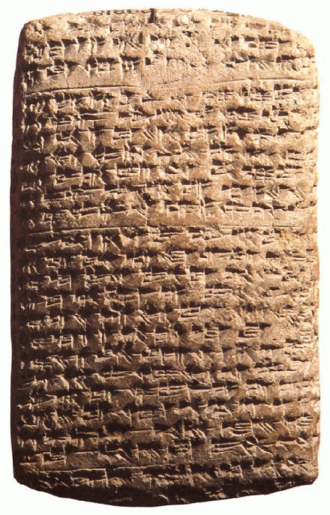
The Amarna Letters are an archive of diplomatic correspondence written on clay tablets between the Egyptian administration and neighboring kingdoms during the New Kingdom in the 14th century BC.
Set reading age
View for Kids
Easy to read and understand
View for Students
Clear, detailed explanations
View for Scholars
Deep dives and big ideas
The Amarna Letters are a collection of ancient clay tablets 📜 made over 3,000 years ago! They were written during the Egyptian New Kingdom, specifically around the middle of the 14th century BC. These letters tell us about conversations between leaders from Egypt and nearby areas like Canaan and Amurru. 🌍The most famous of these leaders was Pharaoh Akhenaten, who ruled Egypt. The letters reveal what life was like back then, how people traded, and how they communicated with each other. It's like a time capsule 📦, giving us a peek into ancient diplomacy!
The Amarna Letters contain different topics, like gifts, military help, and marriages 🤝. Some letters were about asking for help in battles! Others thanked leaders for gifts, such as gold and horses! 🎁The letters also discussed marriages between royal families, which was a way to create friendships between countries. Through these letters, we can learn about the politics of the time and how important trust was between leaders. They show us that diplomacy—talking things out—was important in keeping peace and trade going!
During the 14th century BC, Egypt was a powerful kingdom 🌅! At this time, Pharaoh Akhenaten changed many things in Egypt, including religion. He wanted to worship only one sun god named Aten. The Amarna Letters show how Egypt interacted with neighboring lands, especially Canaan (now part of Israel and Palestine) 🌐. These places were important for trade and safety. The letters give us clues about the relationships between countries and how they were trying to work together or sometimes fight! By studying these letters, we learn about the world so long ago.
Some important people appear in the Amarna Letters! Pharaoh Akhenaten is the most famous, but there were others too. 🌟For instance, the letter from Abdu-Heba, the ruler of Jerusalem, asks for protection from invaders. There was also Biryawaza, a king who wrote to Akhenaten about trade opportunities. 🏰These figures show the close connections between cities and the importance of their relationships. Their letters tell us who was involved in the politics of the time and how they tried to maintain peace, trade, and friendships!
The Amarna Letters offer amazing cultural insights into life in ancient Egypt and Canaan! 🎭The letters speak of religious practices, trade goods, and even food! They mention gifts like wine, gold, and silver—which were considered very special! 🍷Through these letters, we see how people valued relationships and friendship, filling their exchanges with tokens of goodwill. The letters also reveal that people worried about invaders and sought help from powerful neighbors. Learning about this can help kids understand that cultures vary but share common desires for peace and friendship!
The Amarna Letters were discovered in the city of Akhetaten, modern-day Amarna, Egypt 🏺. Archaeologists uncovered them in the late 19th century. The letters are significant because they show actual conversations between kings and governors! These tablets help historians understand how countries communicated—kind of like texting today, but on clay! 📱They also help us see how alliances were formed and how they handled issues like wars and trade. The discovery was like finding treasure because it changed our understanding of ancient history!
The Amarna Letters have greatly impacted how we understand ancient Egypt and Canaan 🌏. They reveal details of political relationships, trade agreements, and cultural exchanges. This helps historians learn about the people who lived there, their challenges, and their achievements. The letters also highlight how the two cultures influenced each other! For example, they show how worship practices differed but sometimes blended together. The letters remind us that even long ago, people were connected through trade, communication, and shared ideas, making history a fascinating subject!
Preserving the Amarna Letters was important for us to learn about the past! Archeologists found them in clay form, but they had to carefully clean and store them 💧. Scholars worked hard to translate the inscriptions from Akkadian to languages we understand today! ✍️ Because of their knowledge, we can read these ancient letters. The process is challenging, just like solving a puzzle! Without this perseverance, we might never have known about these exciting tales of diplomacy from so long ago. Learning about these letters can inspire kids to appreciate and preserve history!
The diplomatic relations shown in the Amarna Letters tell us a lot about the time. Egypt was a dominant power, and other smaller kingdoms looked to it for protection 🌟. Leaders often wrote to Pharaoh Akhenaten, asking for help or alliances. Some letters even show the fear those leaders had when their lands were threatened by enemies. 🛡️ By understanding these relationships, kids can see how important communication was to avoid wars and build friendships. The letters remind us that talking can solve problems, even if it was with a quill and clay!
The Amarna Letters were written in a special ancient language called Akkadian, which was used for international communication 🌍. The letters used cuneiform writing, which looks like little triangles and wedges pressed into soft clay! 🗗️ This was easy for scribes to use. The writers had to be very careful and neat, as mistakes could lead to misunderstandings! The letters also show that sometimes different cultures used similar symbols to express similar ideas. Learning about ancient writing techniques can inspire kids to write their own letters in creative ways!
The Amarna Letters can be compared to other ancient diplomatic letters, like those from Mesopotamia, Greece, and Rome 🏛️. For example, the Hittite letters showed similar negotiations over land and trade. Just like today’s letters or emails, they involved discussions of alliances, treaties, and marriages! 💌Comparing these letters helps us understand how different cultures communicated and what was important to them. It shows that people have always needed to share information to work together. The Amarna Letters are a piece of this giant puzzle of human history!


DIY is a creative community where kids draw, build, explore ideas, and share.
No credit card required