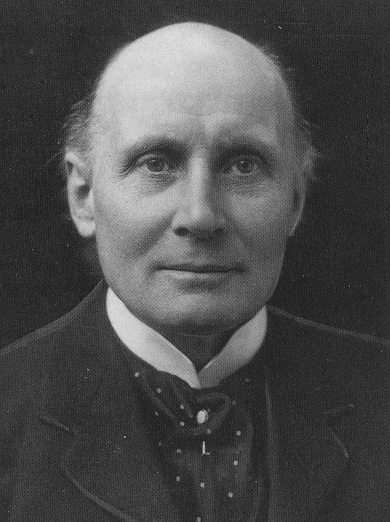
Alfred North Whitehead was an English mathematician and philosopher renowned for his work on logic, mathematics, and process philosophy.

Set reading age
View for Kids
Easy to read and understand
View for Students
Clear, detailed explanations
View for Scholars
Deep dives and big ideas
Alfred North Whitehead was a famous British mathematician and philosopher born on February 15, 1861, in Ramsgate, England. 🌍He is known for his work in mathematics, logic, and philosophy. Whitehead believed in the importance of learning and creativity. He was not just a mathematician; he also loved to think deeply about life and ideas! He passed away on December 30, 1947, in Cambridge, Massachusetts, USA. 🏫His thoughts and ideas helped shape many fields of study, making him an important figure in both mathematics and philosophy.
Whitehead wrote several important books during his life. 📖One of his most famous works is “Principia Mathematica,” written with Bertrand Russell. This book, published in 1910, tried to explain the foundations of mathematics using logic. Another key book is “Process and Reality,” published in 1929. In this book, he explored his ideas about process philosophy. ✍️ Whitehead's writings are complex, but they open up exciting ideas about math, nature, and existence. Many people still read his works today!
Alfred North Whitehead left a lasting legacy! 🌟His groundbreaking ideas influenced many thinkers in philosophy, science, and education. His concept of process philosophy encouraged people to appreciate connections, creativity, and the journey of learning. Whitehead's work continues to inspire students, teachers, and researchers at universities around the world. Many students learn about his contributions in their math and philosophy classes! 🏆Even today, his ideas help us think about complex issues such as nature, community, and existence.
Whitehead showed great talent in school from a young age. 📚He attended the prestigious Brighton College and later went to Trinity College, Cambridge, where he studied mathematics. 🤓He graduated in 1884, earning very high marks. Whitehead was excited about the world of numbers and ideas. His education helped him see the connections between math and life. He became a teacher, sharing his knowledge with students at various universities, including London and Harvard! 🏛️
Not everyone agreed with Whitehead's ideas, and that's okay! 🤔Some critics found his philosophy too complicated to understand. Others doubted whether his approach could help solve practical problems in science and math. Despite these criticisms, many people admire his ability to spark curiosity and encourage creative thinking. Whitehead's work stirred conversations and debates among thinkers, which is an important part of learning! 💬Engaging in discussions helps students understand different viewpoints and expand their knowledge.
Alfred North Whitehead is known for creating unique ideas about how everything in the universe is connected! 🌌He believed that life is like a big, ever-changing dance. He called this idea "process philosophy." This means that instead of thinking about things as separate and unchanging, he saw them as fluid and interconnected. Whitehead's thoughts encouraged people to think about change, creativity, and relationships in new ways. His work gave a fresh perspective on how we understand our world and each other! 🌈
If you're interested in learning more about Alfred North Whitehead, there are plenty of great resources! 📚You can find books like "Process and Reality," which explores his philosophy in depth. Many websites and libraries also offer articles about his life and work. Check your local library for information on Whitehead or visit educational websites for kids, like National Geographic Kids or Britannica! 🏫Learning about thinkers like Whitehead can inspire your own creativity and curiosity about the world!
Whitehead's process philosophy is a fascinating concept! 🌟He believed that everything in the universe is always changing. He thought of individuals, like people and animals, as "actual occasions," connected through their experiences. Whitehead suggested that instead of seeing things as solid and unchanging, we should view them as part of a continuous flow. This idea has inspired many to think about how their lives and actions influence the world around them. 🎢Process philosophy teaches us about the importance of change and relationships!
Alfred North Whitehead had a big impact on science and mathematics! 🔍His ideas helped influence fields like physics, biology, and education. He believed that science doesn't just collect facts but also creates new ideas! Whitehead's thoughts on relationships in nature changed how scientists and mathematicians think about their work. His theories encouraged scientists to look at the world in a more interconnected and dynamic way, inspiring future generations to explore new ideas! 🚀
📚 Alfred North Whitehead was a British mathematician and philosopher who co-authored 'Principia Mathematica'.
🌌 He is known for his process philosophy that describes reality as a series of interconnected events.
🔍 Whitehead served as a professor at both the University of Cambridge and Harvard University.
🌀 His work laid the foundation for modern metaphysics and the philosophy of science.
⚙️ Whitehead contributed significantly to the field of algebra, with a focus on the theory of relations.
🌱 He developed a theory of organic evolution as part of his philosophical reflections.
✒️ Whitehead believed in the significance of education, emphasizing experiential learning.
💡 He offered a systematic approach to mathematical logic and philosophy, influencing many later thinkers.
🎓 Whitehead's work inspired various fields, including theology, ecology, and cybernetics.
⏳ He was born on February 15, 1861, and died on December 30, 1947.


DIY is a creative community where kids draw, build, explore ideas, and share.
No credit card required