Alexander R. Todd, Baron Todd Facts For Kids
Alexander R. Todd, Baron Todd was a pioneering British biochemist whose work on nucleotides earned him the Nobel Prize in Chemistry in 1957, significantly impacting genetics and medicine.
Select reading age
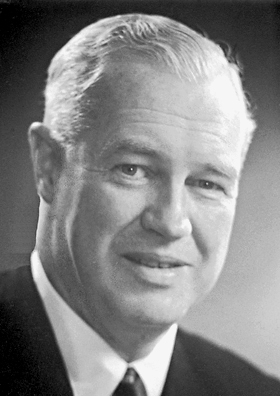
Alexander R. Todd, Baron Todd Facts For Kids
Videos & Quizzesincluded
About this topic
Alexander R. Todd, also known as Baron Todd, was a bright British chemist born on October 2, 1907, in Glasgow, Scotland. 🏴☠️ He is famous for his incredible work in biochemistry, which is the study of living things at a chemical level. Todd made noteworthy discoveries about tiny molecules called nucleotides, which are crucial in our DNA and energy production! In 1957, he earned the Nobel Prize for Chemistry for his groundbreaking research. 🌟Todd's work has helped scientists understand how life functions, making him an important figure in science!
Explore with ChatDinoKey Points
Alexander R.
Even after his passing on January 10, 1997, Todd's legacy lives on!
After completing his studies, Todd worked in various scientific positions, showcasing his talents!
Todd's primary research focused on the important molecules called nucleotides.
Todd had a curious mind from a young age!
Todd published numerous books and articles throughout his career!
Todd's discoveries significantly impacted modern biochemistry!
During his career, Todd collaborated with many talented scientists, enhancing his research!
Todd's main contributions to biochemistry revolve around nucleotides and nucleosides!
In addition to his scientific accomplishments, Todd was given the title of Baron Todd in 1965!
🏆 Awards And Honors
Alexander R. Todd received many prestigious awards for his achievements! 🏆In 1957, he won the Nobel Prize in Chemistry for his research on nucleotides. This award is considered one of the highest honors in science! Todd also received the Royal Medal from the Royal Society in 1960 and was knighted in 1963, making him Sir Alexander Todd. 👑Throughout his life, Todd was recognized as one of the leading scientists in biochemistry, reflecting his hard work and dedication!
Go deeper🌟 Legacy And Memory
Even after his passing on January 10, 1997, Todd's legacy lives on! 🌟Students and scientists still study his research and learn from his discoveries. Schools and institutions recognize his contributions to biochemistry. Todd's name is mentioned alongside other famous scientists, reminding us all of the power of curiosity and exploration. His life serves as an inspiration for young scientists everywhere to dream big and believe in their ability to make a difference! 🌈
Go deeper🔬 Scientific Career
After completing his studies, Todd worked in various scientific positions, showcasing his talents! 🔬In the 1930s, he was part of the University of Cambridge, where he researched chemical compounds. Todd's curiosity and skill helped him explore the world of biochemistry! During World War II, he investigated how to make essential medicines, helping soldiers stay healthy. 🩺After the war, he became a professor at Cambridge, sharing his knowledge with students and fellow scientists. Todd's impactful career inspired many aspiring chemists around the globe!
Go deeper🧪 Research On Nucleotides
Todd's primary research focused on the important molecules called nucleotides. 🧪Nucleotides are the building blocks of DNA and RNA, essential for life. Todd studied their structures, which helped scientists understand how these molecules function. By learning how to synthesize nucleotides in the lab, he discovered the connections between them and cellular processes. 🔗His research provided crucial insights into how genetic information is stored and transmitted in living organisms, which is fundamental for biology!
Go deeper🌱 Early Life And Education
Todd had a curious mind from a young age! 🌱He attended Glasgow High School before going on to the University of Glasgow, where he studied chemistry. In 1927, he earned his Bachelor’s degree. His desire to learn didn't stop there! Todd completed his Ph.D. in 1931, becoming even more knowledgeable about chemicals. 🎓He loved to explore and discover new things, which shaped his future as a remarkable scientist. Todd's interest in biochemistry started during his studies, leading to an incredible career!
Go deeper📚 Publications And Writings
Todd published numerous books and articles throughout his career! 📚His writings explain complex ideas in chemistry and biochemistry, making them easier to understand. Some of his significant works focus on nucleotides and their impact on life. By sharing his knowledge, Todd helped educate many aspiring scientists. His publications remain valuable resources today, inspiring new generations to learn about the fascinating world of biochemistry and the importance of scientific research! ✍️
Go deeper🌍 Impact On Modern Biochemistry
Todd's discoveries significantly impacted modern biochemistry! 🌍His research on nucleotides helped unlock secrets about DNA, contributing to advancements in genetics. Today's scientists use his findings to study diseases, develop vaccines, and create new medicines. 💊Todd also inspired future researchers to explore the world of biochemistry further, making life-changing discoveries. His work laid the foundation for various scientific fields, showing how essential his contributions were in improving our understanding of life!
Go deeper🤝 Collaboration With Other Scientists
During his career, Todd collaborated with many talented scientists, enhancing his research! 🤝Working together allowed them to share ideas and discoveries. Todd often teamed up with other biochemists, sharing his knowledge on nucleotides and their role in cellular functions. These collaborations led to exciting innovations and advancements in the field. By joining forces, Todd and his colleagues contributed to shaping modern biochemistry, demonstrating the power of teamwork in science!
Go deeper🧬 Major Contributions To Biochemistry
Todd's main contributions to biochemistry revolve around nucleotides and nucleosides! 🧬He discovered how these molecules are structured and how they work together. Nucleotides are essential for building DNA and RNA—important for life! Todd also examined nucleotide coenzymes, which help enzymes speed up chemical reactions in our bodies. ⚡His research paved the way for understanding cellular energy systems and aided in advancements in medicine. Todd's work opened new doors for discoveries that benefit everyone!
Go deeper👨⚖️ Baron Todd: The Peerage And Public Service
In addition to his scientific accomplishments, Todd was given the title of Baron Todd in 1965! 👨⚖️ This noble title means he could sit in the House of Lords, where important decisions are made for the United Kingdom. Todd used his position to support science and encourage education in the country. He spoke about the importance of research and how it can benefit society. Todd's contributions as a Baron helped shape policies that supported future scientific discoveries and ideas!
Go deeper