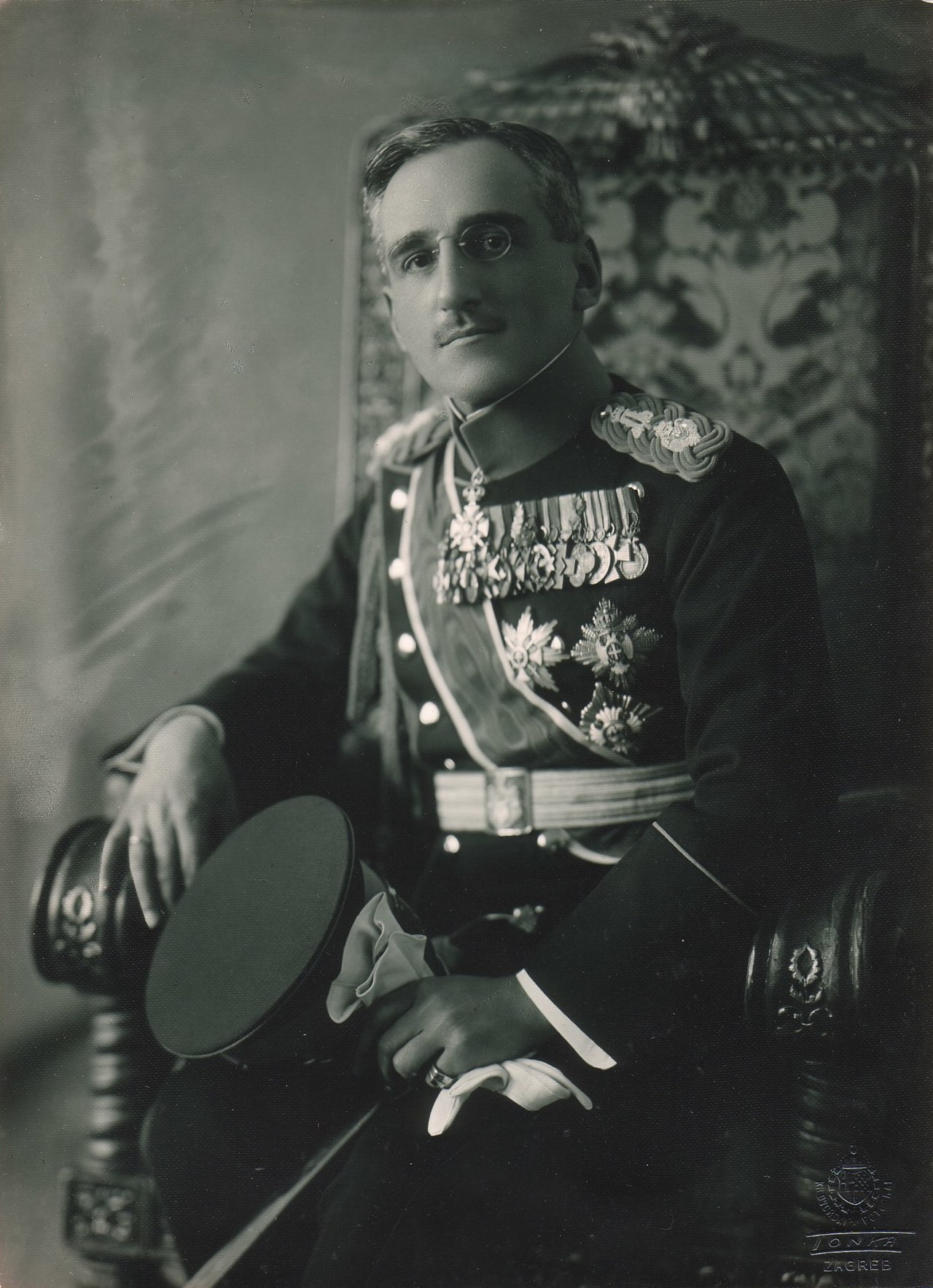
Alexander I of Yugoslavia, known as Alexander the Unifier, was a king who dedicated his reign to uniting the diverse ethnic groups in Yugoslavia from 1921 until his assassination in 1934.
Set reading age
View for Kids
Easy to read and understand
View for Students
Clear, detailed explanations
View for Scholars
Deep dives and big ideas
Alexander I of Yugoslavia, also called Alexander the Unifier, was a king who ruled from 1921 to 1934 🏛️. He was born on December 16, 1888, in Cetinje, Montenegro. Alexander united different regions, including Serbs, Croats, and Slovenes, making Yugoslavia a new country! 🇷🇸🇭🇷🇸🇮 His goal was to bring people together and create peace after World War I. Sadly, his reign ended when he was assassinated in 1934 in France 😢. Alexander worked hard for unity, but many challenges lay ahead, which influenced not only his country but also all the people who lived there.
After his father, King Peter I, passed away in 1921, Alexander became Prince Regent 👑. A regent is someone who rules for a king who is too young or unable to. Alexander was young but determined! He wanted everyone in his kingdom to feel included. To promote unity, he traveled around Yugoslavia, meeting people and listening to their concerns 🎤. In 1929, he officially became king! His desire for collaboration helped him understand the needs of different groups in the country. His work as Prince Regent set the stage for many important changes and challenges as king.
Alexander wanted to change the government from a democracy to a dictatorship for better control. This change happened in 1929, when he introduced new laws and a new constitution 📜. A constitution is like a rulebook for how a country should be run. He believed that strong leadership would help solve conflicts. Alexander also wanted to limit the power of political parties so that everyone could focus on working together 💪. These reforms were controversial, and many people had differing opinions about them. Some supported Alexander's decisions, while others disagreed, causing further tensions across the country.
On October 9, 1934, tragedy struck when Alexander was assassinated in France while visiting the nation 🇫🇷. A group of assassins attacked him during a parade, and it shocked many people both in Yugoslavia and around the world. Alexander’s dreams of unity faced a devastating blow with his death. After his passing, his legacy as a ruler who aimed to bring people together continued to inspire new leaders. Even today, Alexander is remembered for his efforts to create a strong, united Yugoslavia. His story teaches us about the importance of leadership, unity, and cultural understanding. 🌟
Alexander was born to the royal Karađorđević family 🎉. He spent much of his youth in a royal palace in a small town. Alexander had a rich education, learning about history, languages, and leadership 📚. He spoke Serbian, French, and English fluently! He became a military officer and fought in World War I, gaining experience that would help him later as king. In 1918, after the war ended, he helped create the Kingdom of Serbs, Croats, and Slovenes. His education made him a strong leader, preparing him to rule a diverse nation with different cultures. 🌍
On October 3, 1929, Alexander King became King of Yugoslavia! 🎉He changed the name of his kingdom to focus on unity, including all the different ethnic groups. During his reign, he wore a crown symbolizing that he was a king for everyone, not just one group. The coronation ceremony was grand, bringing people together from all over the country 🎊. Alexander wanted a strong, happy kingdom where everyone could live together peacefully. People had high hopes, and Alexander was excited to meet their expectations and make Yugoslavia a welcoming place for all its citizens.
The Great Depression started in 1929 and affected many countries, including Yugoslavia 🌧️. This economic crisis led to high unemployment and poverty, making life difficult for many citizens. Alexander wanted to help the people, so he implemented several economic reforms to stabilize the country. He worked to improve agriculture, boost industry, and create jobs for those facing hardships 🌱. However, the effects of the Depression caused unrest, and many people lost faith in the government. Alexander tried his best to guide Yugoslavia through this tough time, but the struggle continued to challenge his leadership and decisions.
Being king wasn’t easy for Alexander! He faced many political challenges, including disagreements among the different groups in Yugoslavia ⚖️. Some people wanted more independence for their areas, while others wanted a stronger central government. To tackle these issues, Alexander formed alliances with different political leaders and groups. He tried to create a sense of belonging for everyone in the kingdom 🤝. However, not everyone agreed with his ideas, and this led to political unrest. Despite these challenges, Alexander continued to work hard, believing in unity among all Yugoslavs for a brighter future 🌟.
Alexander loved culture and wanted to promote the arts 🎨. He supported many musicians, writers, and artists across Yugoslavia. By encouraging cultural projects, he hoped to unify people through shared stories and creativity. One famous event was the opening of the National Museum in Belgrade, showcasing the country’s rich history and culture. By investing in arts and education, Alexander believed it would foster a sense of unity among different ethnic groups 💖. Festivals, concerts, and exhibitions flourished during his reign, making Yugoslavia a vibrant place, filled with creativity and cultural pride ✨.
Alexander knew that to keep his country safe, he needed good relationships with neighboring countries 🏡. Yugoslavia shared borders with Italy, Hungary, Bulgaria, and Greece, making it important to maintain peace. He worked to build alliances to strengthen connections and prevent conflicts. Alexander even signed treaties, like the Little Entente, to support cooperation with Czechoslovakia and Romania 🤝. Despite his efforts, tensions still existed, especially with Italy under Mussolini. Alexander believed that a united Yugoslavia would be stronger and more influential in the region, paving the way for better relations in the future 🌏.


DIY is a creative community where kids draw, build, explore ideas, and share.
No credit card required