Agujaceratops Facts For Kids
Agujaceratops is a genus of ceratopsian dinosaur known for its distinct facial features and was a herbivore that roamed North America in the Late Cretaceous period.
Select reading age
Agujaceratops Facts For Kids
Videos & Quizzesincluded
About this topic
Agujaceratops is a cool dinosaur that lived about 75 million years ago during the Late Cretaceous period! 🦖It was discovered in what is now known as west Texas, USA. Scientists believe it was a herbivore, which means it only ate plants. Agujaceratops had a unique head shape that featured large horns and a frill, making it look like a living dinosaur art piece! This dinosaur is part of the ceratopsid family, which includes other famous dinosaurs like Triceratops. Isn’t it fascinating how dinosaurs roamed our planet long before we were here? 🌍
Explore with ChatDinoKey Points
The fossils of Agujaceratops were found as part of a larger group of dinosaurs.
The name "Agujaceratops" means "Aguja horned face."
Agujaceratops was a large dinosaur, measuring around 16 to 20 feet long!
As a herbivore, Agujaceratops loved to eat plants!
Agujaceratops lived in a warm, forested area that had lots of plants to munch on.
Agujaceratops lived in groups or herds, which offered safety in numbers!
Dinosaurs like Agujaceratops have made appearances in movies, books, and toys!
When comparing Agujaceratops to other dinosaurs, we see some fun similarities and differences!
Photos of Agujaceratops

Restoration of Agujaceratops mariscalensis

Size comparison of Agujaceratops mariscalensis to a human

Juvenile Agujaceratops skeleton as reproduced by Triebold Paleontology in Woodland Park, Colorado, USA

Agujaceratops mariscalensis brow horn

Agujaceratops mariscalensis squamosal
🦴 Fossil Evidence
The fossils of Agujaceratops were found as part of a larger group of dinosaurs. 🦴Fossils typically include bones, teeth, and even skin impressions, which gives scientists clues about what these creatures were like. You can see Agujaceratops’ fossils displayed in museums, where they are studied to learn more about its life and environment. Fossil evidence helps scientists piece together the puzzles of how dinosaurs lived millions of years ago! 🔍
Go deeper🏞️ Discovery And Naming
The name "Agujaceratops" means "Aguja horned face." It was named after Aguja Peak, which is close to where its fossils were discovered. 🏞️ The first bones of this dinosaur were found in the 1990s by scientists who were very excited to discover a new species. The fossils were well preserved, which helped paleontologists learn a lot about how Agujaceratops looked and lived. Its name tells us not only about its place of discovery but also suggests what it looked like - a horned dinosaur! 🦙
Go deeper🦕 Physical Description
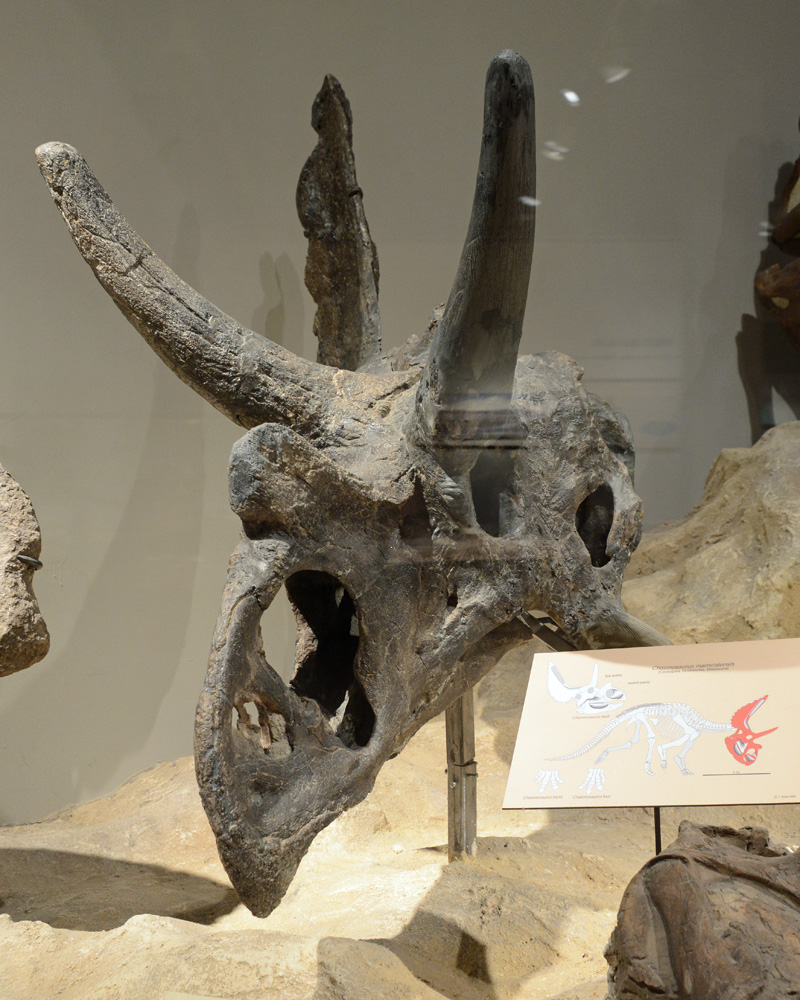
Agujaceratops was a large dinosaur, measuring around 16 to 20 feet long! 🦕It had a massive skull with eye-catching horns above its eyes and a bony frill at the back of its head. This frill might have helped to protect it from predators or attracted other Agujaceratops for mating. Its body was heavyset, walking on four sturdy legs, making it a strong and stable creature. Agujaceratops looked quite different from some small two-legged dinosaurs, showing us the wonderful variety in the dinosaur family! 🌈
Go deeper🥬 Diet And Feeding Habits
As a herbivore, Agujaceratops loved to eat plants! 🥬It used its flat beak to nibble on leaves, ferns, and other vegetation that grew all around it. To keep cool in different seasons, it likely moved to find food as the climate changed. Agujaceratops had to eat a lot every day, which meant it was always on the lookout for delicious plants. This way of eating helped help the plants grow back healthier and gave the environment a good balance! 🌱
Go deeper🌳 Habitat And Distribution
Agujaceratops lived in a warm, forested area that had lots of plants to munch on. 🌳Most of its fossils were discovered near the Aguja formation in Texas, a place that was once much different than today! During the Late Cretaceous, Texas was covered in lush vegetation, making it a great place for dinosaurs to live. Agujaceratops roamed around in herds, which helped protect them from predators like the fearsome Tyrannosaurus rex that could be lurking nearby! 🦖
Go deeper🐾 Behavior And Social Structure
Agujaceratops lived in groups or herds, which offered safety in numbers! 🐾Being part of a herd allowed them to protect one another from predators like meat-eating dinosaurs. They likely communicated using body language and maybe even sounds! Their large frills and horns could have also played a role in social interactions, helping them attract mates or show they were strong. Just like elephants and other animals today, Agujaceratops probably formed strong bonds and lived together in close-knit family groups! 💕
Go deeper🎥 Cultural Impact And Representation
Dinosaurs like Agujaceratops have made appearances in movies, books, and toys! 🎥📚 You can see similar horned dinosaurs in films like "Jurassic Park." These dinosaurs capture our imagination with their giant sizes and unique looks. Children everywhere love pretending to be dinosaurs, and Agujaceratops reminds us of the amazing creatures that once walked the earth. 🦖Learning about them helps us connect with history and nature, inspiring future scientists and explorers! 🌟
Go deeper📊 Comparative Analysis With Other Dinosaurs
When comparing Agujaceratops to other dinosaurs, we see some fun similarities and differences! 📊Like Triceratops, Agujaceratops had horns and a frill, but instead of having three facial horns, it had a unique two-horned appearance! Both dinosaurs were herbivores and had similar body structures, but Agujaceratops was found in different regions. This shows us that in the dinosaur world, many relatives had different adaptations to fit their environments! 🐉
Go deeper