Acrocanthosaurus Facts For Kids
Acrocanthosaurus was a giant theropod dinosaur known for its high neural spines and formidable predatory skills, living during the Early Cretaceous period.
Select reading age
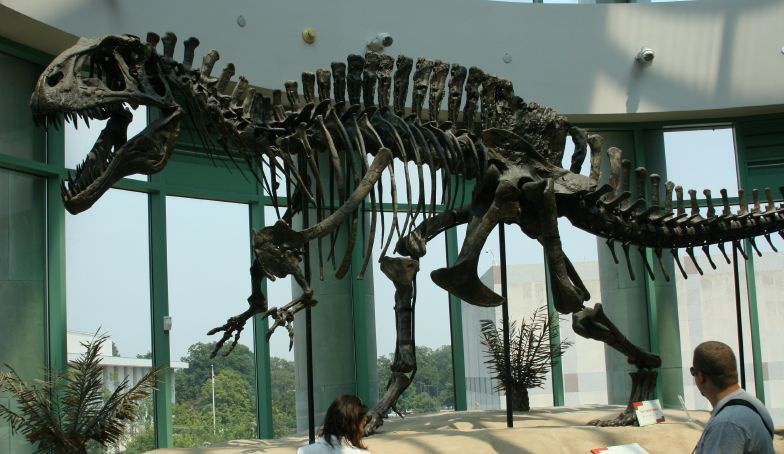
Acrocanthosaurus Facts For Kids
Videos & Quizzesincluded
About this topic
Acrocanthosaurus was a large dinosaur that lived about 115 million years ago during the Early Cretaceous period! 🦖It was discovered in North America, specifically in what is now Oklahoma. Acrocanthosaurus means "high-spined lizard" because it had tall spines along its back. This dinosaur was a meat-eater, or carnivore, measuring around 28 feet long, roughly the length of a school bus! 🚍It walked on two powerful legs and had sharp teeth to catch its prey. Scientists classify it as a theropod, just like the famous T. rex!
Explore with ChatDinoKey Points
Acrocanthosaurus lived in what is now North America, particularly in areas like Oklahoma and Texas.
Fossils of Acrocanthosaurus have been found in several locations, mainly in the USA.
As a meat-eater, Acrocanthosaurus had a hearty appetite!
Acrocanthosaurus had fascinating physical features!
Acrocanthosaurus is significant to paleontology because it provides insight into the diversity of theropod dinosaurs.
Acrocanthosaurus likely had a social structure similar to some modern-day predators.
Acrocanthosaurus shares similarities with other well-known dinosaurs, like Allosaurus and Tyrannosaurus rex.
Acrocanthosaurus has made its mark in popular culture, capturing imaginations worldwide!
Photos of Acrocanthosaurus

Known parts of the Acrocanthosaurus specimens (to scale) as of 2015.

Cast of an Acrocanthosaurus atokensis skeleton (NCSM 14345) mounted at the Museum of the Red River, Idabel, Oklahoma.

Size comparison of seven carcharodontosaurids (Acrocanthosaurus in light brown)

Skull of Acrocanthosaurus. Originally illustrated in K. Carpenter, K. 2016. Acrocanthosaurus Inside and Out. Oklahoma University Press, 137p.

Acrocanthosaurus — photo 5

Skeletal diagram


Acrocanthosaurus — photo 8

Restoration of Acrocanthosaurus engaging in courtship behavior
🌍 Habitat And Range
Acrocanthosaurus lived in what is now North America, particularly in areas like Oklahoma and Texas. 🌍During the Early Cretaceous, the land was warm and covered in forests with sandy terrain. This environment provided plenty of food and places to hide. Acrocanthosaurus probably roamed in packs to hunt and thrive. The surrounding areas were also home to many other dinosaurs, including smaller herbivores, which likely made up a part of its diet. It loved this area because it was full of life! 🌳
Go deeper🦴 Fossil Discoveries
Fossils of Acrocanthosaurus have been found in several locations, mainly in the USA. 🦴One of the most important discoveries was made in Oklahoma during the 1950s. Scientists uncovered a nearly complete skeleton! These fossils provide clues about its size, shape, and lifestyle. Some other fossils found include teeth and several vertebrae that show off its unique spine structure. Paleontologists use these fossils to piece together how Acrocanthosaurus lived millions of years ago. Every find helps unlock more secrets about this fascinating dinosaur! 🔍
Go deeper🍗 Diet And Feeding Habits
As a meat-eater, Acrocanthosaurus had a hearty appetite! 🍗It primarily fed on large herbivorous dinosaurs like plant-eating sauropods. With its sharp teeth and powerful jaws, it could easily tear into the flesh of large animals. Sometimes, it may have scavenged on other dinosaurs that were already dead. Its keen sense of sight and smell would have helped it spot prey from afar. Acrocanthosaurus undoubtedly used its speed and strength to chase down its meals. One bite, and it was ready to feast! 🍽️
Go deeper🦒 Physical Characteristics
Acrocanthosaurus had fascinating physical features! It could reach heights of about 16 feet, almost as tall as a giraffe! 🦒Its most notable trait was its tall spines, which were likely covered in skin, giving it a unique look. The dinosaur had strong legs to run fast and sharp claws to help it hunt. Its head was filled with sharp teeth that were perfect for tearing into meat. Imagine a dinosaur with a huge mouth full of teeth! It was a powerful and impressive creature that ruled its territory with strength! 💪
Go deeper🦖 Paleontological Significance
Acrocanthosaurus is significant to paleontology because it provides insight into the diversity of theropod dinosaurs. 🦖By studying its fossils, scientists learn how different dinosaurs adapted to their environments. It helps researchers understand how these creatures evolved into modern birds! 🐦Its tall spines offer clues about how dinosaurs adapted to their habitats, making it a key specimen in dinosaur studies. Additionally, many fossils of Acrocanthosaurus are in museums, exciting visitors and teaching people about prehistoric life! Together, these findings help create a picture of Earth's ancient past! 🌏
Go deeper👥 Behavior And Social Structure
Acrocanthosaurus likely had a social structure similar to some modern-day predators. It might have hunted in groups, or packs, to take down larger prey together. 👥This teamwork allowed them to be more successful hunters. They could also protect each other from larger threats. When they weren’t hunting, they may have used loud sounds or roars to communicate with one another. This behavior helped strengthen their bonds and establish their territory. Being part of a group made survival much easier in the wild! 🌿
Go deeper🦕 Comparisons With Other Dinosaurs
Acrocanthosaurus shares similarities with other well-known dinosaurs, like Allosaurus and Tyrannosaurus rex. 🦕Unlike T. rex, which lived in later periods, Acrocanthosaurus was a much older species, allowing scientists to see how dinosaurs changed over time! While Allosaurus was similar in size and diet, Acrocanthosaurus had its unique high spines. These differences help scientists piece together the giant family tree of dinosaurs. By comparing these mighty creatures, we can learn about the evolution of their features and how they adapted to survive! 🌳
Go deeper🎥 Cultural Impact And Representation
Acrocanthosaurus has made its mark in popular culture, capturing imaginations worldwide! 🎥You might see a version of this dinosaur in books, films, and even video games! It often appears alongside other dinosaurs, showcasing its massive size and unique spines. Some documentaries about dinosaurs explain how Acrocanthosaurus lived, which helps kids learn about these fascinating creatures! Museums also display its fossils, allowing visitors to connect with Earth's incredible history. With its combination of incredible traits and size, Acrocanthosaurus continues to wow audiences everywhere! 🌟
Go deeper