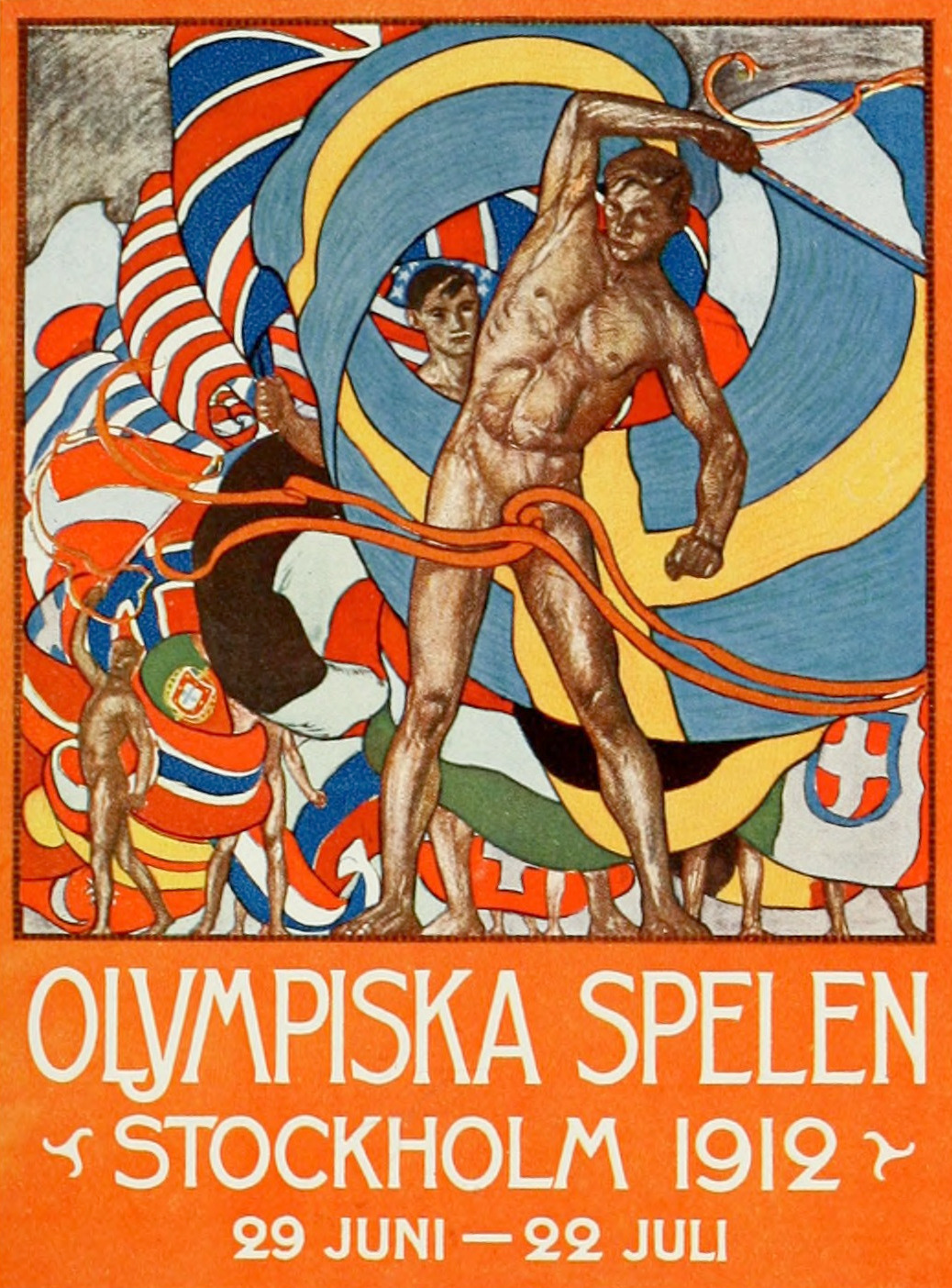
The 1912 Summer Olympics, held in Stockholm, Sweden, celebrated international friendship and athletic excellence with over 2,400 athletes competing in a variety of sports.
Set reading age
View for Kids
Easy to read and understand
View for Students
Clear, detailed explanations
View for Scholars
Deep dives and big ideas
The 1912 Summer Olympics, also called the Games of the V Olympiad, took place in Stockholm, Sweden. 🇸🇪 These exciting games were held from July 6 to July 22, 1912. Athletes from many countries came together to show off their skills in various sports. This was a special time because it was the first Olympics where modern sports equipment was used, making competitions even more thrilling! 🥇The events included swimming, athletics, and gymnastics. Thousands of fans cheered for their favorite athletes, and it was a fun-filled adventure celebrating sports and teamwork! 🎉
The 1912 Summer Olympics featured many thrilling sports! 🏊♂️ Athletes competed in events like swimming, track and field, fencing, and boxing. One of the most exciting races was the decathlon, where male athletes competed in 10 different events over two days! Another fun event was the marathon, which is a long-distance running event. 🏃♂️ The 1912 Olympics had new sports like modern pentathlon, which included fencing, swimming, and running in one challenging competition! Everyone cheered as they watched these talented athletes give it their best, making for a memorable experience! 🎊
The main venue for the 1912 Summer Olympics was the Stockholm Olympic Stadium, built just for these games! 🏟️ It was a beautiful arena with a seating capacity of about 30,000 fans, where all the exciting events took place! The stadium had amazing facilities, like a swimming pool and a running track! It was designed by architect Fredrik Lilljekvist and opened in 1912. 🏊♀️ The games were also held in other venues, like the KTH Royal Institute of Technology for gymnastics! Each venue offered a unique experience for athletes and fans alike, creating lasting memories! 🎉
Though the 1912 Summer Olympics were mostly fun, they did have some challenges. Some athletes faced discrimination based on their race or nationality. 🌈For example, Jim Thorpe, who won gold, had his medals taken away after a dispute over amateur status, which upset many fans! Also, some countries had difficulties sending athletes due to political tensions. 🌍Despite challenges, the spirit of the games continued to shine! Athletes worked hard to compete and supported one another, proving that sports can help overcome difficulties and bring joy! 🎉
The 1912 Summer Olympics had a significant cultural impact on Sweden and the world! 🌍People from different countries gathered to celebrate sports and share their cultures! Traditional music, dances, and food were enjoyed, creating a festive atmosphere! The games inspired people to appreciate sports and fitness, encouraging exercise and teamwork! 🏃♂️ Many athletes became national heroes, and excitement spread across countries as they followed the events! The Olympics helped to grow international friendships, showing that sports can bring people together, regardless of where they come from. 🤝
The 1912 Summer Olympics marked a significant moment for women in sports! 🏃♀️ For the first time, women were allowed to compete in swimming and diving events! 🌊There were around 48 female athletes who competed in these competitions! The inclusion of women in the Olympics paved the way for future games. Though they still faced many challenges, these brave women demonstrated their talent and strength, proving that girls can be amazing athletes too! 💖Their determination and achievements inspired future generations of female athletes to follow their dreams and compete in sports! ✨
The legacy of the 1912 Summer Olympics is still felt today! 🏅It set a high standard for future Olympic games, showcasing amazing athletic achievements and sportsmanship. The games promoted international unity, inspiring future generations to get involved in sports! The introduction of new sports and equipment laid the foundation for the modern Olympics we know today. 🌈Additionally, it served as a reminder that hard work and determination can lead to success. The 1912 Olympics taught us all about friendship, respect, and the joy of competing, and these lessons still resonate around the world! 🌍
Many incredible athletes competed in the 1912 Summer Olympics! One of the most famous was Jim Thorpe from the USA, who won gold medals in both the pentathlon and decathlon! 🥇Another remarkable athlete was Paavo Nurmi from Finland, known as the "Flying Finn," who won gold in the 5,000 meters and the 10,000 meters! 🇫🇮 Also, there was Hyman "Hy" Wachtel, an amazing swimmer who won gold in the 4x200 meters relay! 🌊Each athlete worked very hard to win, and they showed determination and spirit, inspiring fans around the world!
The 1912 Summer Olympics brought new and exciting changes! 🎉This was the first time that athletes received a modern medal design. Gold, silver, and bronze medals were awarded to the top three competitors in each event! 🥇🥈🥉 They also introduced the official Olympic flag featuring the five colorful rings, symbolizing unity among the five continents! 🌍Additionally, it was the first Olympics to use electronic timing to measure race results! These innovations made the games more exciting and helped create a professional atmosphere that the world would cherish for future games! 📅
In the 1912 Summer Olympics, 28 countries participated, including the USA, Sweden, Germany, and Great Britain! 🇺🇸🇸🇪 The USA brought the largest team with over 500 athletes! Each country sent its best athletes to represent them, with every nation hoping to win medals and show their strength! 🌟The Olympics encouraged a mix of cultures, as fans and athletes exchanged stories and experiences. National pride filled the air as every country cheered for their athletes! This spirit of friendly competition and togetherness helped shape the future of the Olympics, making it a global event! 🌍
The 1912 Summer Olympics were held during a time of great change. Europe was starting to industrialize, and many nations were growing stronger. 💪The Olympics aimed to bring people together through friendly competition. The modern Olympics had begun in 1896, and by 1912, they were becoming more popular! In 1900, women competed for the first time! The 1912 games had about 2,500 athletes from 28 countries. This was all about unity and sportsmanship! The Olympic spirit connected people worldwide, which was very important in an era before World War I began. 🌍