All Articles

Iron

Iron Facts For Kids

Iron is a versatile and abundant metal that is critical for modern industry, health, and infrastructure.
🎨 Reading age for 6-8
Background blob
Iron
Iron
Facts for Kids!
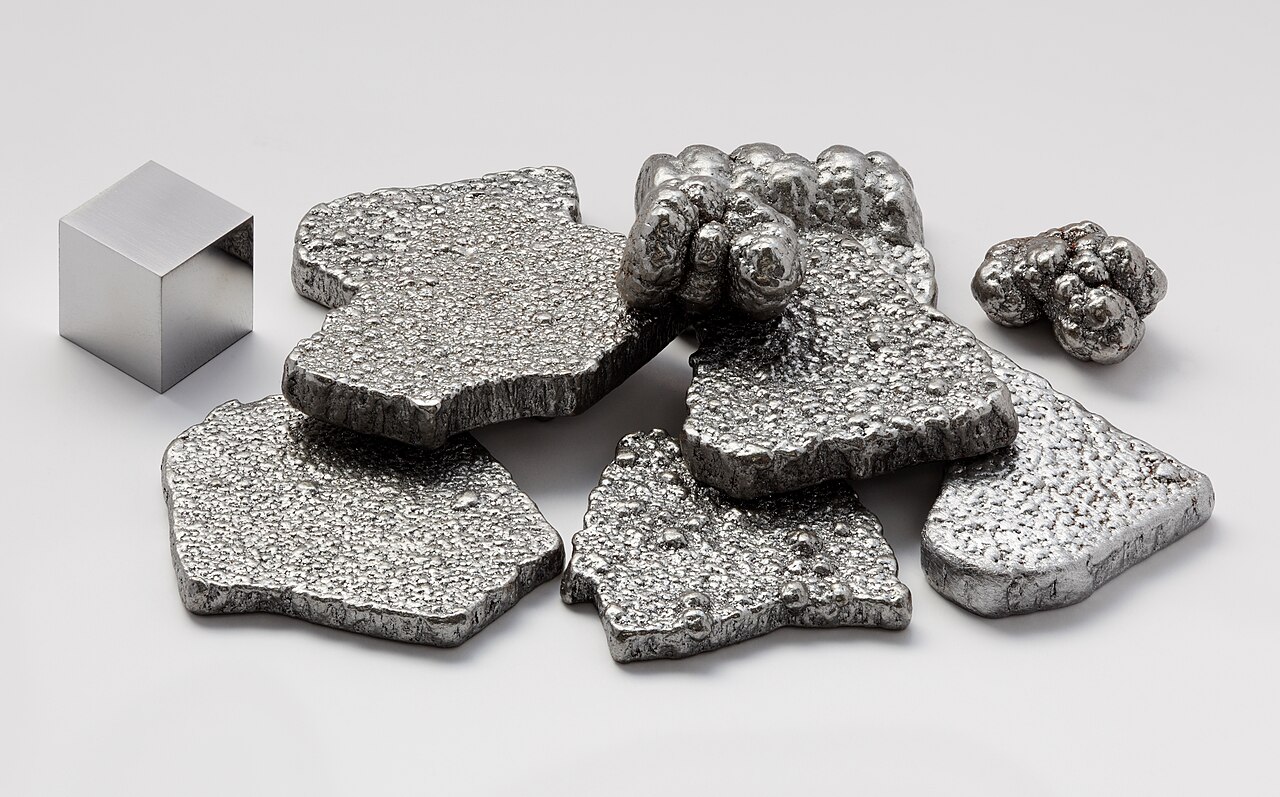
Image by Alchemist-hp ( talk ) ( www.pse-mendelejew.de ), licensed under Free Art License

Do more with AI

Introduction

Iron is a shiny, silver-gray metal found all around us! 🪨It’s the fourth most abundant element in the universe! Iron is located deep inside the Earth and is released through volcanic activity. Most iron comes from countries like China, Australia, and Brazil. Iron is important for making steel, which is stronger than iron alone. Did you know that iron is essential for our health too? It helps carry oxygen in our blood! Without iron, we wouldn’t have strong buildings, cars, or even healthy bodies. So, iron is not just a metal; it's a superhero of materials! 🦸‍♂️

Images of Iron

The body-centred cubic crystal structure.Image by Original: Daniel Mayer and DrBob at English Wikipedia Vector: Stannered, licensed under Creative Commons Attribution-Share Alike 3.0

The body-centred cubic crystal structure.

The Face-centered cubic crystal structure.Image by Original PNGs by Daniel Mayer and DrBob , traced in Inkscape by User:Stannered, licensed under Creative Commons Attribution-Share Alike 3.0

The Face-centered cubic crystal structure.

Molar volume vs. pressure for α iron at room temperatureImage by TomR, licensed under Creative Commons Attribution-Share Alike 4.0

Molar volume vs. pressure for α iron at room temperature

Low-pressure phase diagram of pure ironImage by Diagramma_di_fase_del_ferro_puro.svg : Daniele Pugliesi derivative work: Daniele Pugliesi ( talk ), licensed under Creative Commons Attribution-Share Alike 3.0

Low-pressure phase diagram of pure iron

Magnetization curves of 9 ferromagnetic materials, showing saturation. 1. Sheet steel, 2. Silicon steel, 3. Cast steel, 4. Tungsten steel, 5. Magnet steel, 6. Cast iron, 7. Nickel, 8. Cobalt, 9. Magnetite[19]

Magnetization curves of 9 ferromagnetic materials, showing saturation. 1. Sheet steel, 2. Silicon steel, 3. Cast steel, 4. Tungsten steel, 5. Magnet steel, 6. Cast iron, 7. Nickel, 8. Cobalt, 9. Magnetite[19]

Photon mass attenuation coefficient for ironImage by Materialscientist, licensed under Creative Commons Attribution-Share Alike 3.0

Photon mass attenuation coefficient for iron

A polished and chemically etched piece of an iron meteorite, believed to be similar in composition to the Earth's metallic core, showing individual crystals of the iron-nickel alloy (Widmanstatten pattern)Image by Waifer X, licensed under Creative Commons Attribution 2.0

A polished and chemically etched piece of an iron meteorite, believed to be similar in composition to the Earth's metallic core, showing individual crystals of the iron-nickel alloy (Widmanstatten pattern)

Ochre path in RoussillonImage by G CHP - G CHP, licensed under Creative Commons Attribution-Share Alike 2.5

Ochre path in Roussillon

Banded iron formation in McKinley Park, MinnesotaImage by Raymond M. Coveney, …, licensed under Creative Commons Attribution-Share Alike 3.0

Banded iron formation in McKinley Park, Minnesota

The body-centred cubic crystal structure.Image by Original: Daniel Mayer and DrBob at English Wikipedia Vector: Stannered, licensed under Creative Commons Attribution-Share Alike 3.0

The body-centred cubic crystal structure.

The Face-centered cubic crystal structure.Image by Original PNGs by Daniel Mayer and DrBob , traced in Inkscape by User:Stannered, licensed under Creative Commons Attribution-Share Alike 3.0

The Face-centered cubic crystal structure.

Molar volume vs. pressure for α iron at room temperatureImage by TomR, licensed under Creative Commons Attribution-Share Alike 4.0

Molar volume vs. pressure for α iron at room temperature

Low-pressure phase diagram of pure ironImage by Diagramma_di_fase_del_ferro_puro.svg : Daniele Pugliesi derivative work: Daniele Pugliesi ( talk ), licensed under Creative Commons Attribution-Share Alike 3.0

Low-pressure phase diagram of pure iron

Magnetization curves of 9 ferromagnetic materials, showing saturation. 1. Sheet steel, 2. Silicon steel, 3. Cast steel, 4. Tungsten steel, 5. Magnet steel, 6. Cast iron, 7. Nickel, 8. Cobalt, 9. Magnetite[19]

Magnetization curves of 9 ferromagnetic materials, showing saturation. 1. Sheet steel, 2. Silicon steel, 3. Cast steel, 4. Tungsten steel, 5. Magnet steel, 6. Cast iron, 7. Nickel, 8. Cobalt, 9. Magnetite[19]

Photon mass attenuation coefficient for ironImage by Materialscientist, licensed under Creative Commons Attribution-Share Alike 3.0

Photon mass attenuation coefficient for iron

A polished and chemically etched piece of an iron meteorite, believed to be similar in composition to the Earth's metallic core, showing individual crystals of the iron-nickel alloy (Widmanstatten pattern)Image by Waifer X, licensed under Creative Commons Attribution 2.0

A polished and chemically etched piece of an iron meteorite, believed to be similar in composition to the Earth's metallic core, showing individual crystals of the iron-nickel alloy (Widmanstatten pattern)

Ochre path in RoussillonImage by G CHP - G CHP, licensed under Creative Commons Attribution-Share Alike 2.5

Ochre path in Roussillon

Banded iron formation in McKinley Park, MinnesotaImage by Raymond M. Coveney, …, licensed under Creative Commons Attribution-Share Alike 3.0

Banded iron formation in McKinley Park, Minnesota

Iron In The Human Body

Did you know that iron is also found in your body? 🧬It's important for making hemoglobin, which carries oxygen in your blood! Without enough iron, you might feel tired and weak. Kids need about 10 mg of iron each day, while adults need more! 🏃Foods like red meat, chicken, and leafy vegetables provide iron. When you eat these, your body absorbs the iron to stay healthy! So, eating iron-rich foods is like giving your body super fuel to play and learn! 🥦

Uses Of Iron In Daily Life

Iron is everywhere in our daily lives! 🏠It is used to make tools, cars, and buildings. Steel, which is made from iron, is used to construct bridges and skyscrapers, making them super strong! 🏗️ In the kitchen, many pots and pans are made of iron. Iron is also used in our smartphones and computers! 💻Additionally, it helps us stay healthy because our blood needs iron. Foods high in iron include spinach, red meat, and beans. So, next time you eat, think about all the iron around and in you! 🍽️

Chemical Properties Of Iron

Iron has the chemical symbol Fe, derived from the Latin word “ferrum,” meaning iron! 🔩It can easily react with oxygen to form rust (iron oxide), especially in wet conditions. This is why we see rusty bicycles on rainy days! Iron can also bond with other elements to create compounds. For example, when it reacts with sulfur, it forms iron sulfide. Iron is known to be magnetic, especially when it’s pure! 🧲This means it can attract other magnets and is used in things like fridge magnets. It’s like magic, but it’s science! 🪄

Physical Properties Of Iron

Iron is a strong metal that feels heavy and hard to the touch. 💪Its melting point is around 1,538 °C (2,800 °F), which means it needs a lot of heat to become liquid! When you look closely at iron, you’ll notice that it can rust, turning a reddish-brown color when exposed to water and air. 🌧️ This happens because of a reaction with oxygen. Iron also has a high density, which means it’s very compact and heavy for its size. It’s also a great conductor of heat and electricity, making it useful for many inventions! ⚡

Interesting Facts About Iron

Here are some cool facts about iron! 🥳Did you know that about 90% of the metal extracted on Earth is iron? That's a lot! Iron can be found in meteorites, meaning it's from outer space! ☄️ The famous Eiffel Tower in Paris, France, is made of iron! It weighs around 10,000 tons! Iron is also found in the core of Earth, where it’s very hot and under immense pressure! ☀️ Lastly, the "Iron Man" is a superhero in comic books, but the real iron is even cooler! Iron truly is a wonder metal! 🚀

Historical Significance Of Iron

Iron has been important for thousands of years! ⚔️ People started using iron around 1,200 BCE during the Iron Age, which began in different parts of the world like Europe and Asia. Iron tools helped ancient farmers grow crops more efficiently. The discovery of iron allowed for stronger weapons, changing how wars were fought! 🚀Famous civilizations, like the Romans and Chinese, also used iron to build empires. Today, iron is still vital for construction and technology, showing how this humble metal has impacted history! 🌍

Iron Alloys And Their Applications

An alloy is a mix of metals, and iron is in many important ones! 🛠️ Steel, made from iron and carbon, is super strong and used in construction. Cast iron, which includes carbon and silicon, is used in cookware and heavy machinery! 💡Another alloy, stainless steel, is made with iron, carbon, and chromium, making it resistant to rust. This type of steel is found in kitchen sinks and silverware! 🍽️ Alloys help make our tools, machines, and infrastructure better, proving that iron is an amazing team player! 🤝

Environmental Impact Of Iron Production

While we love using iron, making it can hurt the environment. 🌳Iron production can create air and water pollution. When iron is mined, the land can be damaged and habitats for animals are destroyed. Plus, the processes to turn iron ore into usable iron release carbon dioxide, a greenhouse gas that warms our planet! ☁️ To be kinder to Earth, we can recycle iron from old cars and appliances. Recycling helps reduce waste and protects our environment, showing that iron can be both useful and eco-friendly! ♻️

Iron Quiz

Q1
Question 1 of 10

Learn more about Iron

Ready to create?

Make

To create a safe space for kid creators worldwide!

Create

Vibe Coding

Kids GPT

All Tools

Kibu

Resources

Worksheets

SafeTube

Blog

FAQ

Account

Pricing

Log-in

Sign-up

Data Deletion

Company

About

Community Guidelines

Privacy Policy

Terms of Service

2025, URSOR LIMITED. All rights reserved. DIY is in no way affiliated with Minecraft™, Mojang, Microsoft, Roblox™ or YouTube. LEGO® is a trademark of the LEGO® Group which does not sponsor, endorse or authorize this website or event. Made with love in San Francisco.