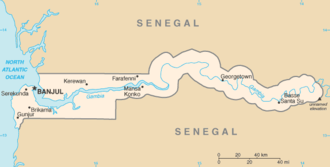
The Gambia is a small country located in West Africa! πIt is known for its beautiful landscape along the Gambia River, where the country gets its name. The Gambia is just 11,295 square kilometers in size, making it one of Africa's smallest countries. The capital city is Banjul, which sits on an island near the river's mouth. Most Gambians speak English, as it was once a British colony. The country has a warm, tropical climate and is home to many colorful and lively cultures! π
Tourists love visiting The Gambia for its sunny beaches and warm climate!
The Gambia has a democratic government!
Education is important in The Gambia!
Gambia is surrounded by Senegal, making it unique!
Gambia is home to amazing plants and animals!
Photos of Gambia
Senegambian stone circles (megaliths) run from Senegal through The Gambia. They are described by UNESCO as "the largest concentration of stone circles seen anywhere in the world".
The Arch 22 monument commemorating the 1994 coup which saw the then 29-year-old Yahya Jammeh seize power in a bloodless coup, ousting Sir Dawda Jawara, who had been President of The Gambia since 1970[79]
Yahya Jammeh and Mrs. Zeinab Jammeh with Barack and Michelle Obama in the White House, August 2014
U.S. AFRICOM commander Carter Ham and senior Gambian Army officer Masaneh Kinteh surveying the troops, 21 July 2011
π΄ Cuisine
Gambian cuisine is delicious and diverse! π΄One popular dish is Jollof rice, made with tomatoes, onions, and spices. Groundnut stew, made from peanuts, is another favorite! Fish is a big part of meals too, served fresh from the river or ocean. Many Gambians enjoy fruits like mangoes and bananas. π₯Food is often shared among families, making meals a special time to connect with loved ones! Spices add flavor, making Gambian food a true treat for everyone! πΆοΈ
Gambian culture is vibrant and colorful! π¨People enjoy music and dance, especially traditional styles like Kankurang and Sabarr. The country has many ethnic groups, including the Mandinka, Fula, and Wolof. Festivals are huge celebrations of music, dance, and food! The famous Kora musical instrument, made from a gourd, is played here too! Gambians love storytelling, sharing tales of history and lessons. The culture is also greatly influenced by Islam, with beautiful mosques found throughout the land! π
The Gambia's economy relies on agriculture! πΎPeople grow crops like peanuts, rice, and millet, which help feed families and sell in markets. Fishing is also important for many Gambians, with fresh fish caught along the coast. Tourism is growing, as many visitors come to enjoy the beautiful beaches and wildlife. πThe Gambian government is working to improve things like schools and roads to help boost the economy even more!
The Gambia has a rich history! It was once inhabited by the Mandinka people. In the 15th century, European explorers arrived, and by the 18th century, the British took control. In 1965, The Gambia became independent! π¬π² Important figures like Sir Dawda Kairaba Jawara helped the country become free. The Gambia is known for its role in the transatlantic slave trade in the past, which affected many families. Today, Gambians celebrate their freedom and culture through music and festivals! πΆ
Tourists love visiting The Gambia for its sunny beaches and warm climate! βοΈ Popular spots include Kotu Beach and Senegambia. Tourists can enjoy water sports like snorkeling and fishing. The country also has cultural tours where visitors can learn about its history and traditions! π The famous Kachikally Crocodile Pool in Bakau is a fun place to see crocodiles up close! The Gambia is often called "The Smiling Coast of Africa" because of its friendly and welcoming people! π
The Gambia has a democratic government! π³οΈ The president is elected and leads the country. Political parties represent different groups of people. The parliament also helps make laws that keep the country running smoothly. In 2016, a peaceful change in leadership occurred when Adama Barrow became president, which made many Gambians happy! The Gambia is working towards being more open and fair for its citizens, allowing their voices to be heard! π
Education is important in The Gambia! π«The country has many primary and secondary schools where children learn about a variety of subjects, like math and science. Some schools even teach English and local languages! The government is working to improve education by building more schools and adding resources. In rural areas, access to education can be challenging, but passionate teachers continue to help children learn and grow! π
Gambia is surrounded by Senegal, making it unique! πΊοΈ The Gambia River flows right through the country, stretching about 1,120 kilometers. There are sandy beaches along the Atlantic Ocean, perfect for sunbathing! The country's landscape includes savanna, forests, and wetlands, which are great homes for both animals and plants. The Gambia has several national parks, like Kiang West National Park, where you can see amazing wildlife, including monkeys and birds! π¦
Gambia is home to amazing plants and animals! π³The country has rich vegetation, including palm trees, baobab trees, and mangroves. In national parks, you can find interesting animals like African elephants, baboons, and several species of birds, like the colorful African Grey Parrot! π¦The wetlands are important for migratory birds. The unique wildlife and plant life make The Gambia a great place for nature lovers and adventurers! π