Beatbox the 'K' Snare
Learn to beatbox the 'K' snare sound using mouth, tongue, and breath techniques. Practice rhythms and control to build rhythmic skills.


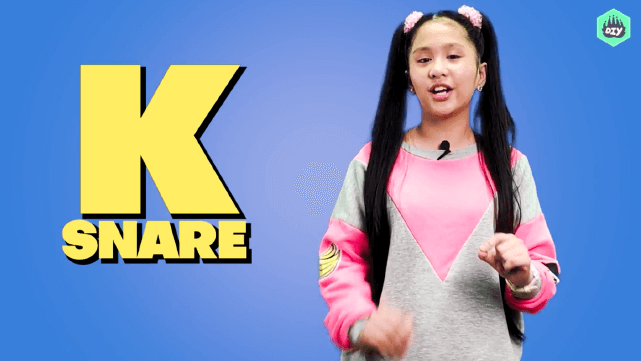
Step-by-step guide to Beatbox the 'K' Snare
Step 1
Sit or stand in your quiet space so you can hear yourself clearly.
Step 2
Take three deep breaths to relax your mouth and body.
Step 3
Open your mouth slightly so your tongue has room to move.
Step 4
Look in the mirror to check that your jaw is loose and relaxed.
Step 5
Lift the back of your tongue so it touches the soft part of the roof of your mouth toward your throat.
Step 6
Keep the front of your tongue relaxed and do not press the tip against your teeth.
Step 7
Take a small breath into your mouth and hold it to build gentle air pressure behind the back of your tongue.
Step 8
Pull the back of your tongue away quickly to release a sharp unvoiced "K" click sound.
Step 9
Repeat that "K" sound slowly ten times with a short pause between each to make the sound steady.
Step 10
Open your metronome app or timer and set it to 60 beats per minute.
Step 11
Make one "K" sound on each metronome beat for eight beats.
Step 12
Practice the rhythm pattern "K - K K - rest" with the metronome and repeat that pattern twelve times.
Step 13
Share a short video or audio of your best "K" snare rhythm on DIY.org to show what you learned.
Help!?
What can I use if I don't have a metronome app or a mirror?
Use your phone's clock timer or a free online metronome for the 60 BPM and the phone's front camera or a shiny spoon as a mirror to check your jaw and tongue position.
I'm not getting a sharp 'K' click—what might be going wrong?
Make sure your jaw is loose, the back of your tongue is lifted to touch the soft roof toward your throat (not the tip against your teeth), take a small breath to build air behind the tongue, then pull the back of the tongue away quickly as the instructions say.
How can I adapt the steps for younger children or older kids?
For younger kids, slow the metronome to about 40 BPM, reduce repetitions (try five slow 'K' clicks), and have a parent guide tongue placement, while older kids can increase tempo to 80–100 BPM, practice the full 'K - K K - rest' pattern more times, and record for feedback.
How can we extend or personalize the 'K' snare practice after finishing the steps?
Combine the 'K' snare pattern with other mouth percussion (like 'B' bass or 'T' hat), layer recordings to make a full beat, or decorate your video and post your best clip on DIY.org as the instructions suggest.
Watch videos on how to Beatbox the 'K' Snare
Inward K/Clutch Snare - How to Beatbox (EASY TUTORIAL) by a beatbox teacher
4 Videos

Inward K/Clutch Snare - How to Beatbox (EASY TUTORIAL) by a beatbox teacher

Basic Beat for beatbox Beginners (using Inward K Snare)

How To Beatbox For Beginners: Learn The Basics (Part 1)

How To Beatbox - Inward K Snare Tutorial
Facts about beatboxing and vocal percussion
🗣️ The 'K' snare is made by a quick, sharp burst from the back of the tongue hitting the soft palate — it's like a tiny tongue drum in your mouth.
👄 Combining the 'K' snare with lip bass and hi-hat sounds lets one person imitate an entire drum kit.
🥁 Beatboxing rose to fame in hip hop during the 1980s — pioneers like Doug E. Fresh and Rahzel helped turn it into a performance art.
🎧 Practicing the 'K' snare builds breath control and rhythm skills that help singers, drummers, and rappers.
🧠 Short, focused practice sessions for percussive mouth sounds help your timing and coordination — your brain gets better at steady beats.
How do I teach my child to beatbox the 'K' snare?
What materials do I need to practice the 'K' snare?
What ages is learning the 'K' snare suitable for?
What are the benefits of learning the 'K' snare for kids?
