What Is the Difference Between a Conductor and an Insulator?
Learn what conducts vs insulates with everyday items, quick tests, and kid-safe circuit ideas. Clear visuals, safety tips, and a handy checklist.
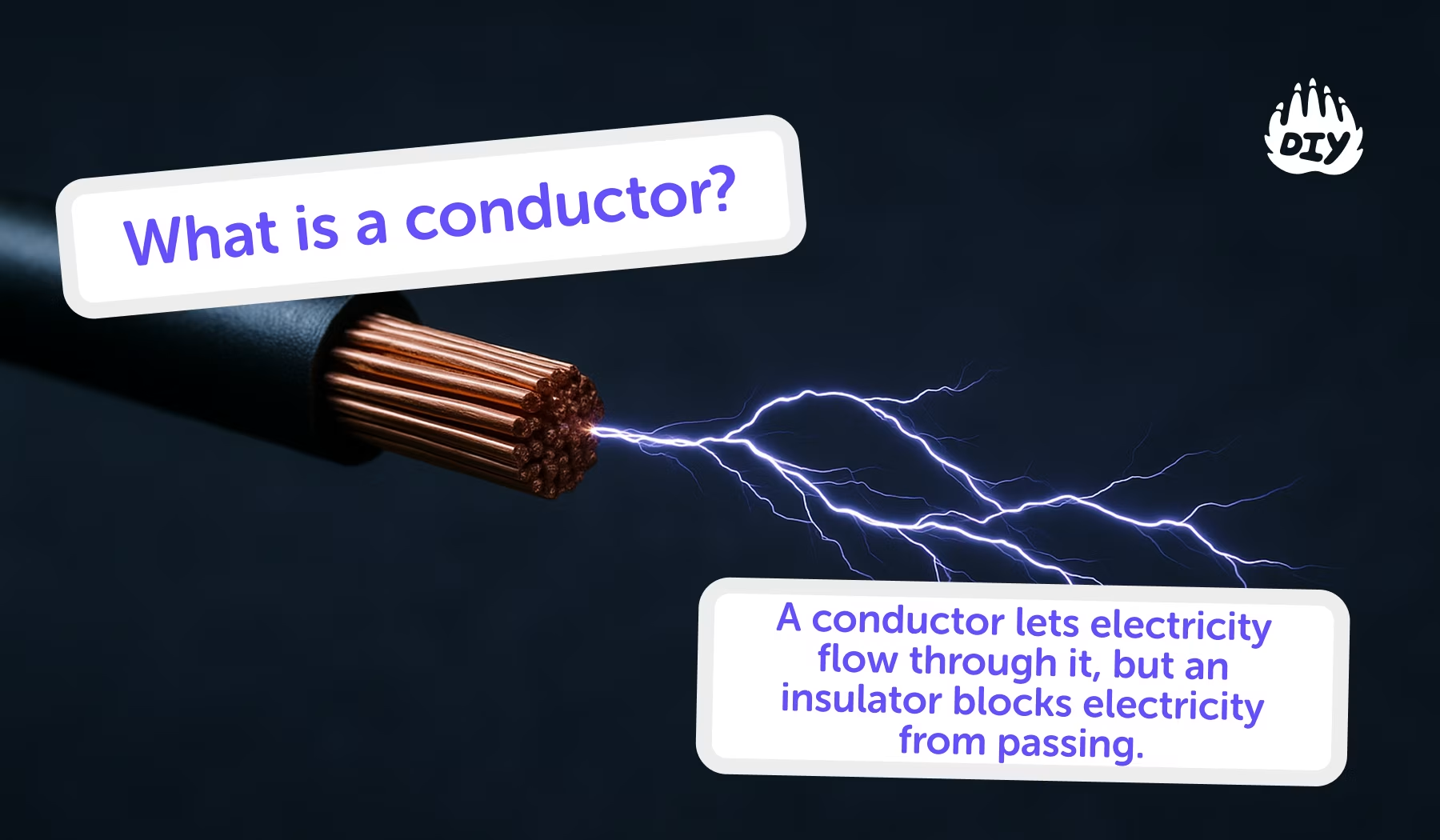
When you start learning about electricity, one of the first questions you come across is: What’s the difference between a conductor and an insulator? It’s a simple idea, but an important one for understanding how electricity works in our homes, schools, and technology.
A conductor lets electric charge or heat move easily.
An insulator blocks the flow of charge or heat.
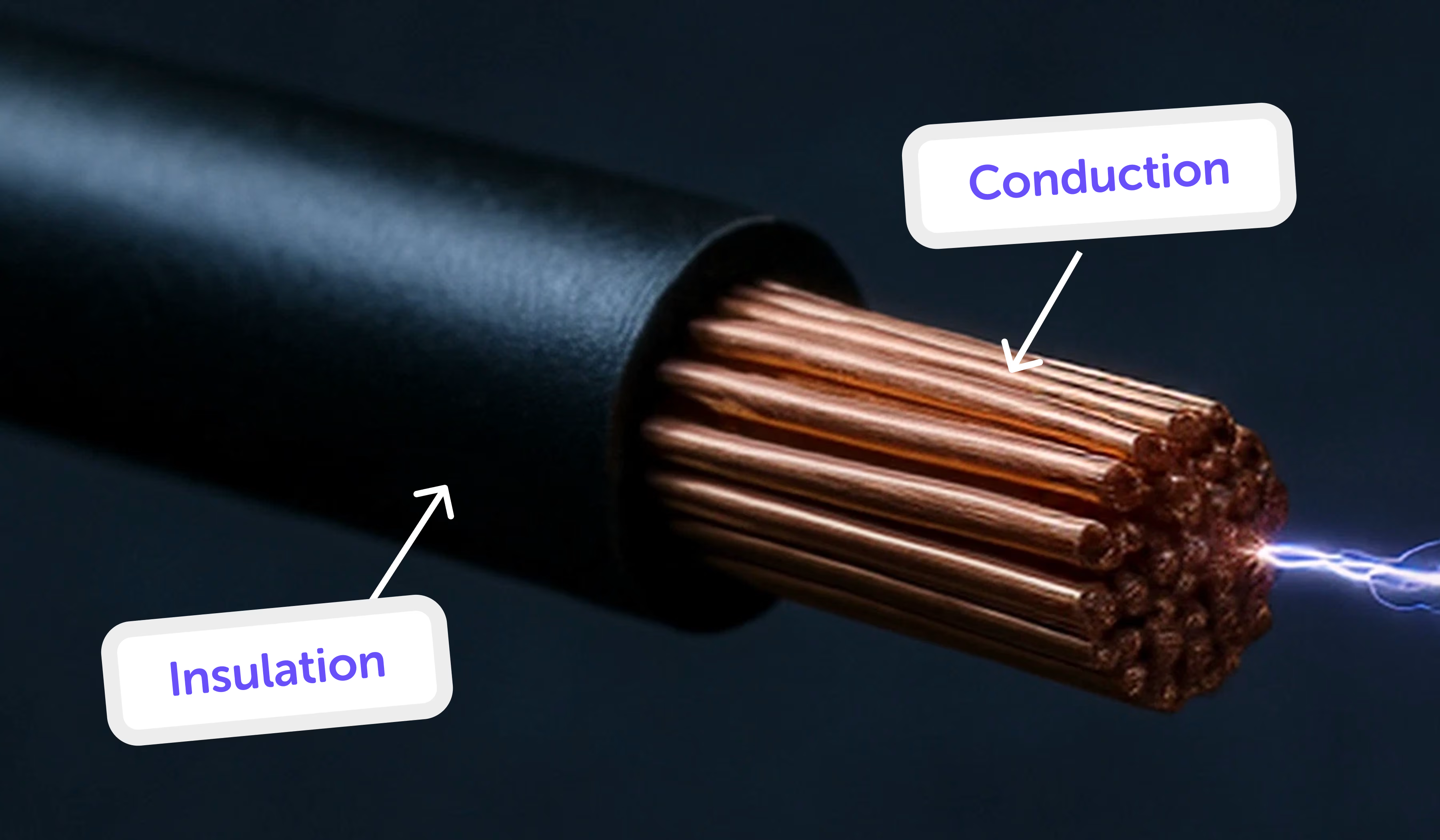
Think about a phone charger: the metal wire inside carries electricity (conductor), while the rubber/plastic coating on the outside keeps you safe (insulator).
What Is a Conductor?
A conductor is a material that allows electricity to flow easily through it. Metals like copper, aluminum, silver, and gold are all good conductors. That’s why copper wires are used inside chargers, plugs, and power lines they carry electricity efficiently from one place to another.
What Is an Insulator?
An insulator is the opposite of a conductor. Instead of letting electricity flow, it blocks or resists it. Materials like plastic, rubber, glass, and wood are all insulators. You’ll notice that most wires are wrapped in plastic this is to keep the electricity inside the conductor and to keep us safe when handling cables.
Comparison
Feature | Conductor | Insulator |
Definition | Material that allows electric current/heat to pass through easily | Material that resists the flow of current/heat |
Electrons | Has many free electrons that move easily | Electrons are tightly bound and don’t move freely |
Conductivity | High conductivity , low resistivity | Low conductivity , high resistivity |
Feels like | Often cool to touch (metals conduct heat away) | Often warm to touch (poor heat transfer) |
Common materials | Copper, aluminum, gold, silver, graphite | Rubber, plastic, wood (dry), glass, ceramic, air |
Typical uses | Wires, circuits, cookware bottoms, lightning rods | Wire coatings, handles, phone cases, wall outlets covers |
Safety role | Moves electricity where we want it | Protects people/devices from unwanted flow |
Why Do We Need Both?
Conductors and insulators work together. The conductor carries the electricity where it’s needed, and the insulator keeps it from escaping or shocking someone. Without this partnership, everyday devices like phone chargers, lamps, and computers wouldn’t be safe to use.
FAQs about a conductor and an insulator
Is water a conductor or an insulator?
Pure water is a poor conductor, but tap water contains minerals/ions and can conduct. That’s why electronics and water don’t mix.
Are all metals good conductors?
Most are good, but not equally good. Silver is best (but expensive), copper is common, aluminum is lighter (used in power lines). Stainless steel conducts worse than copper but is tough and resists rust.
Is wood an insulator?
Dry wood is a poor conductor (so we treat it as an insulator). Wet wood becomes more conductive.
What about semiconductors (like silicon)?
They’re in between: not great conductors or insulators by default, but they can be tuned (doped) to conduct in controlled ways. That’s how computer chips work.
What is the main difference between a conductor and an insulator?
A conductor lets electricity or heat flow easily; an insulator resists that flow.
What are 5 examples of conductors?
Copper, aluminum, silver, gold, graphite (pencil “lead”).
What are 5 examples of insulators?
Rubber, plastic, glass, ceramic, dry wood.
Why do cables use both?
Metal inside to carry current (conductor), protective coating outside to keep you safe (insulator).
What is conductivity vs resistivity?
Conductivity measures how well current flows; resistivity measures how much a material resists current.
Safe Homework Research for Kids
The internet is full of explanations about science but not all of them are safe or reliable for children. If you want your child to research with confidence, DIY.org’s kid-safe Homework Helper is the perfect solution. It provides clear, age-appropriate answers, fun examples, and interactive projects all in a safe, moderated environment.
Ready to start creating?
Join hundreds of thousands of kids already building cool stuff.
Get started for freeYour first game is on us.
Describe a game below - no sign-up needed to try.
Powered by AstroSafe
Make real games - not just chat