Magnificent Frigatebird Facts For Kids
The magnificent frigatebird is a large seabird known for its striking appearance and remarkable flying abilities, particularly seen in its inflated red throat pouch during mating displays.
Select reading age

Magnificent Frigatebird Facts For Kids
Videos & Quizzesincluded
About this topic
The magnificent frigatebird is a large and unique bird found mainly in the tropical regions, like the Galápagos Islands 🌴 and certain parts of Central America. These birds are known for their impressive wingspan, stretching up to 7.5 feet (2.3 meters), which makes them one of the best gliders in the sky! They have striking black feathers, a bright red pouch under their beak (especially during mating season), and long, pointed wings. These birds are amazing flyers, and they can soar high above the ocean for days without flapping their wings! 🌊
Explore with ChatDinoKey Points
Magnificent frigatebirds are expert hunters and have a very interesting way of feeding.
Did you know that magnificent frigatebirds can stay in the air for days?
Unlike many birds, magnificent frigatebirds are known for their non-migratory behavior, which means they usually stay in the same area all year round.
The magnificent frigatebird is currently classified as "Near Threatened" by the IUCN Red List.
Many cultures in the regions where magnificent frigatebirds live have admired these incredible birds for generations.
These incredible birds are mainly found in warm coastal areas across different parts of the world 🌍.
Magnificent frigatebirds have a sleek body that helps them fly effortlessly.
During mating season, male magnificent frigatebirds become quite flashy!
Photos of Magnificent Frigatebird

Magnificent Frigatebird — photo 1

Female fishing off Copacabana beach, Brazil

Female juvenile

Magnificent Frigatebird — photo 4

Magnificent Frigatebird — photo 5

Magnificent Frigatebird — photo 6
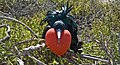
Magnificent Frigatebird — photo 7

Fregata magnificens juvenile in the Galapagos Islands
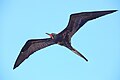
Fregata magnificens male in the Galapagos Islands
🍽️ Feeding Behavior
Magnificent frigatebirds are expert hunters and have a very interesting way of feeding. They don’t have waterproof feathers, so they can’t dive into the water for fish. Instead, they glide above the ocean, searching for other birds that are hunting. When they see smaller birds catching fish, they swoop down and try to steal their meals! 🍽️ This behavior is called "kleptoparasitism." They mainly eat fish and squid, but they are also known to eat other small sea creatures. Their incredible flying skills help them spot food from high up in the sky! 🐠
Go deeper🌤️ Interesting Facts
Did you know that magnificent frigatebirds can stay in the air for days? 🌤️ They can fly for up to a week without landing! They mainly rely on the winds to help them glide without flapping their wings much. Their striking appearance makes them one of the most recognizable seabirds. Plus, their loud, croaking calls can be heard during the breeding season. 🗣️ Another fun fact is that their name “frigatebird” comes from the Spanish word "fragata," meaning "pirate ship," which reflects their sneaky feeding habits! These birds sure are magnificent in every way! 🎉
Go deeper🌊 Migration Patterns
Unlike many birds, magnificent frigatebirds are known for their non-migratory behavior, which means they usually stay in the same area all year round. However, some of them may move shorter distances to find better feeding grounds during the seasons. They are really good at finding food and can travel far over the ocean 🌊, using their strong wings to glide without tiring quickly. The ability to travel over vast areas helps them find places with lots of fish and stay safe from the competition. However, they don’t have a specific migration path like many other birds do! 🗺️
Go deeper🌎 Conservation Status
The magnificent frigatebird is currently classified as "Near Threatened" by the IUCN Red List. This means their population is declining due to several threats. Habitat destruction, climate change, and pollution are some major issues affecting their survival. 🌎They are also at risk from fishing nets and plastics in the ocean. Conservation efforts are underway to protect their habitats and ensure they have safe places to live and breed. By learning about these fascinating birds, we can help raise awareness and support their conservation! 🦅
Go deeper🕊️ Cultural Significance
Many cultures in the regions where magnificent frigatebirds live have admired these incredible birds for generations. In some Caribbean islands, they are known as symbols of freedom and grace 🕊️. They often appear in local art, folklore, and stories, capturing the imagination of people who see them soaring above the ocean. In the Galápagos Islands, they are part of the unique wildlife that attracts tourists, helping promote conservation efforts. Understanding these cultural connections helps us appreciate and protect magnificent frigatebirds for future generations! 🌈
Go deeper🌍 Habitat And Distribution
These incredible birds are mainly found in warm coastal areas across different parts of the world 🌍. They love coastal islands and can be spotted around the Caribbean Sea, the Gulf of Mexico, and the Pacific coast of Central America. Some famous places to see them are the Galápagos Islands 🇪🇨 and the coast of Florida. They prefer areas with plenty of open water where they can find food, making beaches their favorite hangout spots! These birds like to nest in trees or bushes on islands away from predators. 🦜
Go deeper🎈 Physical Characteristics
Magnificent frigatebirds have a sleek body that helps them fly effortlessly. Male frigatebirds are larger than females, with shiny black feathers and that impressive red pouch which inflates like a balloon to attract mates. Females are slightly smaller, with white chests and a darker head. They also have long, pointed tails which help with steering while flying. Their sharp beak is perfect for catching fish and stealing food from other birds. Did you know that their size helps them stay afloat in the air longer, like a kite? 🎈
Go deeper🥚 Reproduction And Nesting
During mating season, male magnificent frigatebirds become quite flashy! They puff out their bright red pouches, trying to impress female birds. Once they attract a mate, the female lays one egg 🥚 in a nest made from twigs and branches. This egg hatches after about 50 days! Both parents take turns keeping the egg warm and later feed their chick by regurgitating their food. The fledgling stays with its parents for about five months, learning how to fly and hunt. After that, the young birds are ready to explore the skies on their own! 🐣
Go deeper