Louis De Broglie Facts For Kids
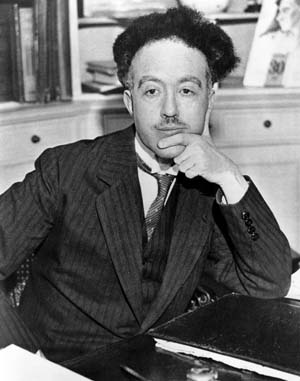
Louis de Broglie was a French physicist known for his pioneering contributions to the theory of wave-particle duality and quantum mechanics.
Select reading age
Louis De Broglie Facts For Kids
Videos & Quizzesincluded
About this topic
Louis de Broglie was a French scientist who was born on August 15, 1892, in Dieppe, France 🇫🇷. He is famous for his ideas about light and matter, which changed the way we understand the tiny world of atoms! De Broglie believed that everything in the universe, like electrons, can behave both like waves and particles. This amazing idea helped lay the foundation for quantum mechanics, which is the study of the smallest things in the universe. He is often thought of as a pioneer in the field of physics ⚛️ and made science much more exciting!
Explore with ChatDinoKey Points
The De Broglie Hypothesis states that every moving particle has a wave associated with it.
Wave-particle duality is a fancy term that describes how tiny things like atoms and electrons can act like both waves and particles!
Louis de Broglie came from a noble family.
Scientists conducted many experiments to explore de Broglie’s ideas.
One of his most important contributions to science was the concept of "wavicles."
De Broglie's discoveries had a huge impact on quantum mechanics, which studies the behavior of tiny particles in the universe.
In 1929, Louis de Broglie received the Nobel Prize in Physics for his revolutionary ideas about wave-particle duality and matter waves!
Louis de Broglie’s legacy lives on today!
Photos of Louis De Broglie

François-Marie, 1st duc de Broglie (1671–1745), ancestor of Louis de Broglie and Marshal of France under Louis XV

de Broglie presented at the Solvay conference 1927 (third from right in middle row).

Ondes et mouvements, 1926
🌌 De Broglie Hypothesis
The De Broglie Hypothesis states that every moving particle has a wave associated with it. 🌌This means that even tiny particles like electrons are not just little dots but can also be thought of as waves! De Broglie created a formula to calculate the wavelength of these "matter waves." The formula is λ = h/p, where "λ" is wavelength, "h" is Planck's constant, and "p" is momentum. This exciting idea that everything moves like waves helps us understand many topics in physics, from how atoms interact to how we can create new technologies!
Go deeper🌊 Wave-particle Duality
Wave-particle duality is a fancy term that describes how tiny things like atoms and electrons can act like both waves and particles! 🌊⚛️ For example, light can bend and spread out like waves, but it can also hit surfaces like little particles called photons. De Broglie suggested that all matter has this dual nature, which means that even things we can’t see behave in ways similar to light! This idea helped scientists explore new experiments, leading to our current understanding of quantum mechanics. Wave-particle duality remains a key principle in how we see the universe today!
Go deeper🎩 Early Life And Education
Louis de Broglie came from a noble family. His father was a count, and his mother was also from an important family! 🎩After high school, he went to the University of Paris, where he studied history, philosophy, and science. He earned his Ph.D. in 1924 after presenting his thesis about the wave nature of electrons 📚. De Broglie was curious since childhood and loved to ask questions! This curiosity turned him into a great scientist. He later served in the French military in World War I, where he also had time to think about his discoveries.
Go deeper🕳️ Experiments And Evidence
Scientists conducted many experiments to explore de Broglie’s ideas. One famous experiment is called the double-slit experiment. In this experiment, light and electrons were fired at two close slits in a barrier. 🕳️ To everyone's surprise, both light and electrons created patterns on a screen showing wave-like behavior! This experiment provided strong evidence that particles could indeed act like waves, just as de Broglie predicted. 🧪Understanding these patterns helps scientists learn about how matter behaves on the smallest scale. It set the stage for many discoveries in the future too!
Go deeper😲 Scientific Contributions
One of his most important contributions to science was the concept of "wavicles." 😲 He combined the ideas of waves and particles! De Broglie's research suggested that particles like electrons have wave-like properties, which was a new idea at that time. This was explained in his famous theory about matter waves. His groundbreaking work helped scientists understand that light could behave as both a wave and a particle, which was very different from what people thought before. This theory opened the door for many other discoveries in quantum physics! ⚡️
Go deeper🌌 Impact On Quantum Mechanics
De Broglie's discoveries had a huge impact on quantum mechanics, which studies the behavior of tiny particles in the universe. 🌌His ideas influenced other scientists, like Erwin Schrödinger, who developed the famous wave equation. This equation allows scientists to predict how particles behave over time. De Broglie’s work was essential in explaining how atoms interact, which is key to understanding chemistry and materials. His theories changed the way we see the universe and helped lead to important technologies like lasers and semiconductors. 🔬
Go deeper🏆 Nobel Prize And Recognition
In 1929, Louis de Broglie received the Nobel Prize in Physics for his revolutionary ideas about wave-particle duality and matter waves! 🏆This was a great honor, recognizing his incredible contributions to science. He was only 37 years old at that time! Many famous scientists, including Albert Einstein, praised his work, which showed how important de Broglie's ideas were to modern physics. His recognition helped inspire many young scientists to explore the exciting world of quantum mechanics and push the boundaries of what we know! 🌟
Go deeper💻 Legacy And Further Developments
Louis de Broglie’s legacy lives on today! Many researchers continue to explore the ideas he introduced. His work laid the groundwork for exciting technologies like quantum computing and quantum teleportation! 💻🌌 He inspired a new generation of scientists to study and understand the quantum world. Today, we use his ideas in many areas, including electronics, medicine, and information technology. Schools worldwide teach about his contributions, and his work continues to influence science and technology. Louis de Broglie's discoveries opened the door to a fantastic universe of possibilities! 🚀
Go deeper