Keynesian Economics Facts For Kids
Keynesian economics is a macroeconomic theory that emphasizes the importance of aggregate demand and government intervention to achieve economic stability and growth.
Select reading age

Keynesian Economics Facts For Kids
Videos & Quizzesincluded
About this topic
Keynesian Economics is like a special map to help countries do better with money! 💰It was created by John Maynard Keynes, a smart man from England, in the 1930s. He believed that when people don't have enough jobs or money, the government should step in to help. By spending money on things like roads and schools, they can create jobs and make everyone happier. 🌍This kind of economics focuses on how people spend their money and how it can help the economy grow, especially during tough times!
Explore with ChatDinoQuick Facts
Key Points
Aggregate demand and supply are important ideas in economics!
Like all ideas, Keynesian Economics has its critics.
During a time called the Great Depression in the 1930s, many people lost their jobs and struggled to buy food.
Aside from spending money, governments also control how much money is flowing in the economy using something called monetary policy.
Keynesian Economics changed how people think about managing the economy!
The main idea of Keynesian Economics is that when people are sad about money, the government can cheer them up!
Today, some countries still follow Keynesian ideas to help their economies.
Fiscal policy is like a magic wand that governments use to help the economy!
Photos of Keynesian Economics

Determination of income according to the General Theory
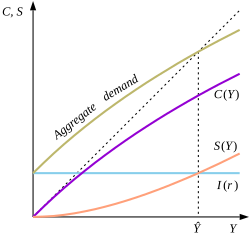
Keynes–Samuelson cross

The liquidity trap


Typical intervention strategies under different conditions
📈 Aggregate Demand And Supply
Aggregate demand and supply are important ideas in economics! 📈Aggregate demand is all about how much stuff everyone wants to buy at different prices. When people want to buy a lot, it's like a busy restaurant with long lines! 🍽️ On the other hand, aggregate supply is how much stuff businesses can make. It’s important for them to match because if too much is made and not enough is bought, it can lead to problems! Balancing both helps keep the economy in a happy place where everyone can enjoy their meals!
Go deeper🤔 Criticism And Controversies
Like all ideas, Keynesian Economics has its critics. 🤔Some people think it might not work all the time. For example, if the government spends too much money, it could lead to higher debts, which means they owe lots of money. 💸Others believe that if people get used to government help, they might not work as hard. Critics also think that waiting for the government to help can slow down people’s actions. It’s important to listen to both sides of the story to understand better!
Go deeper😞 Historical Context And Development
During a time called the Great Depression in the 1930s, many people lost their jobs and struggled to buy food. 😞John Maynard Keynes noticed that just waiting for things to get better wasn't working. He wrote a famous book called "The General Theory of Employment, Interest, and Money" in 1936. 📖His ideas taught that big changes in government spending could help get economies back on track. Countries like the United States started using his ideas to create jobs and help their citizens feel safe again.
Go deeper💵 Monetary Policy And Interest Rates
Aside from spending money, governments also control how much money is flowing in the economy using something called monetary policy. 💵This includes adjusting interest rates. Interest rates are like a fee for borrowing money. If the government lowers them, more people can borrow money to buy houses or cars. 🚗This encourages people to spend and helps the economy grow. However, if they make interest rates higher, it could slow down spending. It's a balancing act to keep everything just right!
Go deeper🌟 Impact On Economic Policy And Theory
Keynesian Economics changed how people think about managing the economy! 🌟It taught us that government spending can play a vital role during tough times. Many schools and universities teach Keynesian ideas to help future leaders understand economic challenges. 📚Today, most countries use a mix of ideas, including Keynes' principles, to keep their economies healthy and strong! This shows us how important economics is in our everyday lives and the choices we make. 🎈
Go deeper🎉 Key Principles Of Keynesian Economics
The main idea of Keynesian Economics is that when people are sad about money, the government can cheer them up! 🎉One key principle is “aggregate demand.” This means how much stuff people want to buy. If they're not buying enough, the economy can get slow. Another important idea is that the government should spend more when times are tough! This extra spending helps create jobs and puts money back into people's pockets. With more spending, people can buy more, and the economy starts to grow again! 🌱
Go deeper🌏 Keynesian Economics In Modern Practice
Today, some countries still follow Keynesian ideas to help their economies. 🌏For example, during the 2008 financial crisis, governments all over the world spent lots of money to help people and businesses. They built jobs, fixed roads, and helped banks. 🔧These actions were inspired by Keynes' thinking! Even now, when economic problems appear, leaders often turn to Keynesian principles to guide them and find ways to support everyone.
Go deeper✨ Government Intervention And Fiscal Policy
Fiscal policy is like a magic wand that governments use to help the economy! ✨Keynes believed the government should use this wand to increase spending during hard times. This could mean building parks, schools, or bridges. By spending money, they create jobs for people. 🙌That way, more people earn money and can buy things, which makes everyone feel happier and helps the economy grow. Think of it like planting seeds in a garden; soon flowers (jobs and happiness) will bloom! 🌺
Go deeper